Video of Donald Trump peeking at Xi Jinping’s notes found to be AI-generated
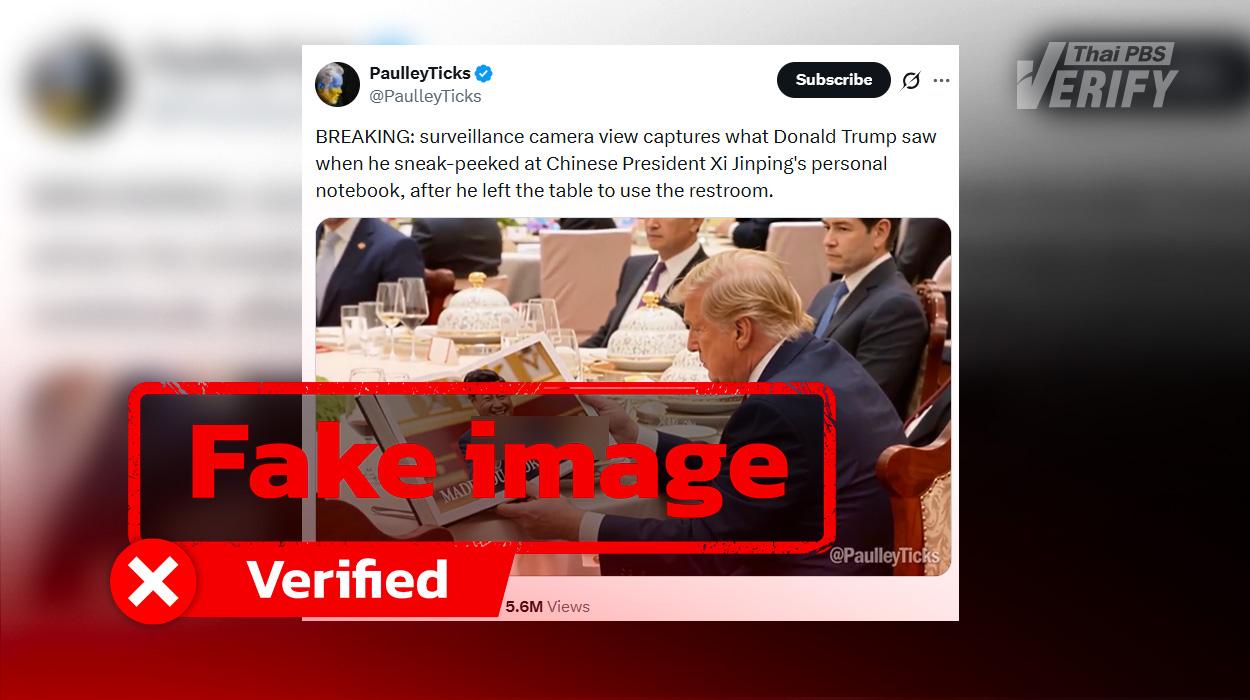
Thai PBS Verify found the fake video on: X
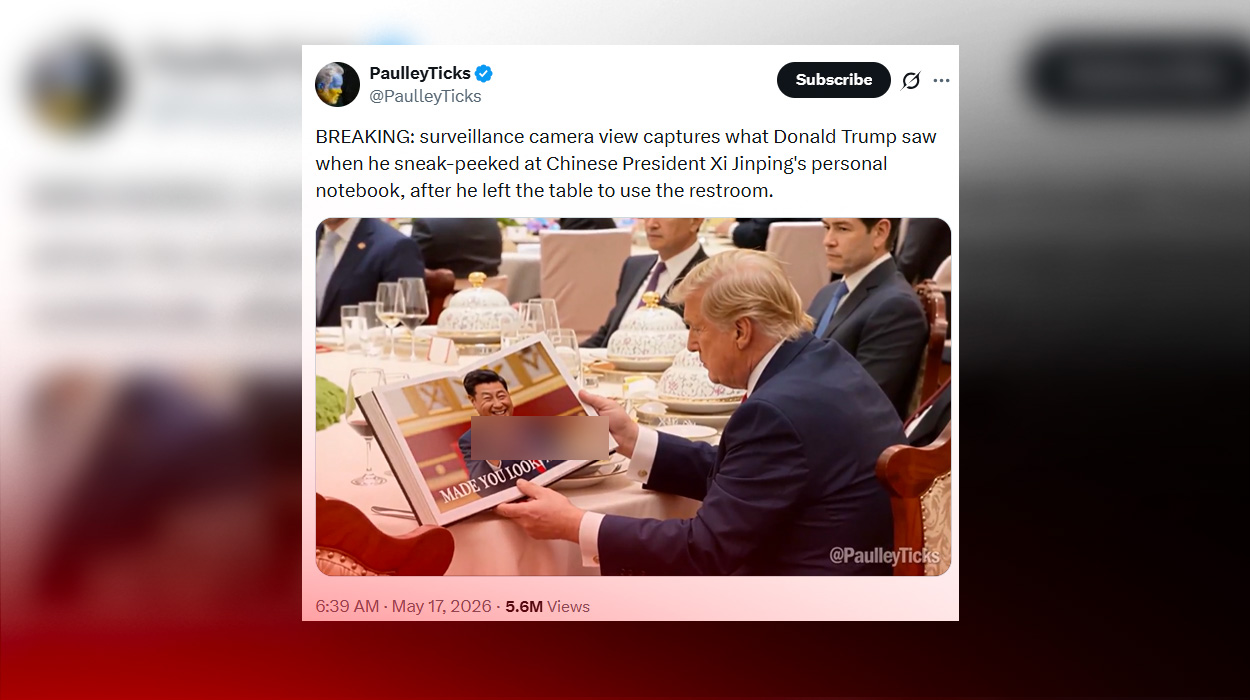
An X account shared a video of President Trump sitting at a dining table and opening documents on the table.
Thai PBS Verify found that an X account posted a video showing President Donald Trump sitting at a dining table and opening documents. The post’s caption reads: “BREAKING: surveillance camera view captures what Donald Trump saw when he sneak-peeked at Chinese President Xi Jinping’s personal notebook, after he left the table to use the restroom”
The post reportedly received 5,500,000 views, 12,000 reactions, 437 comments and 24,000 reposts.
President Trump’s did not try to peek at Xi Jinping’s notes
Thai PBS Verify conducted a reverse image search on Google Lens, finding that the video matches a CNN report titled “A viral clip from Beijing sparked online speculation that President Donald Trump was trying to sneak a look at Chinese President Xi Jinping’s notes. But a closer look at the footage tells a different story,” published on May 16, 2026.
The report suggests that in fact, Mr. Trump took a look at his personal notebook, as the cover was labelled with the U.S. presidential seal. In other words, the documents were actually Trump’s own papers, not Xi Jinping’s.
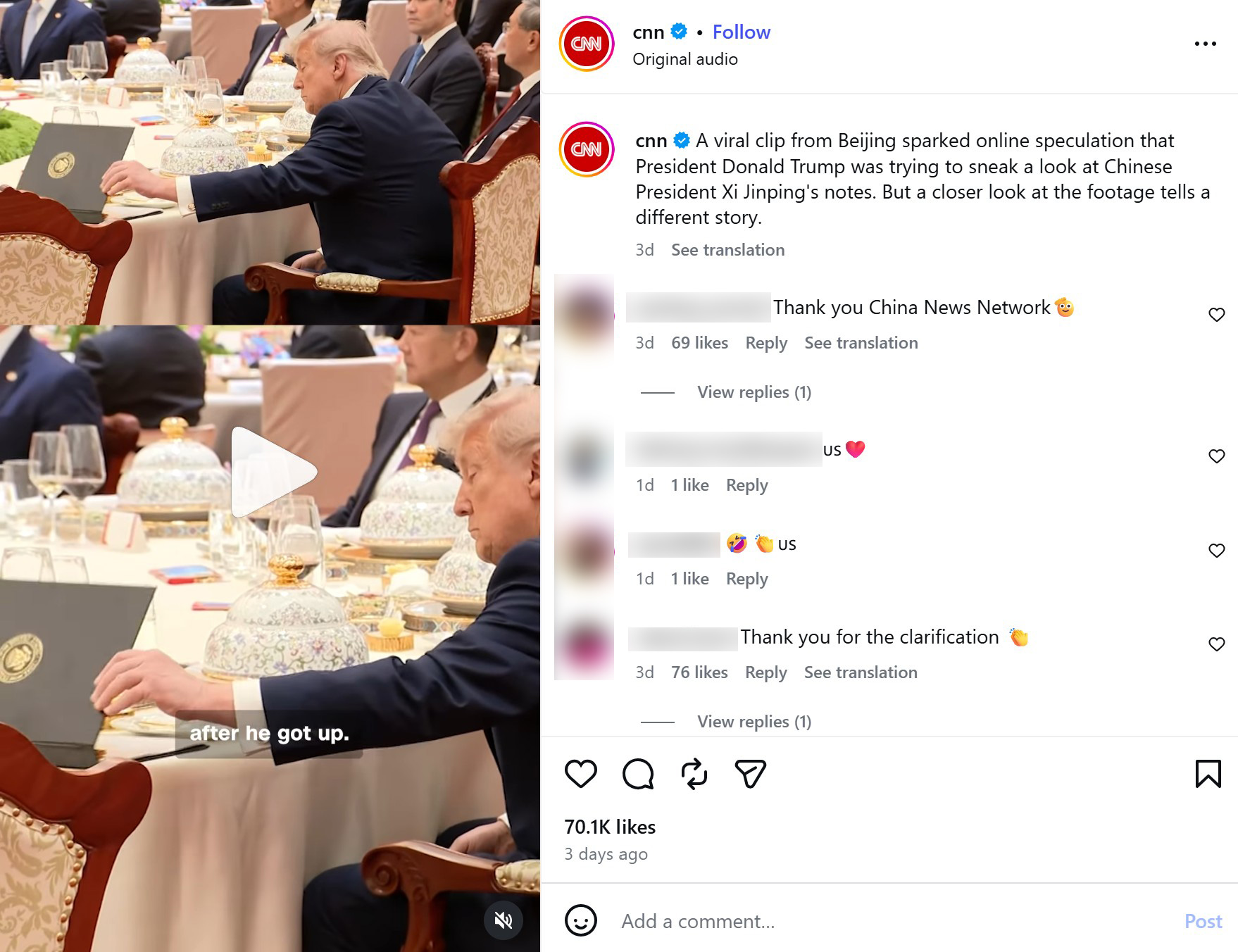
A screenshot of the CNN report on Instagram.
In the video, Mr. Trump is seen sitting at a dining table with President Xi Jinping. He reached to open documents on the table. However, in the original footage, it appears that the contents inside the book do not match what appears in the fake video in any way.
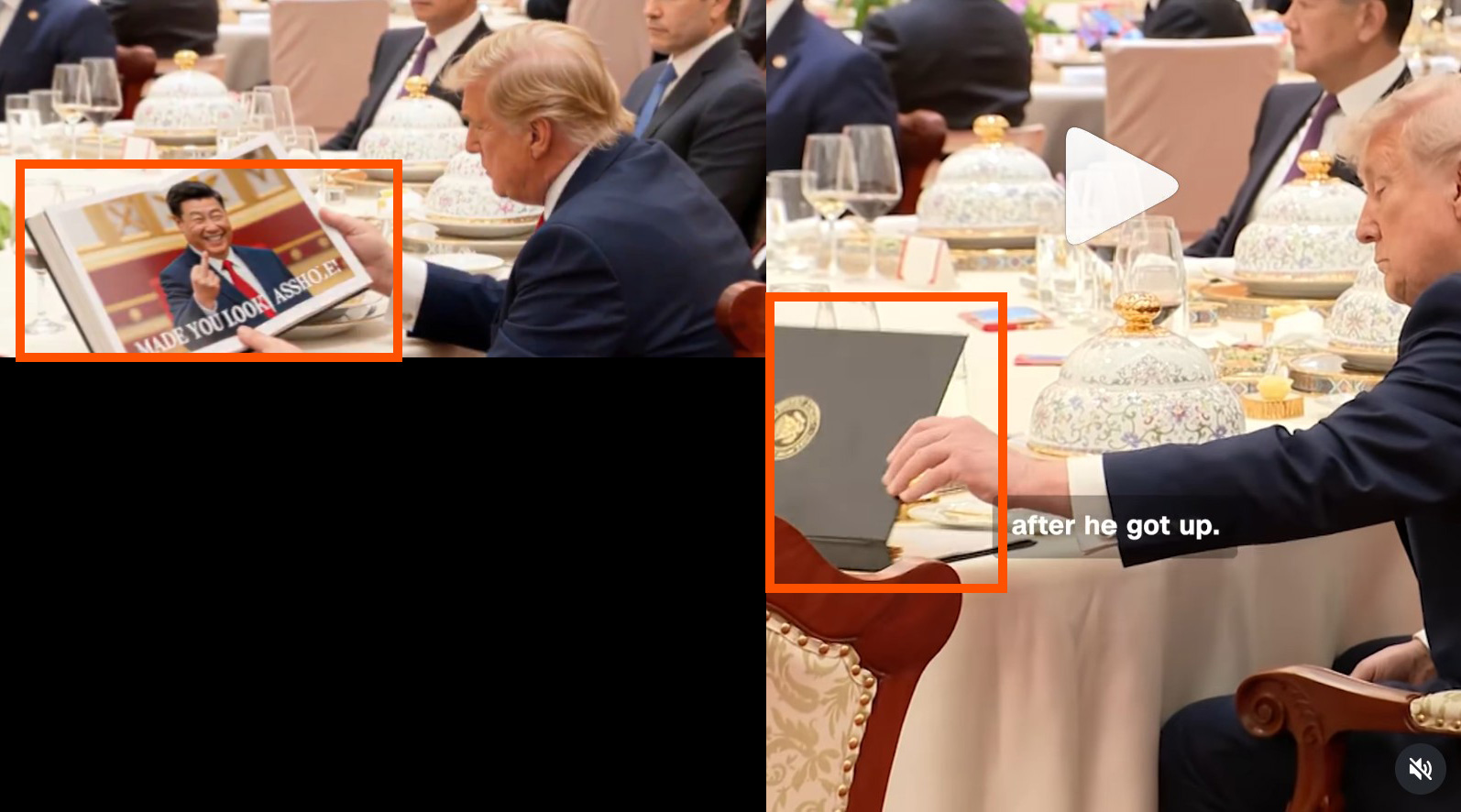
A comparison between the fake post (left) and the real footage from CNN (right) shows clear differences.
The Trump-peeking-at-Xi’s notes video is AI-generated
In addition, when selected frames from the video in question were analyzed on Hive Moderation, the clip was found to have a 78.9-percent probability of being AI-generated.
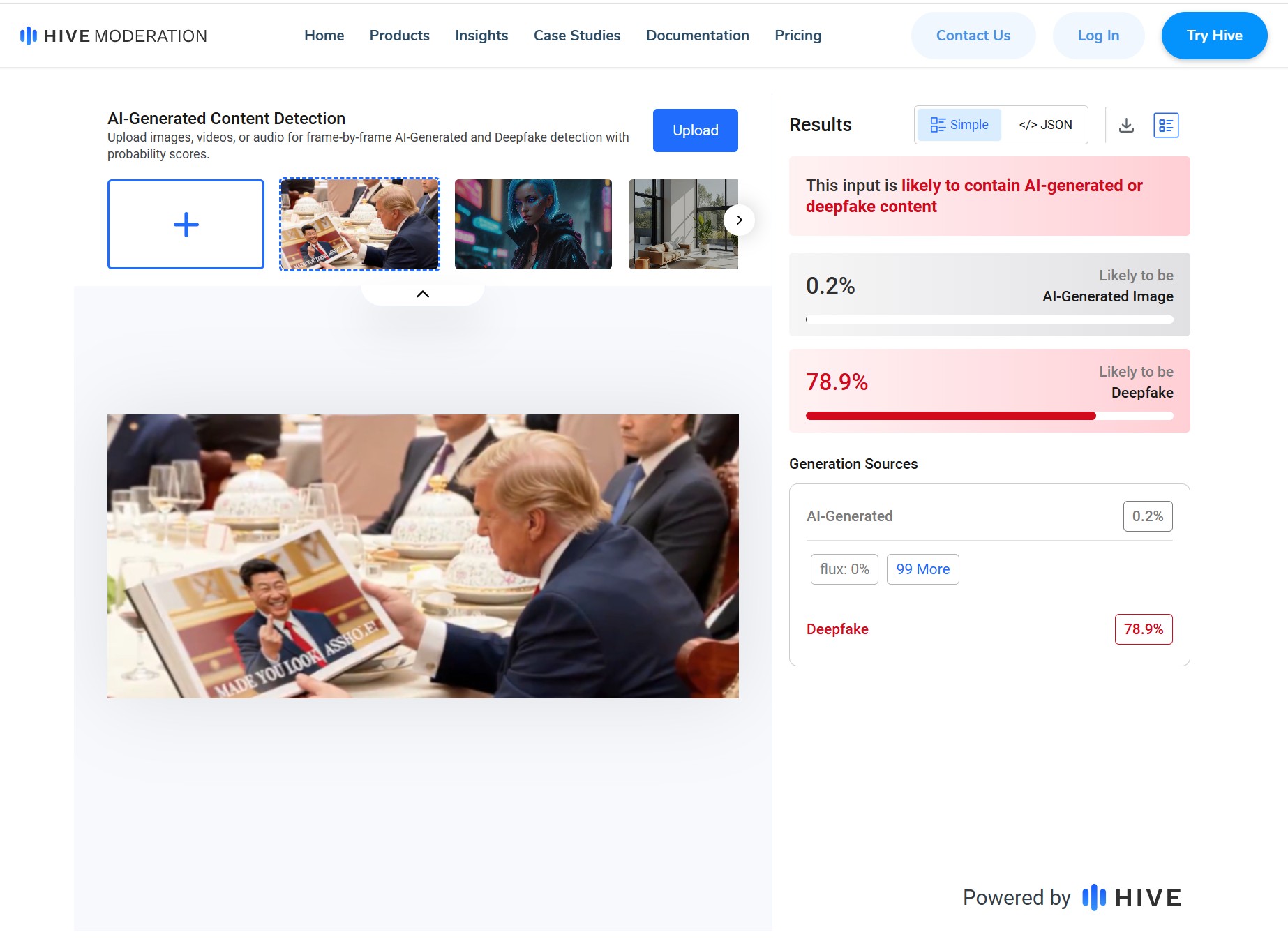
The investigation process via Hive Moderation.
What happened during President Trump’s visit to China?
President Trump traveled to the People’s Republic of China for his first official visit in nearly 10 years, where he was formally welcomed in Beijing and accompanied by a delegation of leading global business figures such as Jensen Huang and Elon Musk.
The two-day meeting with President Xi Jinping included both ceremonial events and key diplomatic negotiations. The U.S. administration aimed to encourage China to open its markets further to American businesses, including discussions on potential future Boeing aircraft purchase agreements.
At the same time, the talks also covered international security issues, including arms sales to Taiwan and rising tensions in Iran. The U.S. side expressed expectations for China to help ease tensions, particularly the situation in the Strait of Hormuz, which has had significant impacts on the global economy and international shipping routes, amid increasing maritime security measures by various countries.
The international community closely followed the meeting between the two leaders, hoping it would contribute to reducing tensions and promoting global cooperation for peace.
What is the truth?
Thai PBS Verify investigated the clip claiming that Mr. Trump was secretly looking at Mr. Xi’s personal documents during a dinner gala. The video in question is not real.
The original footage is a real event showing a meal between the two leaders. However, the content in the clip has been altered and misrepresented using AI techniques.
In the authentic footage, the documents on the table belong to President Trump himself, not Xi Jinping as claimed in the fake video. AI manipulation and editing were used to change or insert visual details, creating the false impression that sensitive information was being secretly viewed.
Additionally, a close examination of the video together with AI detection tools showed that parts of the clip were edited or artificially generated, leading to misleading visual interpretations and public misunderstanding.
Verification Process
- Google Lens verification: The video clip was matched with a CNN report titled “A viral clip from Beijing sparked online speculation that President Donald Trump was trying to sneak a look at Chinese President Xi Jinping’s notes. But a closer look at the footage tells a different story,” published on May 16, 2026.
- AI content detection: Selected frames from the video were analyzed on Hive Moderation. The results showed that the clip had a 78.9-percent probability of being AI-generated.
Potential impacts of the fake video
- Distortion of international political understanding: It can mislead the public about the behavior of world leaders and potentially affect perceptions of international relations.
- Damage to the credibility of public figures: Fake content can create negative portrayals, unfairly undermining the reputation and credibility of leaders or important individuals.
- Erosion of trust in media and information: As AI-generated images and videos become more realistic, it becomes harder for people to distinguish truth from falsehood, reducing overall trust in media and factual reporting.
- Rapid spread of false information on social media: Viral-style content enables misinformation to circulate quickly and widely before it can be properly verified.
- Increased social confusion and conflict: Fake narratives about global leaders can be used to manipulate public opinion or deepen ideological divisions.
- Greater challenges for fact-checking: Deepfake technology makes it increasingly difficult to distinguish between real and fabricated content, placing additional pressure on media organizations and fact-checkers.
What to do with this misinformation?
- Do not immediately believe or share: Be cautious of content that is shocking or highly emotional, as this is often a characteristic of fake news.
- Check the source: Verify whether the information comes from mainstream media, official organizations, or credible accounts. If the source is unclear, it should be treated with caution.
- Cross-check with multiple sources: Compare information from reliable news outlets to see whether the story is consistently reported.
- Observe details in images/videos: Look for abnormalities in lighting, shadows, motion, or audio, which may indicate AI-generated content or deepfakes.