Image of Donald Trump collapsing on stage found to be AI-generated
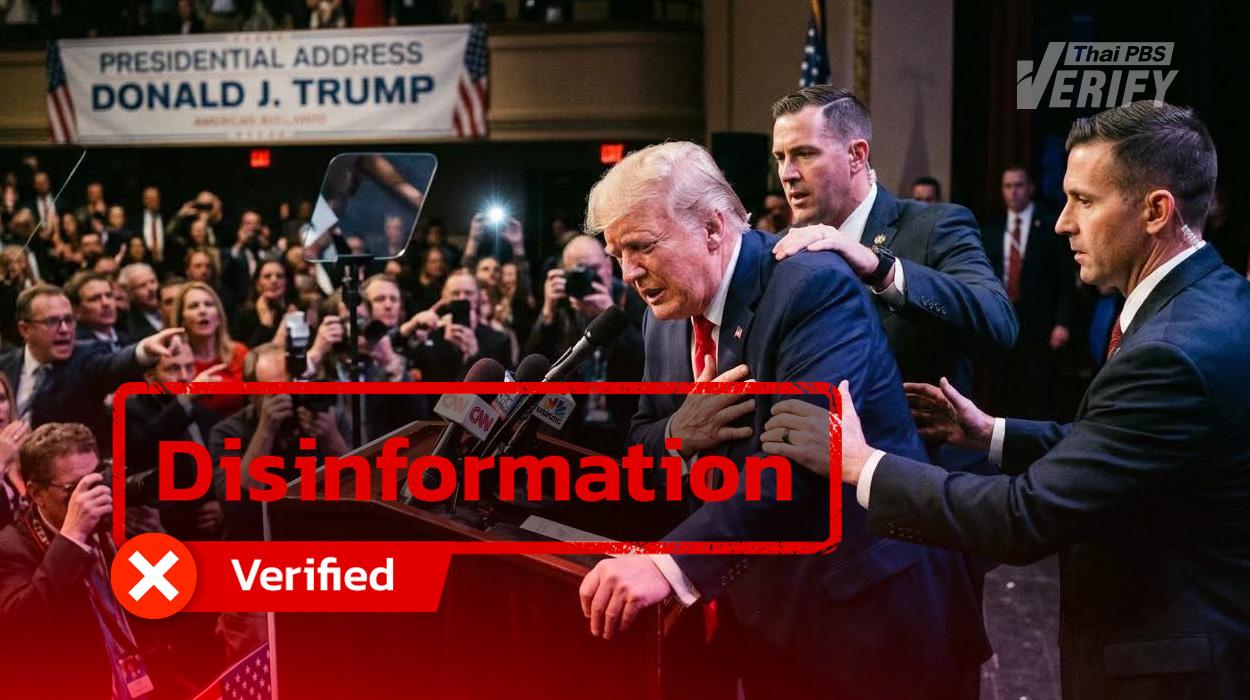
Thai PBS Verify has found that in fact, the image was AI-generated. No mainstream media or any credible news sources have reported the alleged incident.
Thai PBS Verify found the piece of disinformation on: X
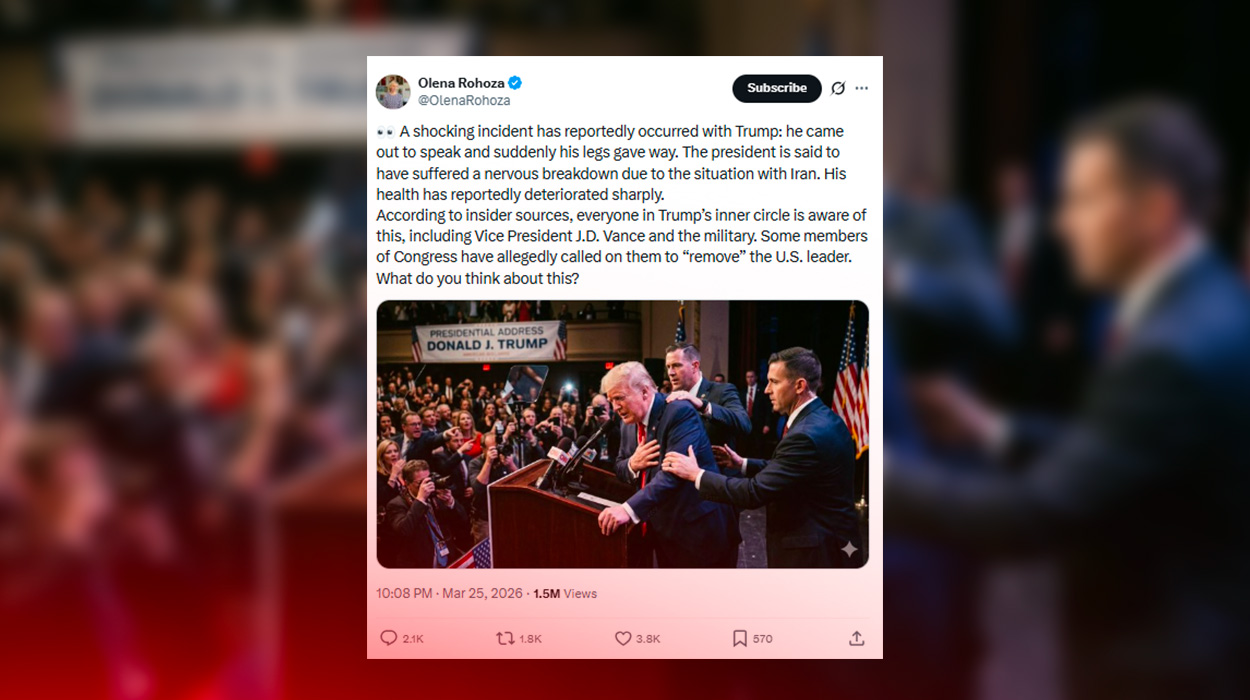
The fake image of Mr. Trump, U.S. President, collapsing while speaking on a public stage.
The image in question showed U.S. President Donald Trump had collapsed while speaking on a public stage. The post also stated that this was caused by his neurological condition related to tensions with Iran.
The caption reads:
A shocking incident has reportedly occurred with Trump: he came out to speak and suddenly his legs gave way. The president is said to have suffered a nervous breakdown due to the situation with Iran. His health has reportedly deteriorated sharply.
According to insider sources, everyone in Trump’s inner circle is aware of this, including Vice President J.D. Vance and the military. Some members of Congress have allegedly called on them to “remove” the U.S. leader.
What do you think about this?
The Trump image in question is not that of a real event
When Thai PBS Verify examined the Trump image in question with Google Lens, no matching reports from any international news agencies were found, nor could the original source of the picture be clearly identified.
At the same time, the “About this image” section on Google provides additional information, indicating that it is AI-generated.
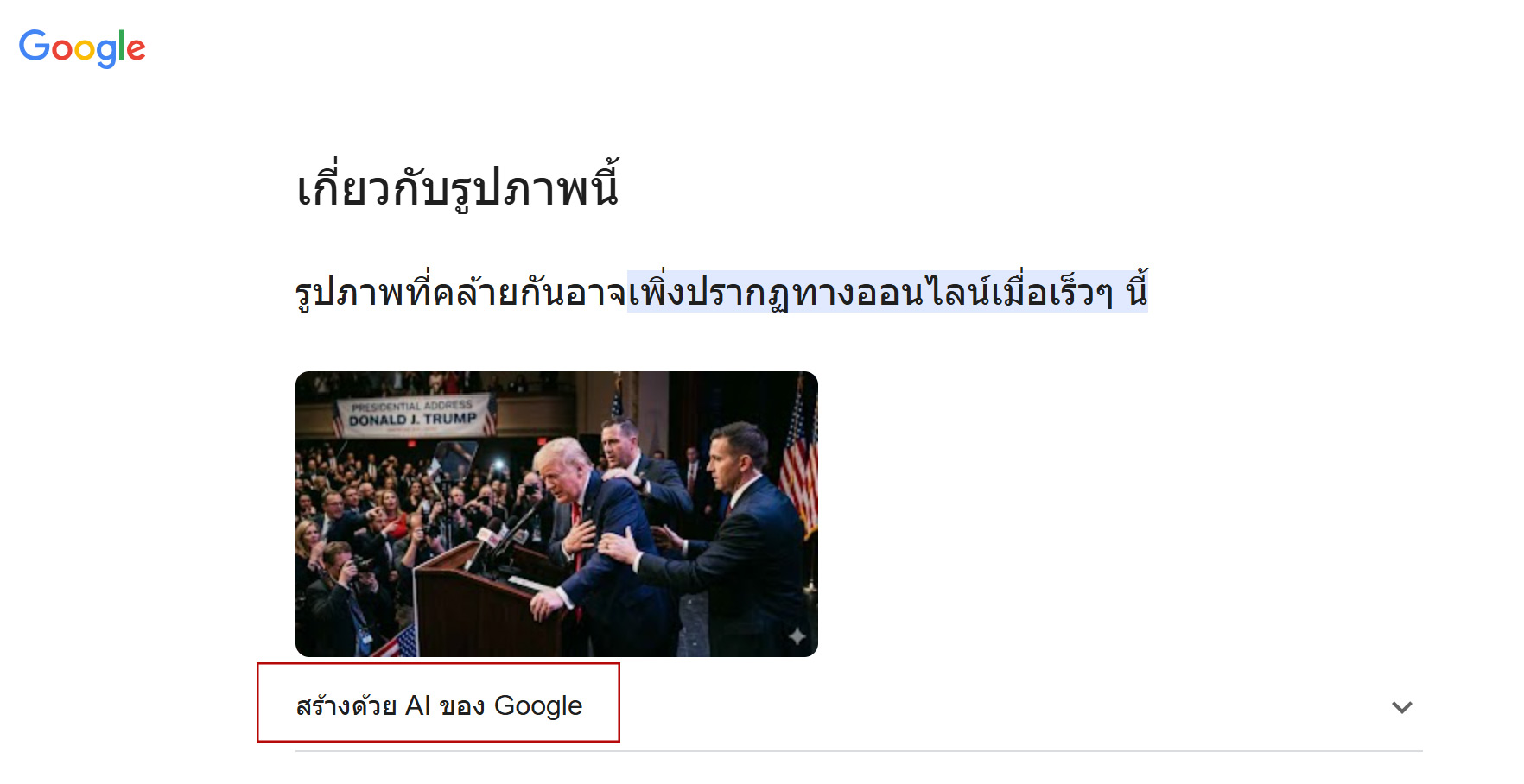
It points out that the image is AI-generated by Google tools.
In addition, when the image was analyzed by Hive Moderation, the results revealed a 99.9% probability of the image being AI-generated.
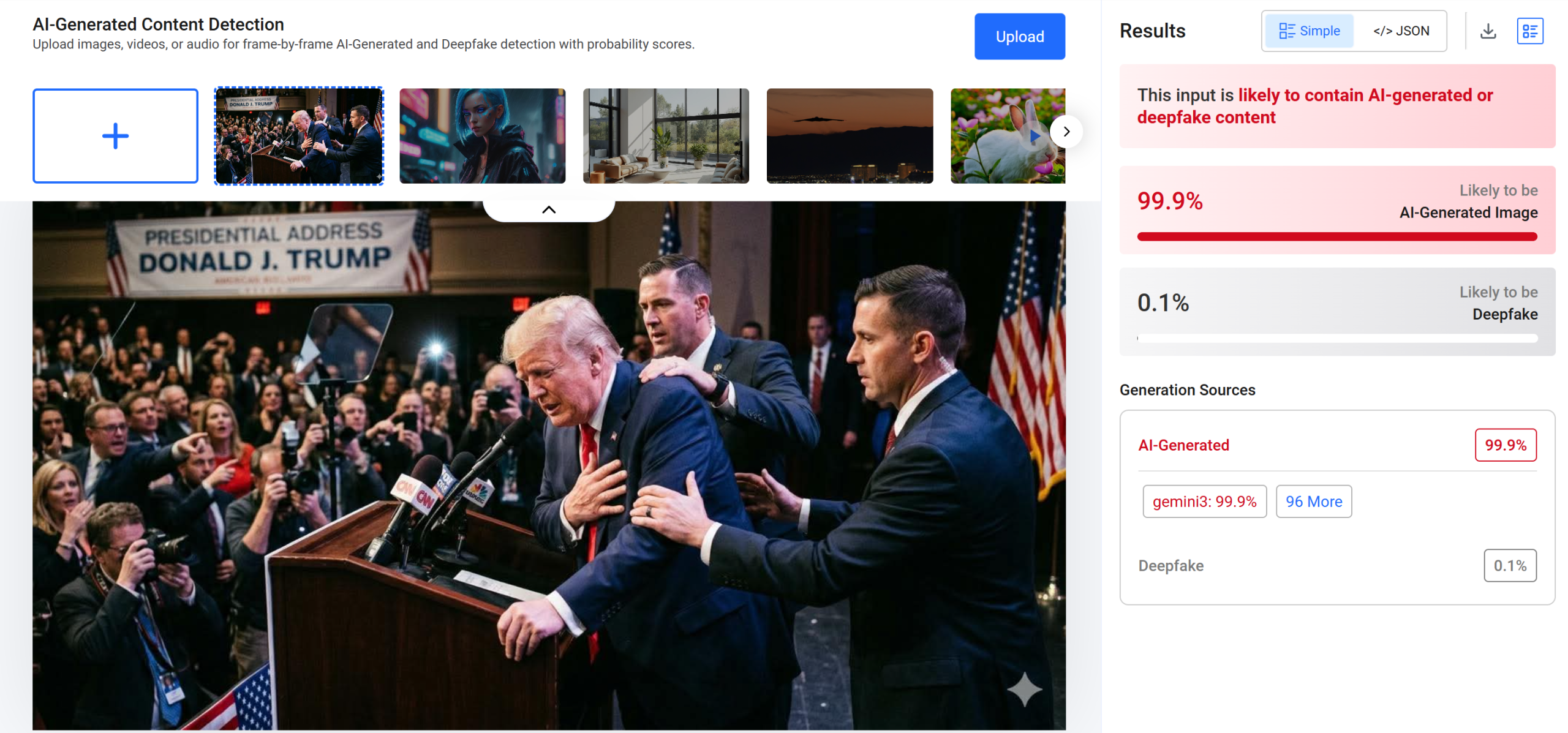
A screenshot of Hive Moderation AI detection results.
Mr. Sathaphon Phatthanakhuha, CEO of Guardian AI, confirmed to Thai PBS Verify that the image is likely to be AI-generated.
“One observation is the name of the news outlet on the microphone shown in the image, which seems similar to NBC News. However, it is misspelled, unreadable and meaningless, hence an irregularity.”
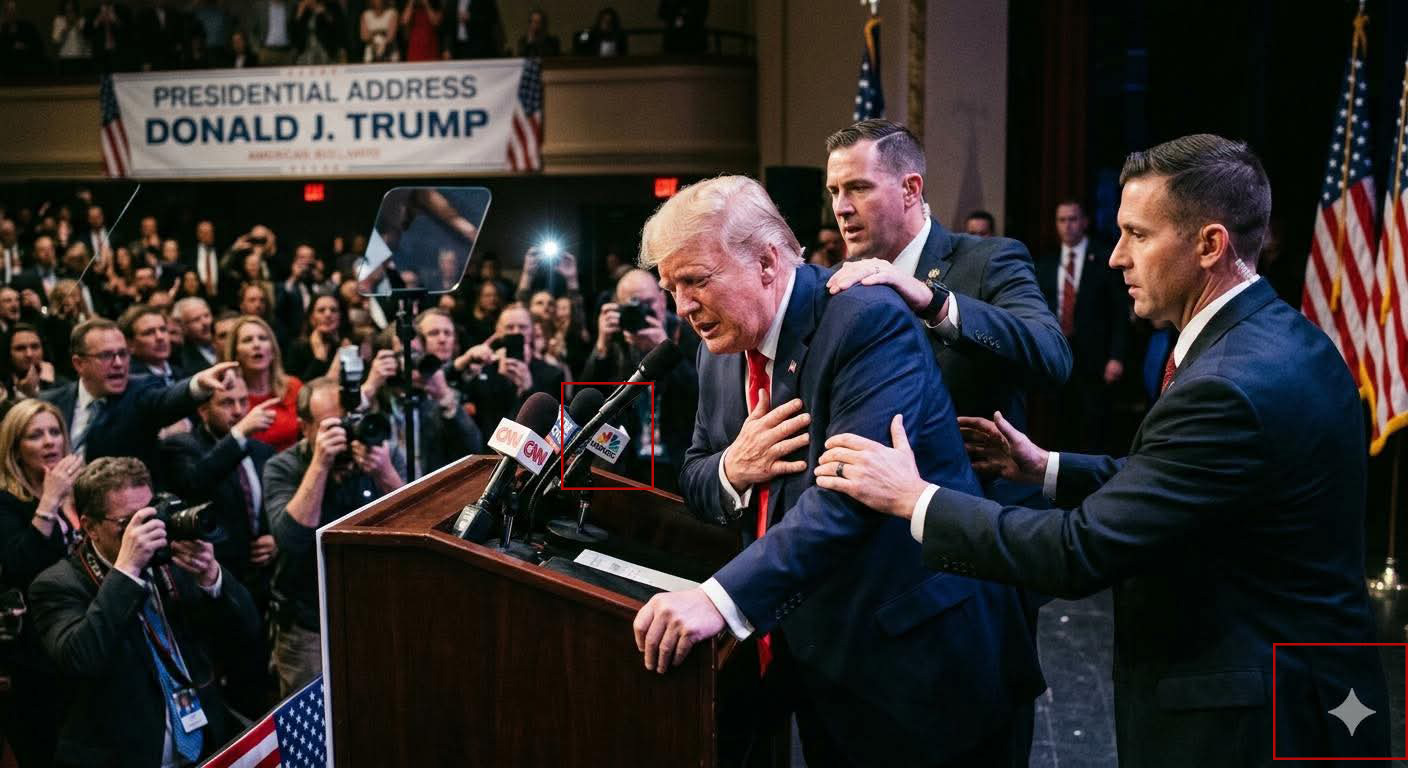
In addition to the suspicious NBC News logo, a Google Gemini watermark is visible at the bottom of the image. It serves as an indication that the image may have been AI-generated.
“Secondly, the reactions of the reporters in the image appear overly similar. Upon observation, their facial expressions and body language look almost identical, as if they were generated in the same pattern. In reality, when an unexpected incident occurs, individuals would naturally display a variety of reactions, such as shock, confusion or different movements,” Mr. Sathaphon added.
“Third, if this were a major incident involving the President of the United States collapsing during a press event, the news would spread rapidly across all social media platforms and be reported by major news outlets worldwide at around the same time. However, in this case, no such widespread coverage was found,” he concluded.
How do the media report Trump’s health?
As for reports on Donald Trump’s health, a keyword search found no information in any mainstream media indicating that he had neurological issues or experienced a “nervous breakdown” as claimed.
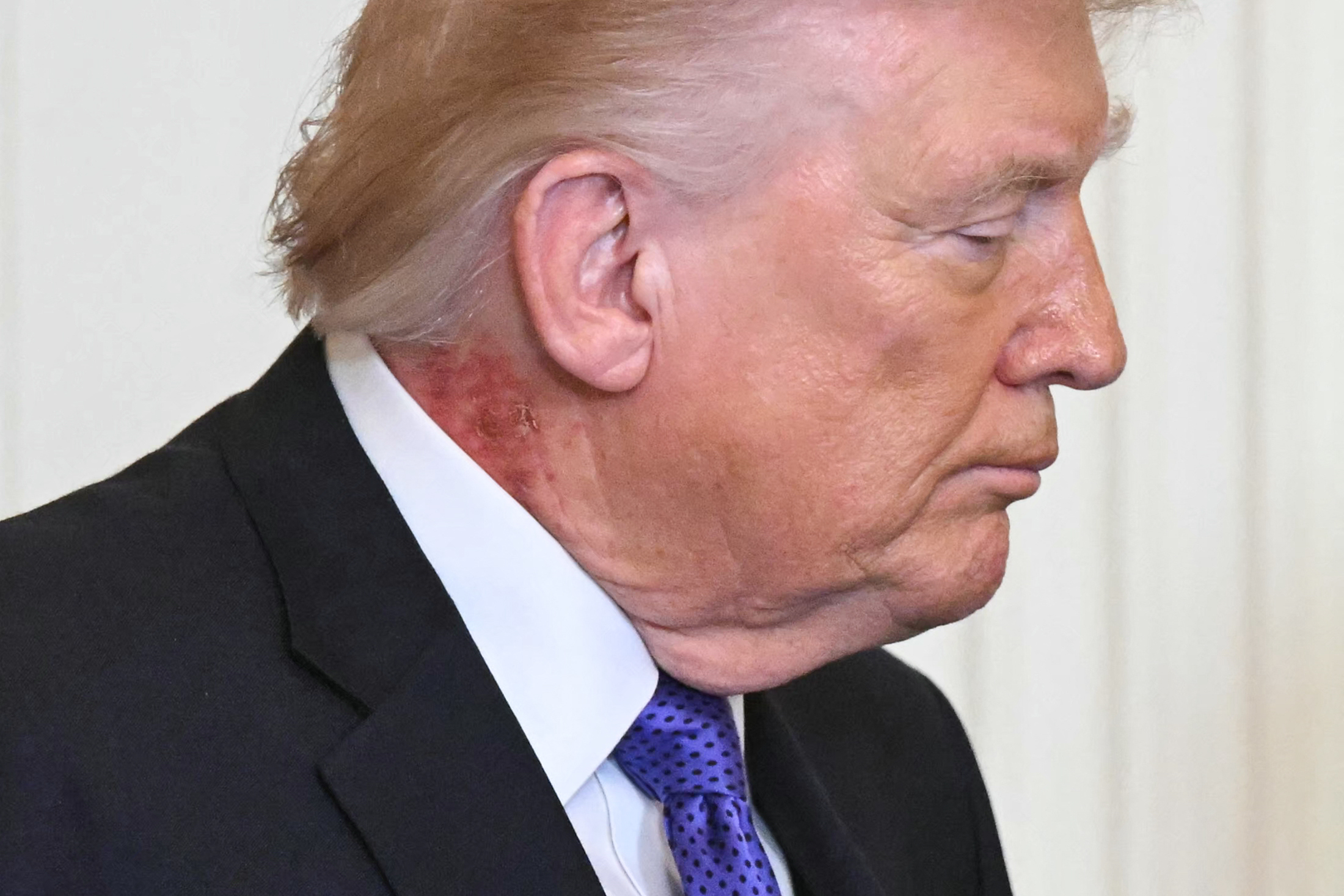
A photograph showing a rash on Mr Trump’s neck was taken on March 2, 2026 (Saul Loeb/AFP).
Previously, CNN reported on the rash on Mr. Trump’s neck, stating that his physician said President Trump had applied a common topical cream to the right side of his neck to treat the skin and prevent deterioration. He had been using the cream for one week, and the redness was expected to remain for a few more weeks.
In addition, there were reports that Trump has experienced occasional bruising on his hands, which was attributed to the use of aspirin at a higher dose than recommended by his doctor. In 2025, there were also reports that Trump underwent a cardiovascular health examination, and his physician stated that Trump was in good health.
What is the truth?
An image of Donald Trump collapsing during a public speech, allegedly caused by his neurological condition related to tensions with Iran, was AI-generated. In addition, no reports of the image or the incident appeared in mainstream media or from any credible news sources.
Verification Process
- Image check with Google Lens: No matching results were found from any international news reports, nor could a clear source of the image be identified. At the same time, the “About this image” section on Google indicated that the image is likely to have been AI-generated.
- AI image detection tool: Analysis from Hive Moderation suggested a 99.9% probability of the image having been AI-generated.
- Expert consultation on AI: Mr. Sathaphon Phatthanakhuha, CEO of Guardian AI, confirmed to Thai PBS Verify that the image is likely AI-generated.
Impacts of disinformation
- Misleading the public about an emergency involving a world’s leader: Claims that Mr. Trump collapsed on stage might lead the public to believe that a serious incident took place, even though it never happened.
- Causing unnecessary panic: False news can spread rapidly, especially content that triggers emotional reactions, resulting in widespread sharing before the facts are verified.
- Reducing overall trust in information: When audiences encounter false news, they may begin to distrust both real and fake news, which can distort overall information consumption.
What to do with this misinformation?
- Check the source before believing or sharing: Verify whether the post comes from credible news organizations such as CNN, BBC, AFP or Reuters.
- Assess the plausibility of the content: Claims of highly serious or emergency events that are not reported by major news outlets are a warning sign of potential fake news.
- Verify images or videos using tools: Use tools such as Google Lens or AI detection platforms like Hive Moderation to check whether the content is real or AI-generated.
- Cross-check multiple sources: Look for the same news from several major news organizations or official sources to confirm its accuracy.
- Be cautious about sharing and inform others: If the information is found to be false, avoid sharing it further and help warn others or provide fact-check information to prevent its spread.
Translation edited by: Peerachai Pasutan

Related Content