An investigation revealed that the viral image depicting ‘migrant women crowding a hospital maternity ward’ was created using AI.

Thai PBS Verify found the source of the fake image to be: Threads.

Following a viral post alleging that hospitals are packed with foreign women waiting to give birth—and that foreign newborns are now outnumbering Thai newborns
Thai PBS Verify discovered a post by a Threads user named ‘klangkie’ showcasing an image of foreign nationals in a hospital, captioned with the question: ‘For how much longer can we still call this place… Thailand?
While the birth rate of Thai citizens continues its steady decline, births among foreign residents are soaring exponentially. (If you go to a prenatal clinic near Mahachai, you’ll understand.) It raises a troubling question: who will be left to hear our national anthem? Look at the picture for the answer.
Since its publication on July 7, 2026, the post has accumulated over 293,000 views and has been shared more than 257 times.
Is the image showing migrant workers authentic?
Thai PBS Verify magnified the image using the InVID-WeVerify verification tool and noted that the women depicted shared strikingly identical facial features.
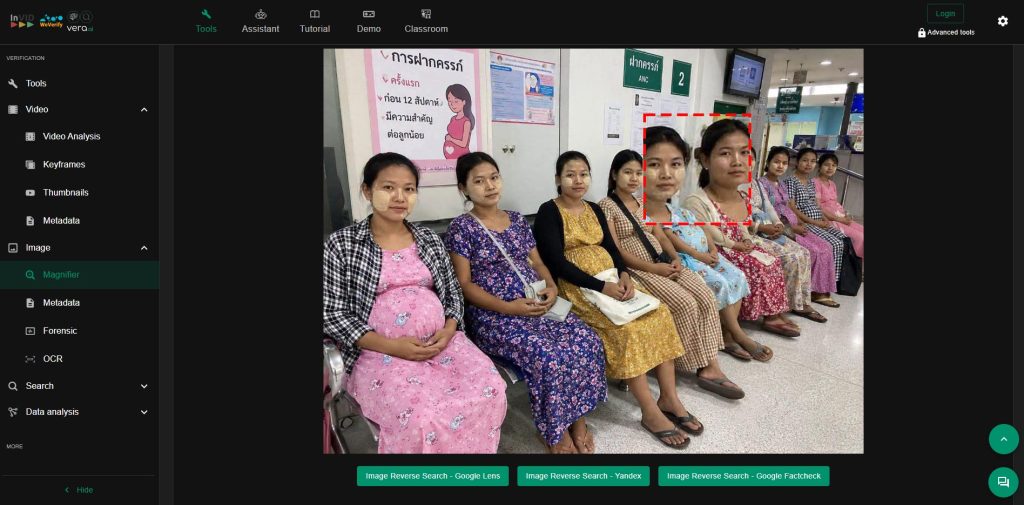
The photo zoomed in using the InVID-WeVerify image verification toolkit
Furthermore, zooming in on the text on the sign revealed that the language cannot be determined. These findings collectively indicate that the image was synthesized by AI.
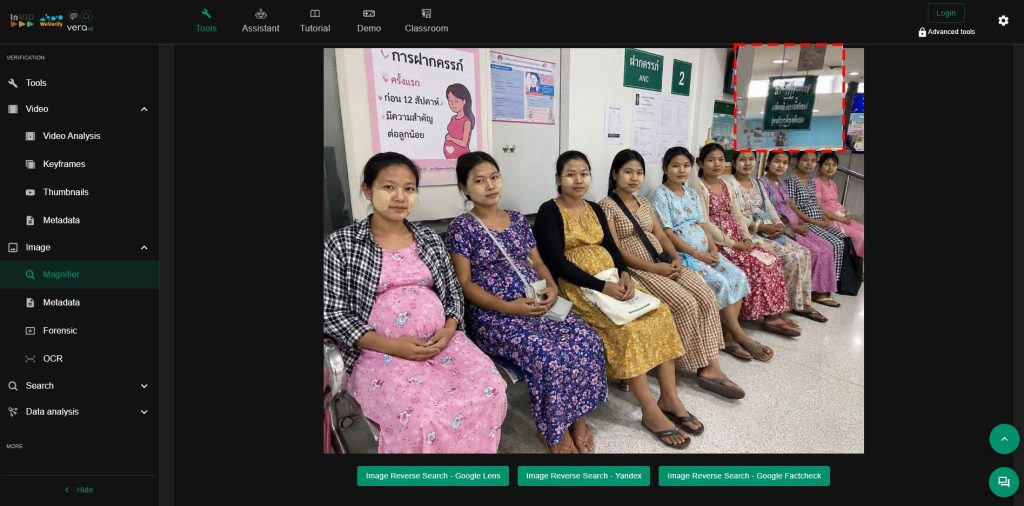
The text on the signage within the image was found to be in an unidentifiable language.
Meanwhile, image analysis using AI detection tools—namely Hive Moderation and AI or Not—both indicated that the image was likely generated by AI. Hive Moderation returned a probability of 41.8%, whereas AI or Not found a 96% likelihood that the image was created by AI.
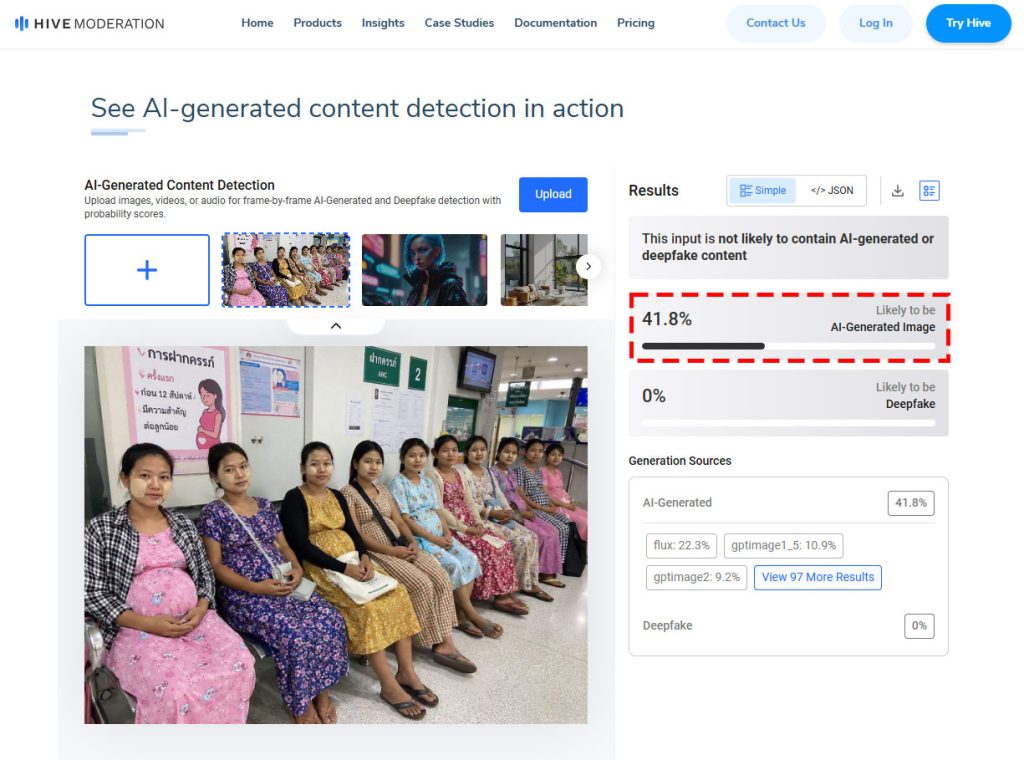
Inspection results by Hive Moderation
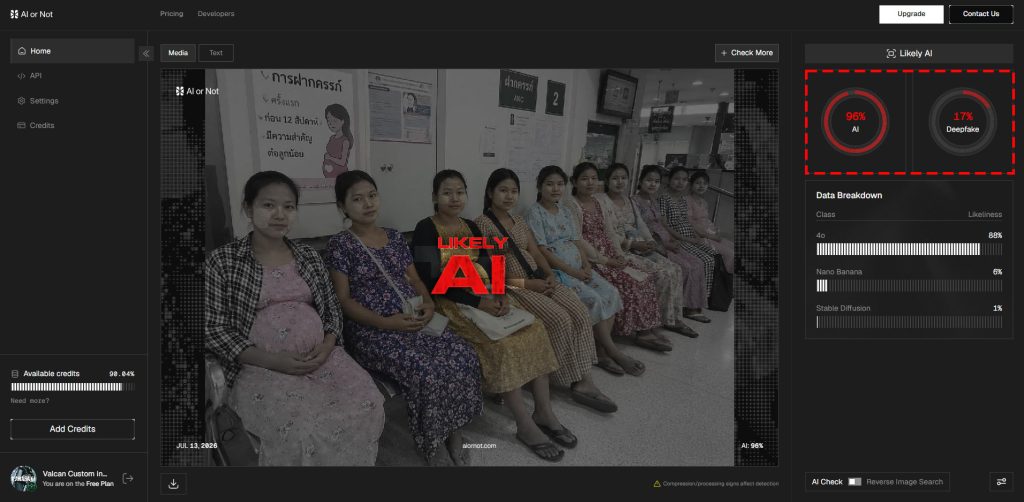
Analysis results from AI or Not
Is the Thai population really shrinking ?
Official figures from the Bureau of Registration Administration, Department of Provincial Administration, Ministry of Interior, indicate that Thailand registered merely 416,574 births in 2025—a decrease of nearly 50,000 from 2024. If current trajectories hold, live births could decline below 400,000 in 2026. Coupled with 559,684 recorded deaths, Thailand experienced its fifth consecutive year of negative population growth.
With Thailand’s total population standing at around 65.8 million, the Institute for Population and Social Research, Mahidol University, forecasts that should the total fertility rate (TFR) keep falling toward South Korea’s rate of 0.7 within 10 years, the national population will drop to 61.9 million by 2035. Concurrently, citizens aged 60 and over will exceed 28% of the population, while the labor force will shrink by approximately 3.4 million people.
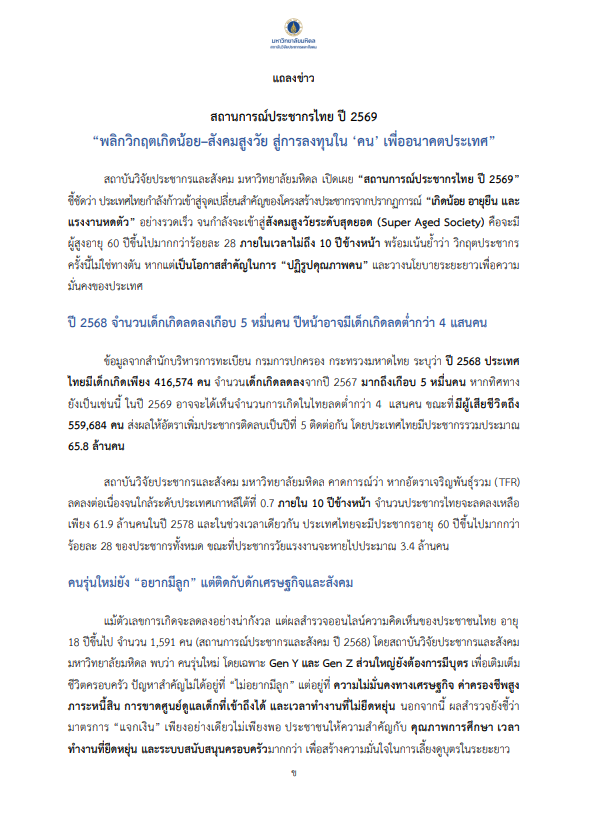
Data on the number of births in 2025
Do births among foreign nationals actually surpass those of Thai citizens ?
A keyword search revealed no official records documenting the births of migrant children in Thailand. The only available data was found in a report by Assoc. Prof. Dr. Chalermpol Chamchan from the research project ‘Assessing the Situation of Migrant Children in Thailand and the Impact of COVID-19’ at Mahidol University’s Institute for Population and Social Research. Utilizing data from the Bureau of Registration Administration, his article, titled ‘A Positive Perspective on “Migrant Children” in an Era of Declining Thai Births,’ outlines the 2020 birth statistics for migrant children, stating that…
The year 2020 marked a historic low as annual births fell below 600,000 for the very first time. This represents roughly half the volume seen 40 to 50 years ago, when the nation saw 1 to 1.2 million newborns each year. Overall, total births in 2020 stood at 587,368.
Notably, the author employs the phrase ‘total births,’ which encompasses both Thai nationals and non-Thai citizens born in the country who successfully registered their births with the Bureau of Registration Administration. The question arises: of these approximately 600,000 newborns, roughly how many lacked Thai nationality? While 2020 data was unavailable to the author, in 2019, total births in Thailand amounted to 618,193.
The author’s findings show that this total comprises 21,269 children without Thai nationality and 596,924 Thai citizens. (Based on these figures, live births among Thai nationals had in fact dropped below 600,000 since 2019.)
The figure of roughly 20,000 non-Thai children born in 2019 is considerably lower than the author had anticipated.
However, this is hardly surprising, as the data accounts only for children born locally who successfully obtained birth registration. Looking back over the past decade, registered births among non-Thai children stood at approximately 7,000 in 2010. This figure rose steadily between 2010 and 2015, and in 2017, annual births of non-Thai children reached over 40,000—before dropping by half in 2019. What drove this decline remains an intriguing question worth exploring.
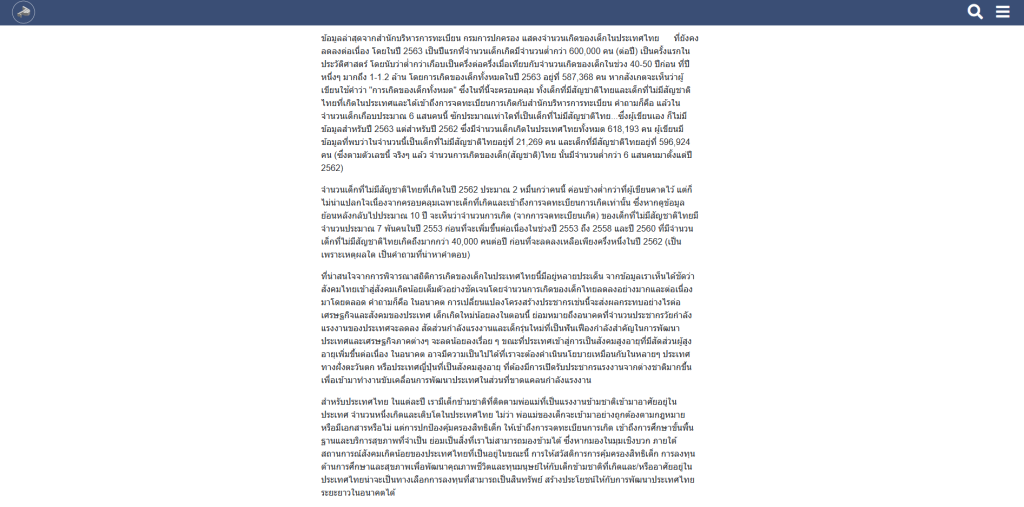
Mahidol University report on foreign child birth statistics in Thailand
Academics confirm that foreign newborns still number far fewer than Thai newborns.
We reached out to Assoc. Prof. Dr. Sakkarin Niyomsilpa, an expert in political economy and international relations, as well as a lecturer at Mahidol University’s Institute for Population and Social Research (IPSR). He told Thai PBS Verify: ‘I view this claim as purely fabricated, because on a national scale, the numbers remain far apart—even though Thai birth rates are steadily falling below 500,000, now hovering at around 400,000 per year.’
Although the birth rate has experienced a sustained decline below the mortality rate for two to three years, the total births among children of migrant workers in Thailand hover at only 40,000 to 50,000 per year. Comparatively, a tenfold margin persists between the two groups. Therefore, any scenario in which migrant birth figures surpass Thai birth figures in the near future remains out of the question.

Associate Professor Dr. Sakkarin Niyomsilpa, a specialist in political economy and international relations, and faculty member at the Institute for Population and Social Research (IPSR), Mahidol University
Nevertheless, in localized areas, migrant births could potentially surpass Thai births. This applies to provinces with heavy migrant concentrations, such as Samut Sakhon and Ranong. In Samut Sakhon in particular, migrant workers make up nearly half of the total population compared to Thai residents.
What are the main factors driving the decline in Thai birth rates?
Associate Professor Dr. Sakkarin identified three primary factors influencing the choice of Thai people to have fewer children, which can be categorized as follows:
- Economic Conditions and the Cost of Living: Over the past years, Thai GDP growth has been stagnant at a mere 2–3% per year. Compounding this issue, household debt is near global highs, averaging more than 200,000 Baht per person. With modest income growth squeezed by inflation and high costs, individuals cannot afford the investment of child-rearing. Raising a child through college is estimated to exceed 2 million Baht, forcing people to postpone having children or limit their family size.
- Demographic Structure and Female Labor Force Participation: Thailand currently exhibits a high female labor force participation rate. As women attain career advancement and higher professional status, they increasingly postpone marriage, thereby narrowing their reproductive window. Furthermore, approximately one-third of Thai women in their reproductive years choose to remain unmarried or without a family, which further diminishes the birth-giving demographic. Additionally, concerns regarding career progression lead some women to avoid taking prolonged maternity leave for childcare.
- Changing Values Among the Younger Generation: Younger generations place a strong emphasis on work-life balance, seeking a low-stress lifestyle with savings set aside for international travel. Raising a child means that for the first two to three years, they can barely go anywhere, as their time must be fully devoted to parenting. This shift in mindset has led many to forgo having children altogether, often opting for pets instead.
Wages and Labor Demand: What Draws Migrant Workers to Thailand ?
From the perspective of migration studies, welfare benefits for migrant workers—such as maternity rights and basic healthcare—are not the primary drivers attracting them to Thailand. Instead, the true magnet is ‘wages and the labor market.’ Migrants are naturally drawn to countries with vast job markets, high demand driven by labor shortages, and wages that surpass those in their home countries.
These are the main pull factors, and Thailand fits the bill perfectly. Meanwhile, maternity benefits and prenatal care serve merely as ‘secondary or supplementary factors.’ For those already living in the country, such benefits simply incentivize having children in Thailand. If we restrict these rights, instead of giving birth safely in hospitals, they will avoid the formal system and opt for unassisted births—such as using traditional midwives. In fact, cases have been documented where migrant workers did just that out of fear of authorities and a lack of legal status.
Hospital births enable the state to issue birth certificates to establish a child’s identity, giving us clear records of their numbers and whereabouts. Without a birth certificate, these children become undocumented and invisible, creating social problems down the line. Furthermore, epidemics do not discriminate by nationality or ethnicity. If this population lacks access to basic healthcare, an outbreak among them can easily spread to the local Thai population.
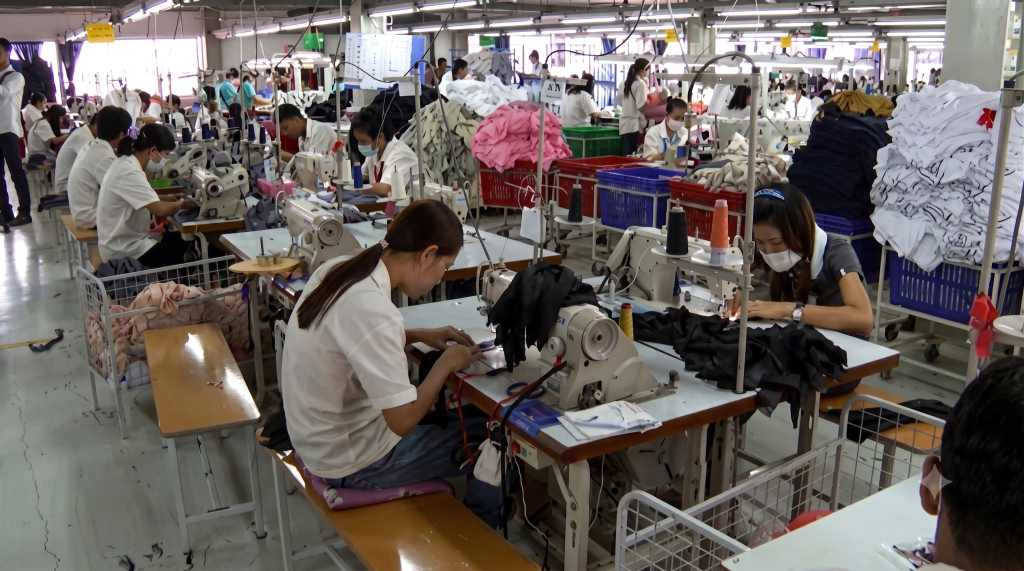
Figure
Children of Migrant Workers: Could They Replace Thailand’s Declining Population ?
Assoc. Prof. Dr. Sakkarin expressed that children of migrant workers born and raised in Thailand are the most accurate answer. Over the years, there has been a continuous push for a ‘replacement migration policy’ as the Thai population steadily shrinks. Without it, Thailand faces severe economic and social challenges in the future—such as labor shortages, an aging workforce, skyrocketing wages leading to a higher cost of living, and an unbearable financial burden on Thai citizens. Meanwhile,
By the laws of nature, migrant workers will inevitably make their way into Thailand. If we fail to welcome them through formal channels, they will arrive undocumented regardless. Crucially, migrant children raised in Thailand have a distinct edge over new arrivals. Having attended local schools and learned the language, they absorb Thai values and ways of thinking—allowing them to assimilate seamlessly into society. Nevertheless, despite legal provisions allowing them to apply for citizenship,
However, the process is extremely cumbersome and requires extensive verification. For instance, certain Cabinet resolutions stipulate that applicants must hold at least a bachelor’s degree. In reality, even the majority of native Thai youth do not finish university. For migrant children, completing a vocational certificate or diploma already demonstrates high competence and capability.
To address the plummeting birth rate crisis, eligibility requirements ought to be relaxed. Completing high school or vocational training, speaking Thai, and living in Thailand continuously for 5 to 10 years should be enough to qualify for citizenship—especially given that a 5-year residency is standard in many other nations.
Clear legal pathways ought to be established enabling existing residents to obtain lawful employment and progressively achieve Thai citizenship. This demographic shares friendships with Thai nationals, possesses Thai language proficiency, undergoes local schooling, and frequently adopts Thai names.
Granting them a clear and lawful pathway to naturalization will foster a sense of belonging, encouraging them to meaningfully contribute to the socio-economic advancement of Thailand.
What is the actual truth ?
- The illustration is 100% fake and AI-generated. A deep forensic analysis of the image depicting pregnant women—originally referenced by a Threads user—revealed anomalies, including illegible text on signs and repetitive, nearly identical facial features. This confirms that the image is not an authentic photograph taken in Thailand.
- Migrant Birth Rates Do Not Outpace Thais: Although Thailand’s native birth rate continues to drop—averaging around 400,000 per year—academic statistics clearly show that annual births among migrants stand at only about 40,000 to 50,000. This leaves a 10-to-1 gap between Thai and migrant newborn numbers. Claims that foreign births will overtake Thais in the near future are simply untrue—except in a few dense hotspots like Samut Sakhon or Ranong, where migrant-to-local ratios are already high.
- Reasons Behind Thailand’s Declining Birth Rate: Driven by three main factors:
- Economic Strain and High Household Debt: With average debt exceeding 200,000 Baht per capita, the cost of raising a child through university (over 2 million Baht) has become a heavy financial burden.
- Workforce Shifts Among Women: More Thai women are entering the workforce and marrying later, with one in three choosing to remain single.
- Evolving Values: Younger generations prioritize personal freedom and increasingly choose pets over parenthood.
- Maternity Benefits Do Not Serve as Primary Incentives: Migrant workers migrate to Thailand driven principally by ‘wage rates and labor market demand’ stemming from domestic labor shortages and higher compensation relative to their countries of origin. Prenatal benefits represent merely secondary considerations. Integrating migrant childbirth into the public healthcare system allows authorities to contain disease transmission to the Thai population and systematically record child identities, thereby mitigating future societal challenges.
Verification Process
1. Image Identity Verification
- Enlarging and analyzing the image from the Threads account ‘klangkie’ using the InVID-WeVerify tool revealed clear physical anomalies.
- Running the image through ‘AI or Not,’ a leading AI detection tool, yielded a 96% confidence score that it was generated by AI—with Hive Moderation detecting a 41.8% probability. These findings clearly identify the referenced photo as fabricated.
2. Verification of Demographic Statistics
- Department of Provincial Administration Statistics (2025): Thailand recorded just 416,574 births, down by nearly 50,000 from the previous year. This marks the fifth consecutive year of negative population growth.
- Expert Comparative Statistics: In an interview, Assoc. Prof. Dr. Sakkarin Niyomsilpa, an expert from Mahidol University’s Institute for Population and Social Research (IPSR), confirmed that registered births among migrant children stand at only 40,000 to 50,000 annually. This ratio remains far too wide for migrant births to overtake Thai births in the near future.
The Impact of This Misinformation
- Inciting Xenophobia and Extreme Nationalism: The post employs leading questions to evoke fear—exemplified by ‘To whom will we sing the national anthem?’—thus provoking paranoia and hostility toward migrant workers, despite their role as a vital cornerstone of Thailand’s industrial sector.
- Misrepresentation of Public Health Initiatives: Mischaracterizing maternal welfare as a incentive for foreign labor fertility may incite societal demands to revoke these public health provisions. Such a rollback would carry severe ramifications, driving migrants toward unregulated births via traditional birth attendants and heightening the danger of disease outbreaks re-emerging within Thai populations.
What to do with this misinformation?
- Checking the Realism of Illustrative Images: AI generated images used by scammers or bad actors to stir up outrage often feature unnaturally smooth skin, cloned-looking eyes and faces, and blurred, unreadable text on background signs that doesn’t belong to any real language.
- Viewing Migrant Children as Opportunity Over Fear: From a demographic perspective, academics suggest that Thailand’s shrinking birth rate will trigger a severe labor shortage. Migrant children born and raised here—who speak Thai, attend local schools, and share Thai social values—represent a vital opportunity to advance a ‘Replacement Migration Policy.’ Easing citizenship criteria, such as requiring a high school diploma or vocational degree alongside 5 to 10 years of continuous residence, would embrace them as citizens driving the nation forward, rather than pushing them away.
- Verify Before You Share: Should you encounter alarmist posts concerning ethnicity or demographic statistics lacking verifiable sources, please refrain from sharing. Submit the content to Thai PBS Verify for factual investigation, and join us in preventing social polarization.