F-16 Clip Bombing Building in Cambodia Found to Be AI-Generated
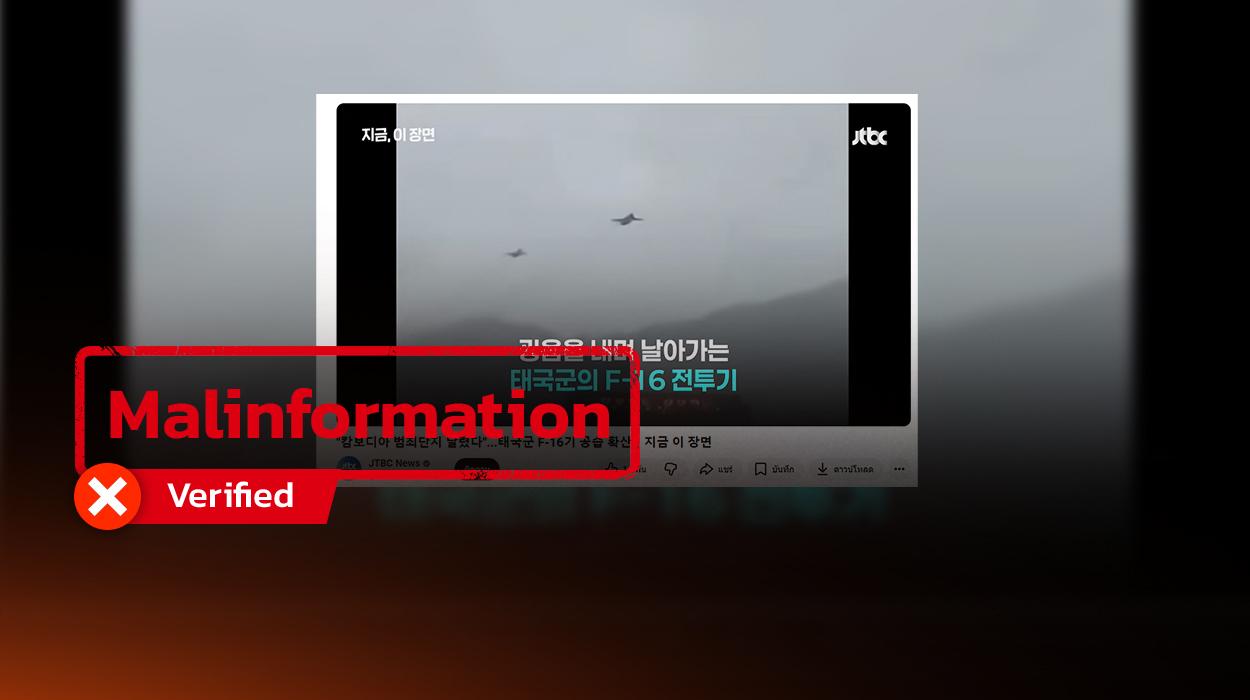
Thai PBS Verify found the source of the information from: YouTube
Thai PBS Verify found a clip claiming that Thailand used F-16 fighter jets to bomb a building in Cambodia. The clip appeared on South Korean media outlet JTBC News as part of an image file compiling various events used to accompany news coverage. It was broadcast on December 11, 2025, with the clip appearing at 0.00–0.07 seconds.
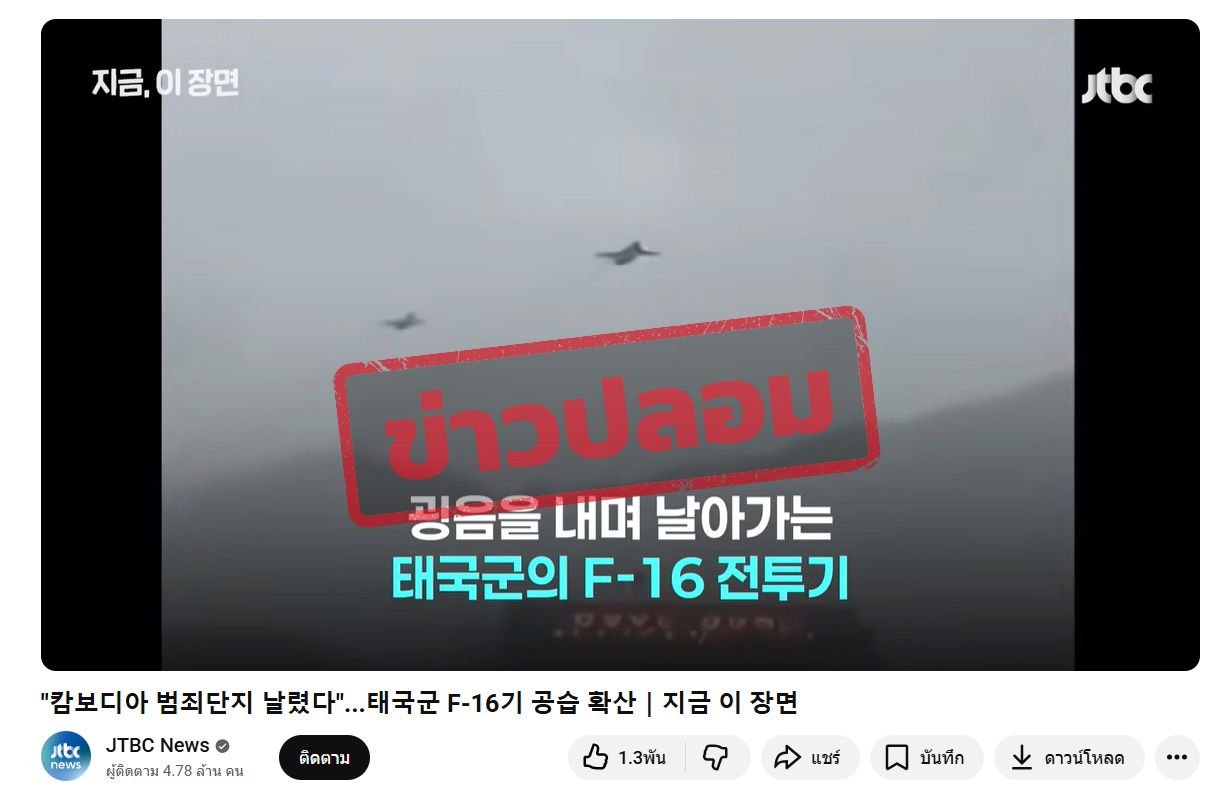
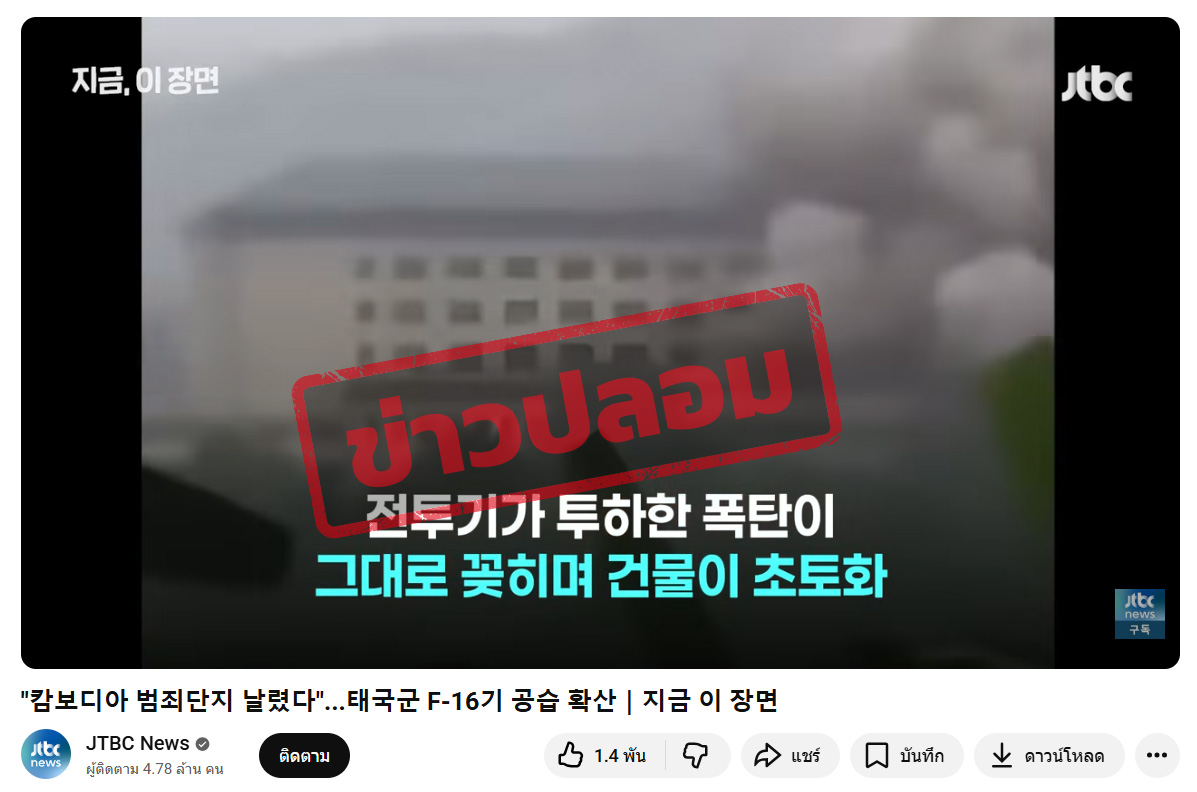
Along with the headline stating:
“보디아 범죄단지 날렸다“… 태국군 F-16기 공습 확산”
“Cambodian criminal gangs wiped out… Thai F-16 airstrikes expand”
The description in the video clip from 0.00–0.07 seconds states:
“굉음을 내며 날아가는 태국군의 F-16 전투기”
“전투기가 투하한 폭탄이 그대로 꽂히며 건물이 초토화”
“Thai military F-16 fighter jets flying past with a thunderous roar”
“Bombs dropped by the fighter jet directly hit the target, reducing the building to rubble”
In addition, the clip also appeared on the X application, with Korean-language text stating:
속보🇹🇭🇰🇭폭격
태국, 캄보디아 폭격중
“Breaking news 🇹🇭🇰🇭 airstrike
Thailand bombing Cambodia”
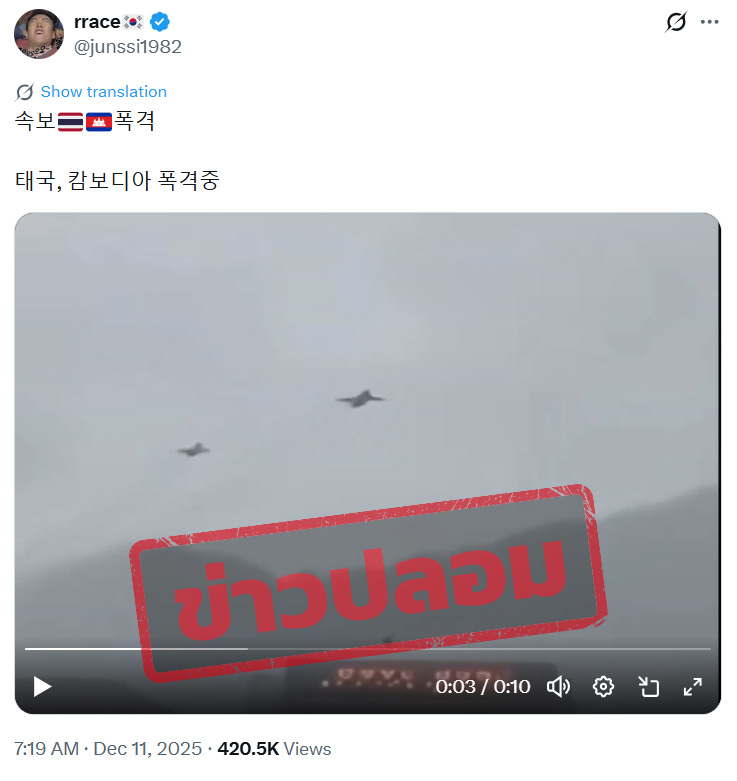
A post claiming that Thailand used F-16 fighter jets to attack a building in Cambodia was
published on December 11, 2025, and recorded 443,600 views.
Meanwhile, reports of clashes along the Thai–Cambodian border began on December 7, 2025, in the Phu Pha Lek–Phlan Hin Paet Kon area. On December 8, 2025, Maj. Gen. Winthai Suvaree, spokesperson for the Royal Thai Army, issued a statement saying that Thai authorities had begun air operations in response, using F-16 fighter jets and focusing on military targets, weapons fire support bases, and drone bases.
Was the clip showing a real event?
When the video clip was broken into keyframes using the InVID-WeVerify program and some images were searched via Google Lens, the results matched a clip from a TikTok user account, which stated that the video was created using AI. However, when rechecking the TikTok account, the video had already been deleted.
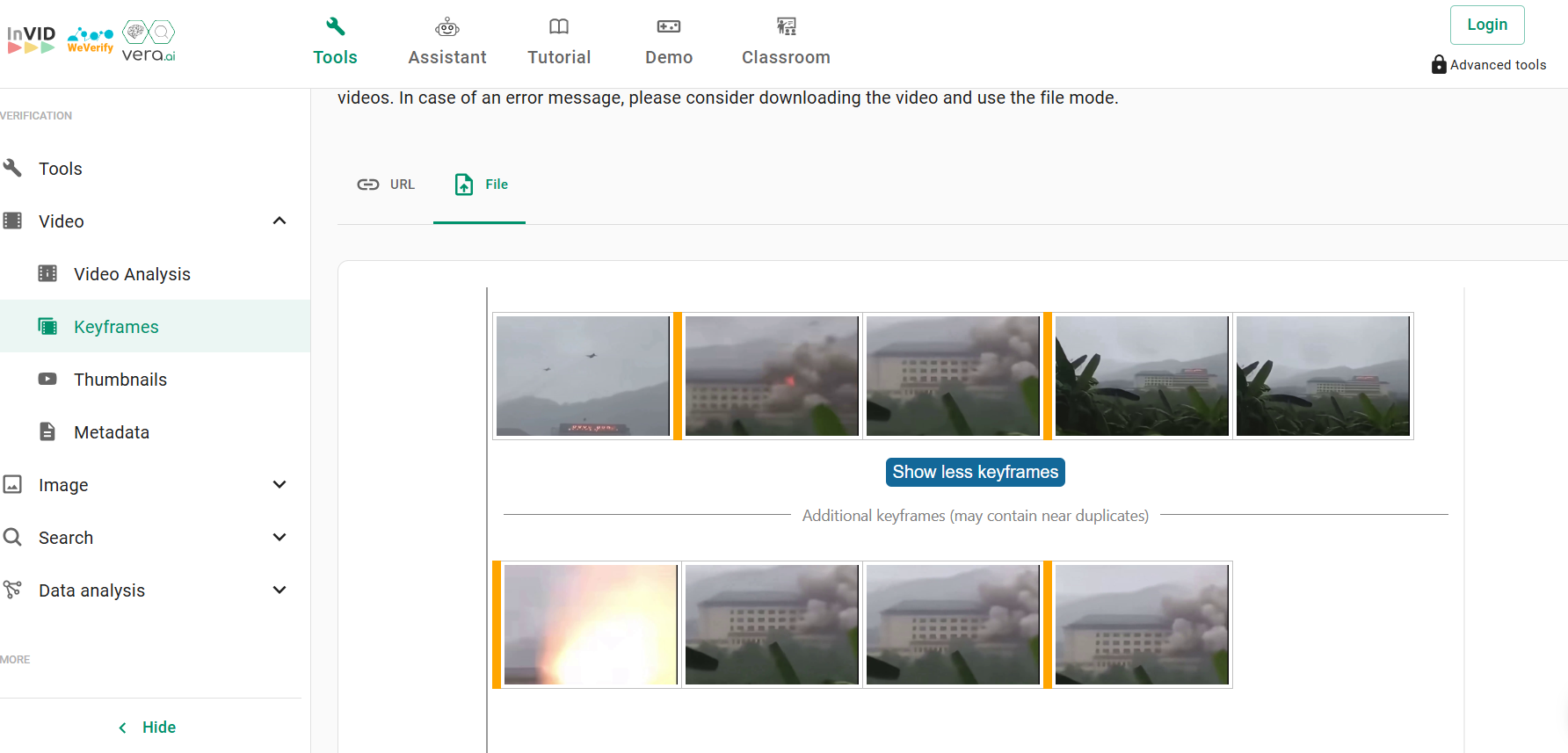
extracting keyframes using the InVID-WeVerify program
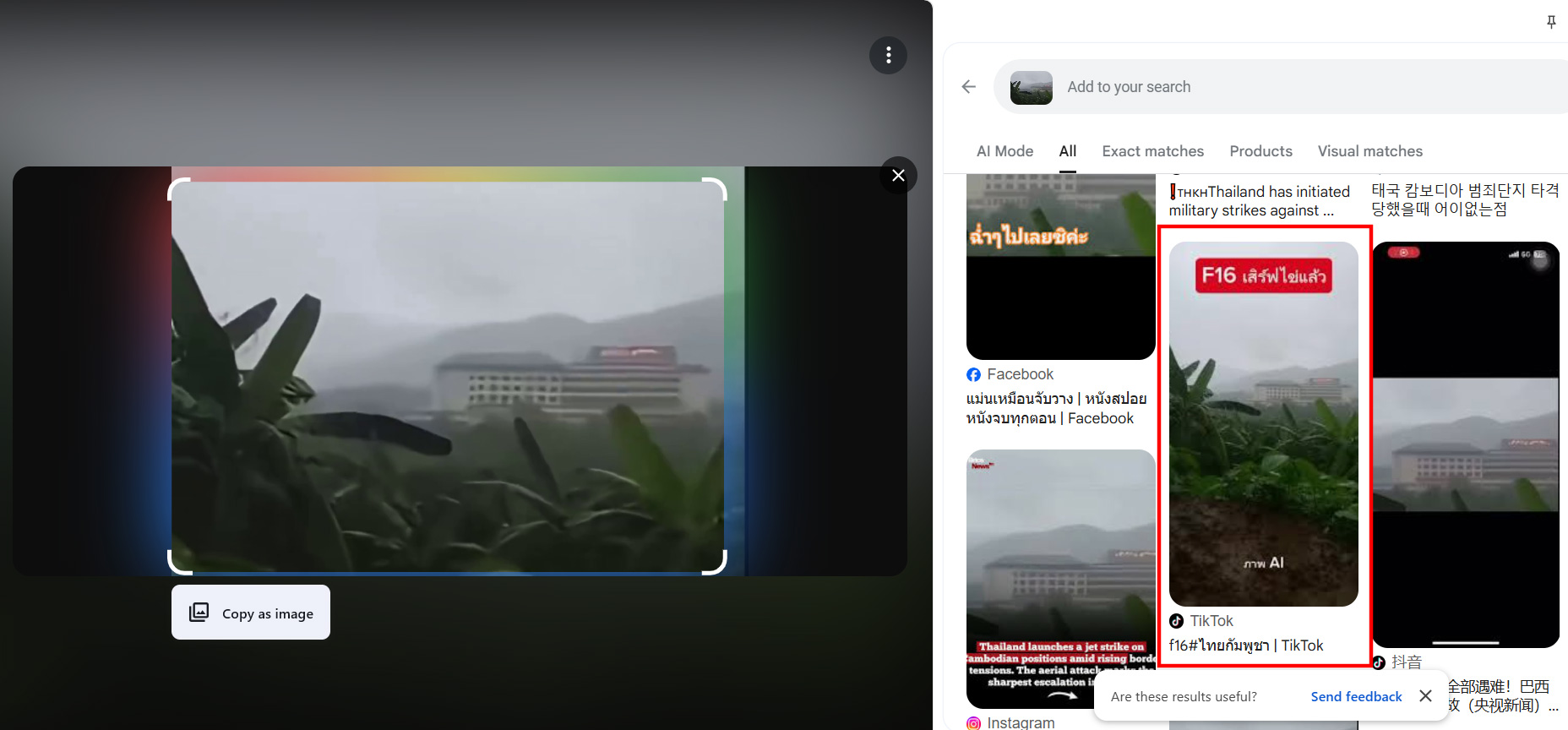
When some of the images were searched using Google Lens, they matched a clip from a TikTok user account, which stated that the video was created using AI. However, upon visiting the TikTok account, the video had already been deleted.
A further search on YouTube using the keywords “F 16 ตึก [F 16 building]” found videos from a channel named ‘Just10sec,’ which publishes multiple AI-generated clips. One of the videos simulates a F-16 fighter bombing a building in Cambodia. The user clearly stated that the content in the video was created using AI and was not a real situation, with on-screen text indicating that it was AI-generated. The clip was published on December 8, 2025.
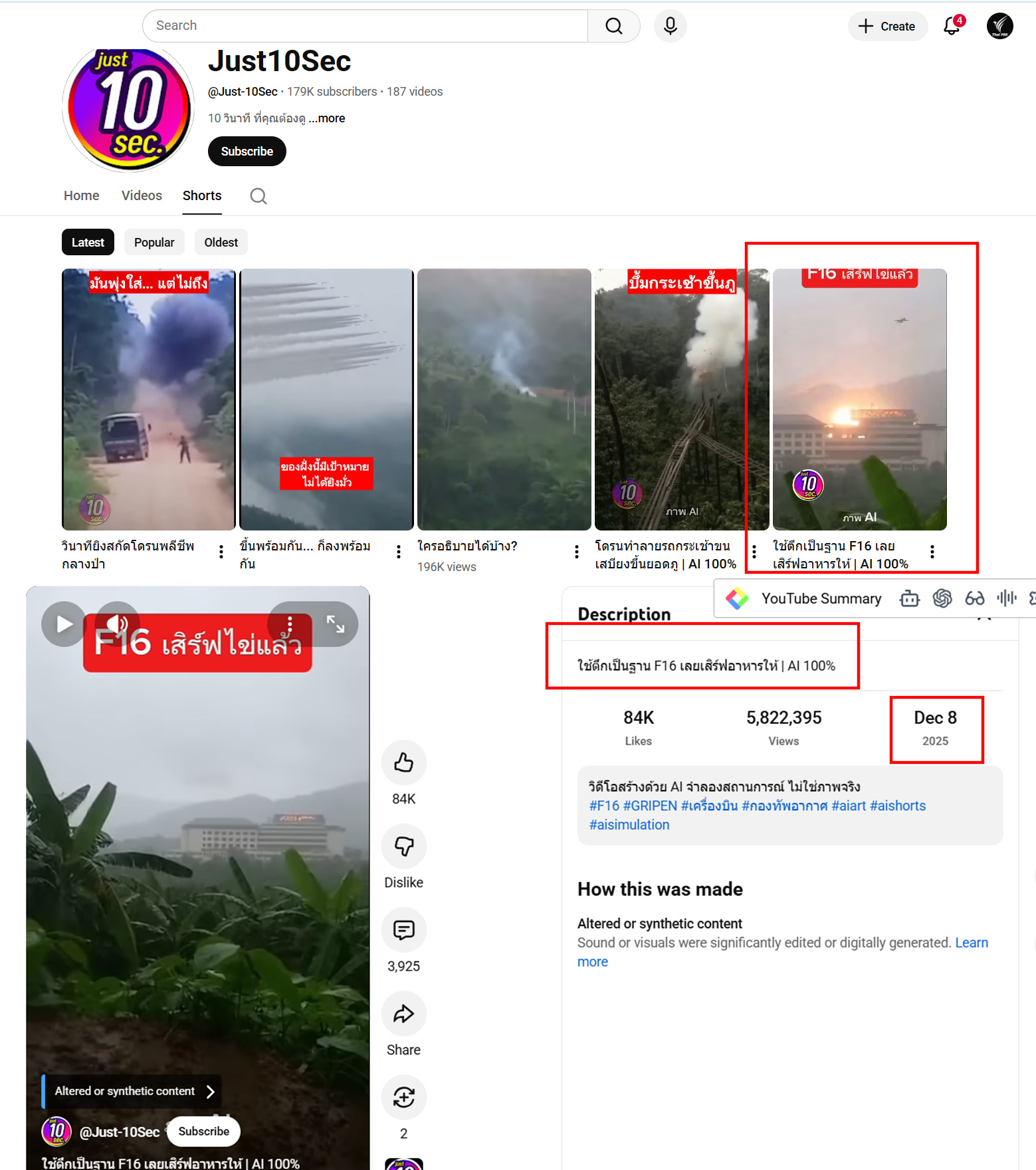
The channel owner stated that the video was created using AI to simulate a scenario and was not real footage.
When a frame from the video clip was analyzed by AI image detection tools from the websites AI or Not and Wasitai, the results indicated that the image was likely to be AI-generated.
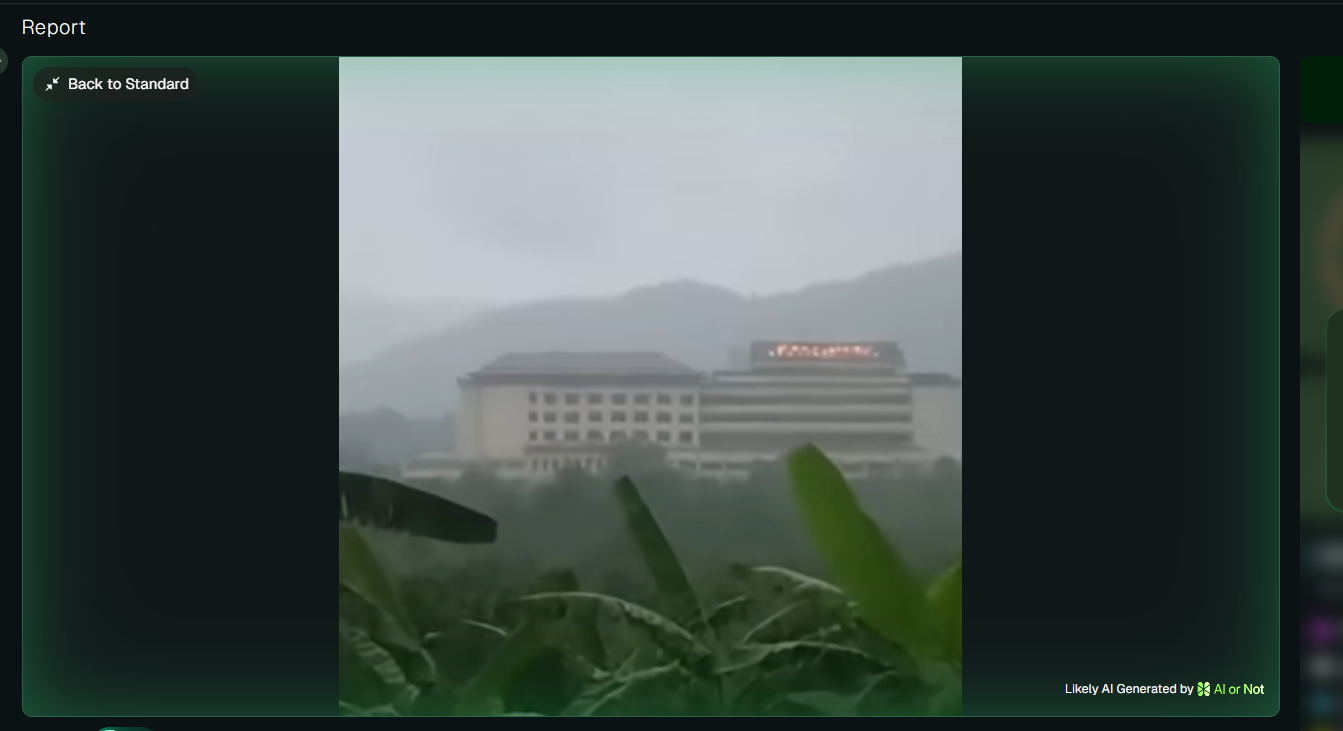
Verification using the AI image detection tool from the website AI or Not indicated that the image was likely AI-generated.

Verification using the AI image detection tool from the website AI or Not indicated that the image was likely AI-generated.
Army and Air Force confirm clip lacks realism
Thai PBS Verify contacted Col. Richa Suksuwanon, Deputy Spokesperson of the Royal Thai Army, who confirmed that the video clip was not related to any Thai military operation in the Thai–Cambodian conflict.
The Royal Thai Air Force also confirmed that the clip was fake and likely to be generated by AI. Air Marshal Praphas Sonjaidee, Deputy Chief of Staff of the Royal Thai Air Force and Air Force Spokesperson, pointed out that the aircraft in the clip was flying abnormally low, which did not correspond with real operational procedures that require maintaining standard altitude levels. In real situations, fighter jets cannot be seen with the naked eye because they operate at high altitudes.
The Air Force Spokesperson emphasized that the clip was not footage of any real event conducted by Thai authorities and was likely created by AI.
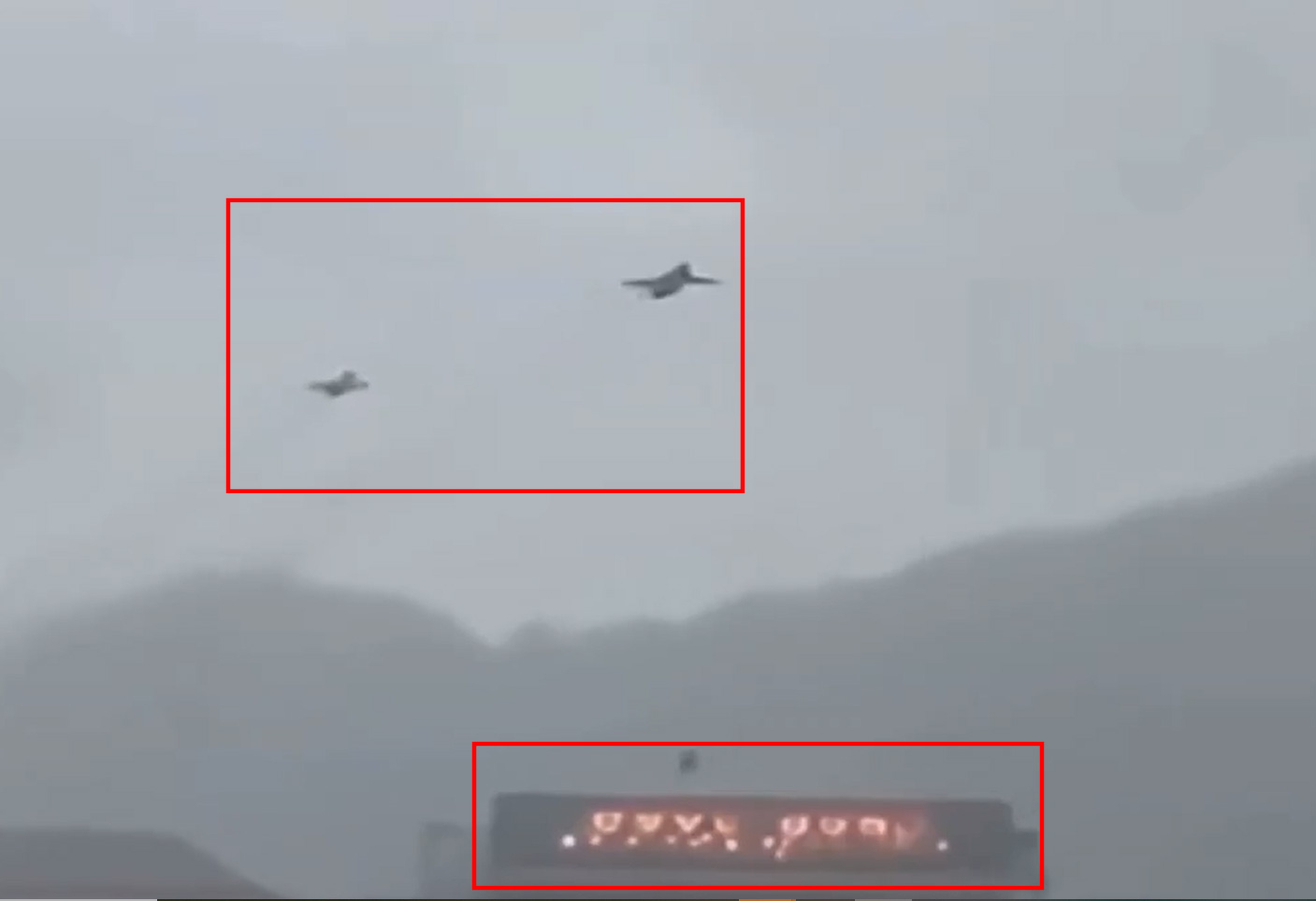
Images showing a fighter jet flying at a low altitude close to a building: the Royal Thai Air Force spokesperson stated that the aircraft in the clip was flying abnormally low, which did not align with real operational procedures that require maintaining standard altitude levels. In addition, the text visible on the building had no clear meaning, indicating that it was likely AI-generated.
What is the truth?
The verification found that the clip circulated by South Korean media and on social media, claiming that Thailand used F-16 fighter jets to bomb a building in Cambodia, was not a real event. It is a simulated clip created using AI. Some of the visuals match clips found on TikTok and a YouTube channel that clearly state the content was created using AI. At the same time, results from AI image detection tools indicate that the content was likely AI-generated.
Furthermore, both the Royal Thai Army and the Royal Thai Air Force confirmed that the aircraft movements shown in the clip lack realism, such as abnormally low-altitude flight and building details that did not correspond with real structures. They emphasized that the clip was not related to any Thai operations in the Thai–Cambodian border area.
Verification Process
- Frame extraction and Google Lens search: Keyframes were extracted using InVID-WeVerify and then searched via Google Lens. The images matched a clip on TikTok that explicitly stated it was “AI-generated” (the clip is currently no longer available).
- Keyword search: A search for “F 16 ตึก” on YouTube found a channel named Just10sec with similar clips, clearly labeled as AI-generated videos. The clip was published on December 8, 2025, and the channel mainly publishes AI-generated video content.
- AI image detection tools: Verification using the websites AI or Not and Wasitai indicated that the images are likely AI-generated.
- Consultation with relevant authorities: The Royal Thai Army confirmed that the clip was not related to any Thai military operation. Meanwhile, the Air Force spokesperson stated that the aircraft in the clip was flying abnormally low, which does not meet real operational standards, indicating that the situation shown in the clip lacks realism.
Impact of Misinformation from This Clip
- Creating misunderstanding and distorting information
A simulated clip presented as if it were a real event can mislead the public into receiving incorrect information that is not factual. This results in distorted public understanding and makes it more difficult to distinguish between real news and fake news.
- Escalating the severity of the situation
False information about border clashes, such as alleged airstrike footage, may cause public misunderstanding and escalate perceptions of violence, fuel hostility between countries, and easily expand conflicts. Regardless of whether the actual situation is severe or not, presenting accurate information is essential and content should always be verified before being shared.
- Unintentional re-publication by some media outlets
Using image compilations to accompany news reports without verifying their sources can make misinformation easier to spread more widely.
What to do with this misinformation?
1. Always verify the original source of the clip
Check whether the source is clear and credible.
2. Extract frames and search for the source using basic tools
Such as InVID-WeVerify and Google Lens, to see whether an original source clip already exists.
3. Question clips that appear overly realistic or exaggerated compared to real events
For example, abnormally low-flying aircraft, exaggerated explosion effects, or unrealistic building details.
4. Examine captions or language used in the clip
Distorted text, language that does not belong to any real language, or meaningless characters are common indicators of AI-generated content.
5. Use AI image/video detection websites
Such as AI or Not, Wasitai, Hive Moderation, or other video analysis tools.
6. Compare with official information
Check reports from the military, government agencies, or credible news organizations to see whether they align with or contradict what is shown.
7. Avoid sharing before thorough verification
Resharing helps misinformation spread more widely and rapidly.