Archived footage combined with AI-generated content to claim Iranian attack on U.S. Navy
Thai PBS Verify found the piece of disinformation on: Threads
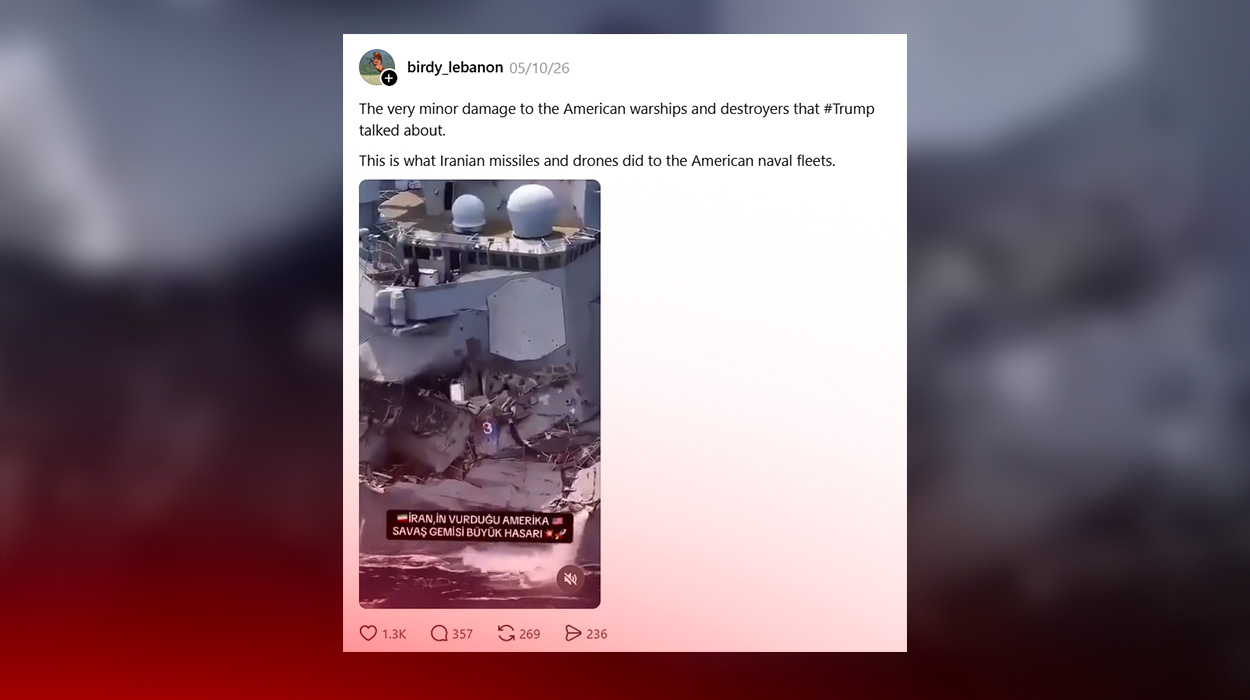
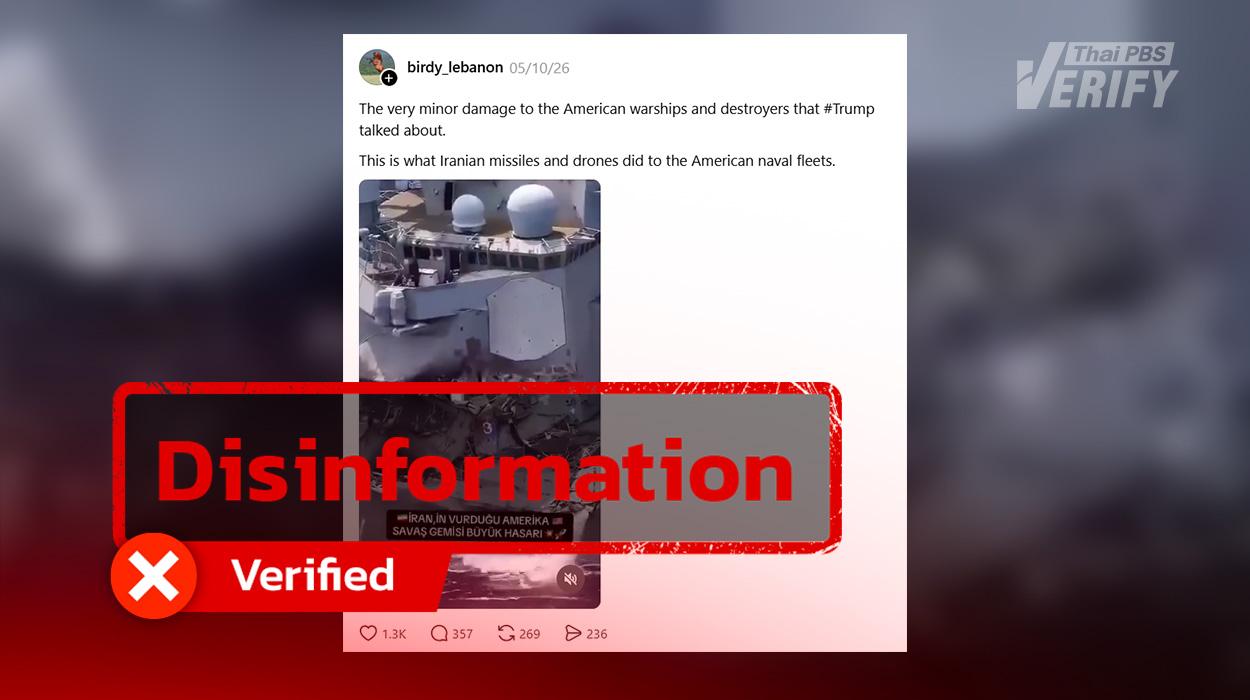
A Threads user claimed that Iran had caused damage to American warships and destroyers.
Thai PBS Verify found a post on Threads, featuring a video of damaged U.S. warships. The post’s caption reads:
“The very minor damage to the American warships and destroyers that #Trump talked about.
“This is what Iranian missiles and drones did to the American naval fleets.”
The post was published on May 10, 2026. It received more than 1,300 likes and was shared more than 200 times.
The video in question was in fact AI-generated
Thai PBS Verify analyzed the clip on Hive Moderation and found that it had a high likelihood of being AI-generated, at 94.7%.
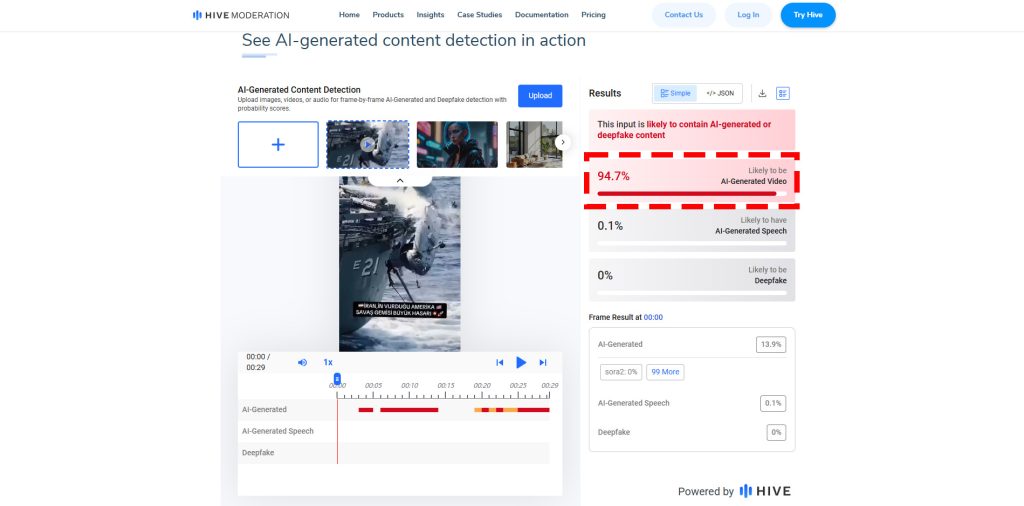
The results of the inspection indicate a 94.7-percent likelihood of the video being AI-generated.
The U.S. ships-helicopters were not attacked by Iran
Thai PBS Verify further extracted images for verification with Google Lens. The results showed that the image of the first ship in the clip matched a BBC news report covering the 2017 collision of the U.S. Navy’s USS Fitzgerald (DDG-62) with the Philippines-registered container ship MV ACX Crystal, which traveled between Nagoya and Tokyo.
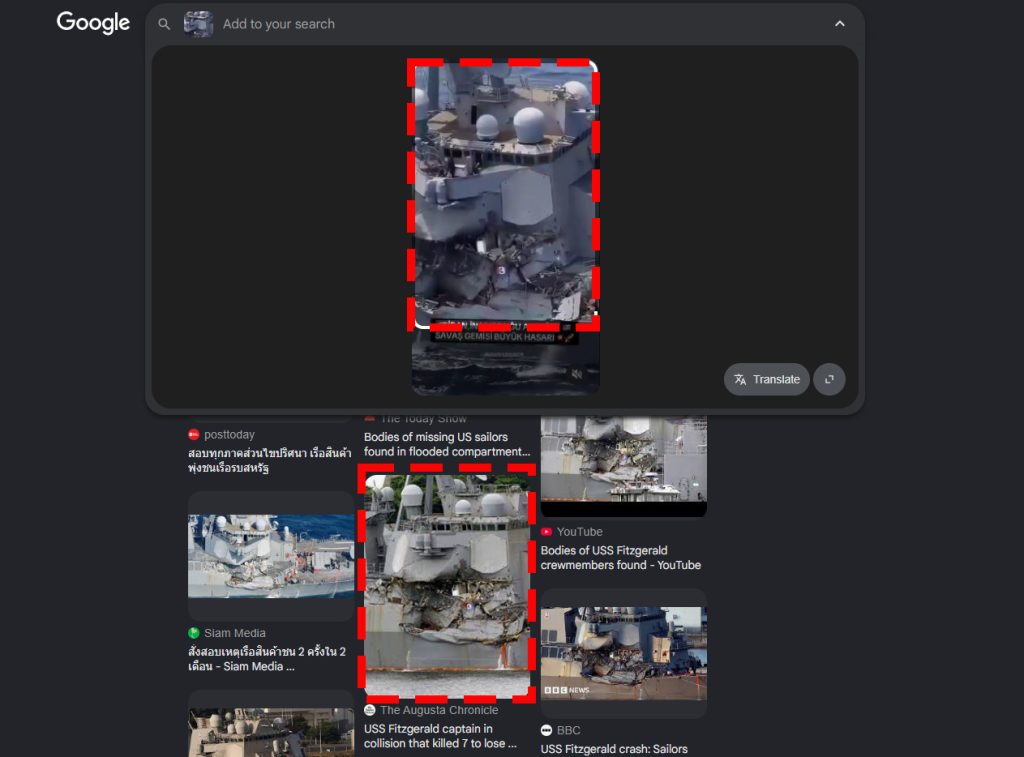
The search results trace back to the 2017 collision of the USS Fitzgerald with a cargo ship MV ACX Crystal.
The incident occurred on June 17, 2017, in waters off the coast of the Izu Peninsula, about 56 nautical miles south of Yokosuka, Japan. The Arleigh Burke-class guided-missile destroyer USS Fitzgerald, a high-tech warship equipped with long-range radar detection systems, collided with the Philippine-flagged cargo vessel MV ACX Crystal, causing severe damage to the right side of the ship.
Seven U.S. Navy sailors were killed, with all bodies later found in flooded crew compartments. At least three others were injured, including the ship’s commanding officer.
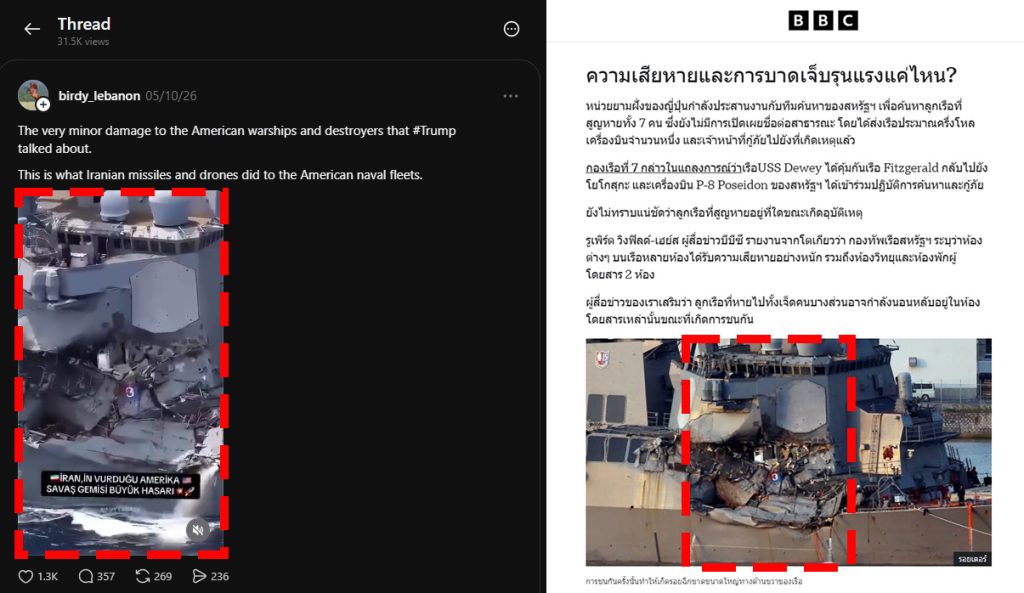
A comparison between the fake post (left) and BBC news images of the 2017 USS Fitzgerald crash (right).
Meanwhile, for the damaged helicopter shown in the clip, the team used key visual clues from the video, including markings on the ship reading “E21,” to conduct a Google search. The results led to Wikipedia information showing an image of the USS Suribachi (AE-21), a U.S. Navy ammunition ship.
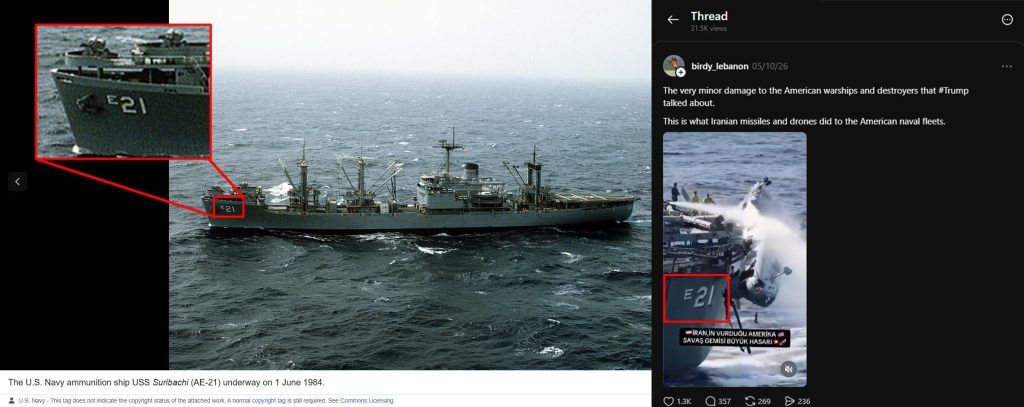
The letters from the USS Suribachi, showing “E21” (left), match the markings seen in the clip (right).
September 1992, a Boeing-Vertol CH-46D Sea Knight helicopter of the U.S. Navy experienced a mechanical failure during ammunition transfer and crashed onto the stern deck of the Suribachi. The helicopter had taken off from the aircraft carrier USS Dwight D. Eisenhower off the coast of Virginia. Fortunately, only one crew member was injured.
After a check of the referenced link, the archived images were found to match the fabricated video of Iranian drone attack on U.S. Navy forces. This confirms that the clip is fake, created by combining still images.
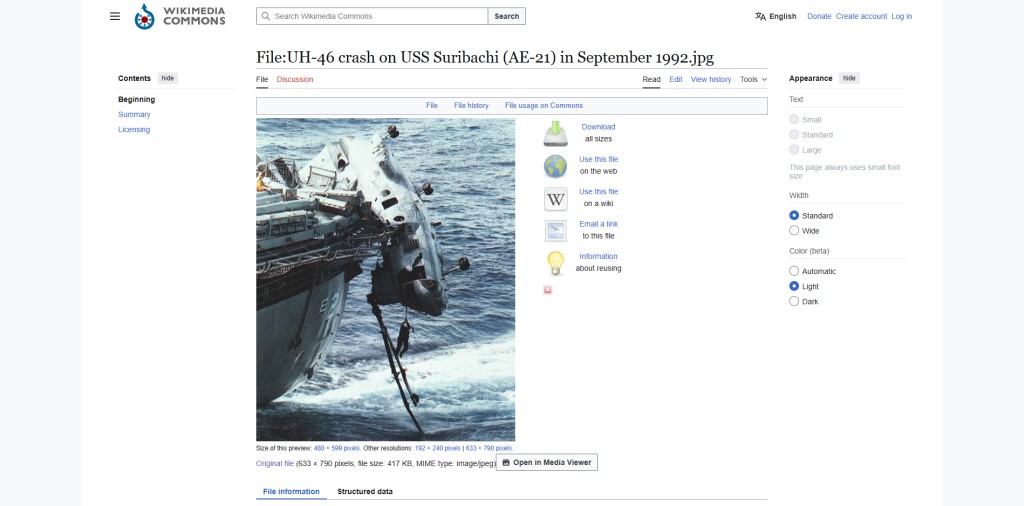
The incident occurred during a VERTREP (Vertical Replenishment) operation, which involves the vertical transfer of supplies and ammunition between two ships. While a U.S. Navy UH-46D Sea Knight helicopter was carrying out ammunition transfer above the stern of the USS Suribachi in September 1992, it suddenly experienced a mechanical failure. This caused the aircraft to lose control and crash violently onto the ship’s aft flight deck, resulting in the helicopter being completely destroyed, with rotor blades torn apart and part of the fuselage hanging over the edge of the stern.
However, the service record of the Suribachi states that the ship was decommissioned on December 2, 1994. Therefore, it is confirmed that no relation to any current events in the Middle East was found.
What is the truth?
Posted on Threads, the video of a so-called Iranian drone attack on the U.S. Navy is “false and entirely fabricated.” Thai PBS Verify has found that the clip does not show a current conflict in the Middle East, but is instead a combination of images from two separate past accidents involving the U.S. Navy that were edited together.
- Heavily damaged warship: In reality, this is an image from the accident on June 17, 2017, when the U.S. Navy guided-missile destroyer USS Fitzgerald (DDG-62) collided with the Philippines-registered container ship MV ACX Crystal off the coast of the Izu Peninsula, Japan. The crash caused severe damage to the starboard side of the ship and resulted in the deaths of 7 U.S. Navy sailors (consistent with BBC news reports at the time).
- Damaged helicopter: In reality, this refers to an old accident from September 1992 (34 years ago), when a CH-46D Sea Knight transport helicopter suffered a sudden mechanical failure during a vertical replenishment (VERTREP) operation. The aircraft crashed onto the flight deck at the stern of the ammunition ship USS Suribachi (AE-21) off the coast of Virginia. The ship had already been decommissioned in late 1994.
Verification Process
The Thai PBS Verify team examined the authenticity of the video in question through these steps:
- AI content detection: The video clip was analyzed on Hive Moderation. The results showed a high probability score of 94.7% that the clip was created with AI, by manipulating old still images into realistic-looking motion video.
- Reverse image search: The first ship image in the clip was analyzed with Google Lens. It was found that the damage on the ship’s hull matched exactly with BBC news images of the USS Fitzgerald incident, when the vessel collided with a commercial ship from the Philippines in the Sea of Japan in 2017.
- Historical trace and data verification: The markings on the ship in the clip, “E21,” were identified and traced back to the ammunition ship USS Suribachi (AE-21). Further verification with Wikipedia service records and archived images confirmed that the helicopter crash scene shown in the clip matches historical documentation of the real 1992 incident, with identical visual evidence appearing in the fabricated video.
Potential impacts of disinformation
- Global security disruption: The false claim that Iran launched an attack destroying a U.S. naval fleet is highly sensitive information. It risks being used as propaganda to distort the situation in Middle Eastern conflicts and to incite hostility.
- Rapid spread of fake news: The post on the Threads platform received more than 1,300 likes and was shared over 200 times, reflecting how alarming content can easily attract engagement and be shared without verification.
- Rising threat of Generative AI: This case clearly illustrates how AI can convincingly transform old accident images into modern-looking, emotionally impactful news-style videos, making it difficult for the general public to distinguish authenticity with the naked eye.
What to do with this misinformation?
- Do not immediately believe war-related rumors: If a major global conflict actually occurs, both Thai and international mainstream media outlets will report it as breaking news immediately. If the information appears only in personal posts, it should be treated with skepticism.
- Pay attention to details in images/videos: Look for numbers, markings, or codes (such as the ship code “E21”), or any unnatural AI-like inconsistencies. These details can be used as keywords to search further on Google.
- Use reverse image search tools: When encountering suspicious images or clips, take a screenshot and use Google Lens to trace their origin. This can help reveal whether the visuals are from older incidents that have been reused or misrepresented.
- Report false content: If you find posts that intentionally distort information, use the “report misinformation” feature on the relevant social media platform to reduce visibility and help limit the spread of fake news.