Iranian attack on Omani port incident distorted as U.S. strike on Iranian oil tanks
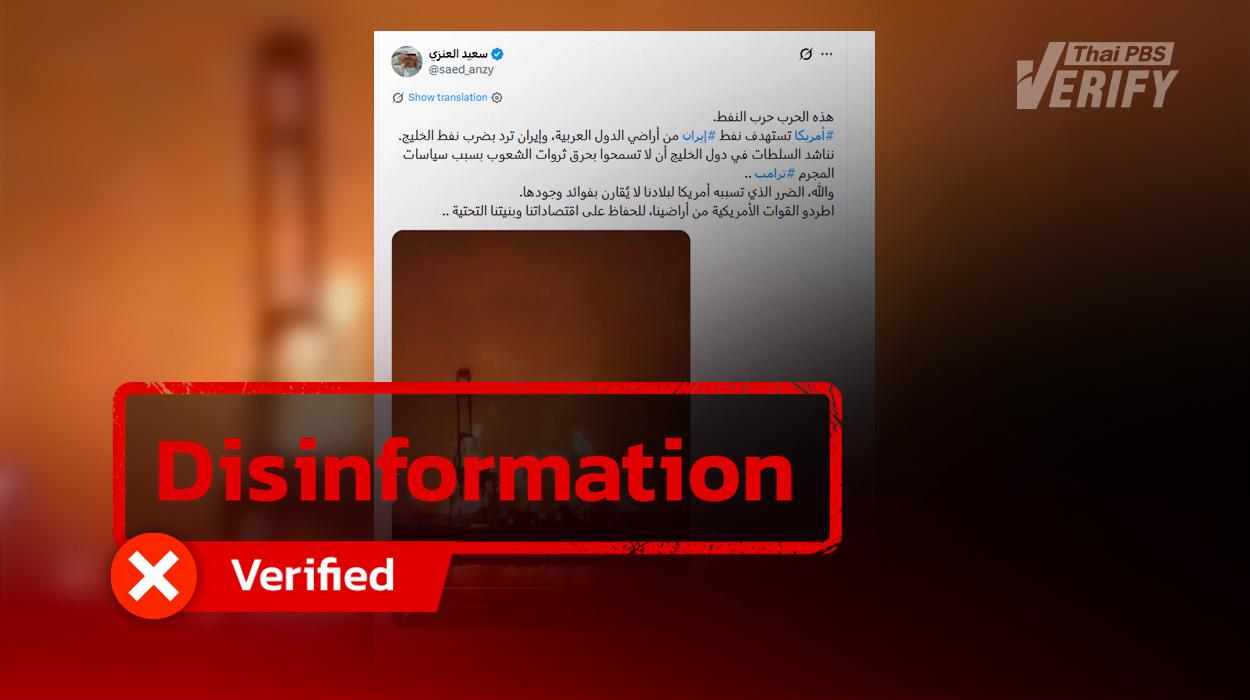
Thai PBS Verify found the piece of disinformation on: X
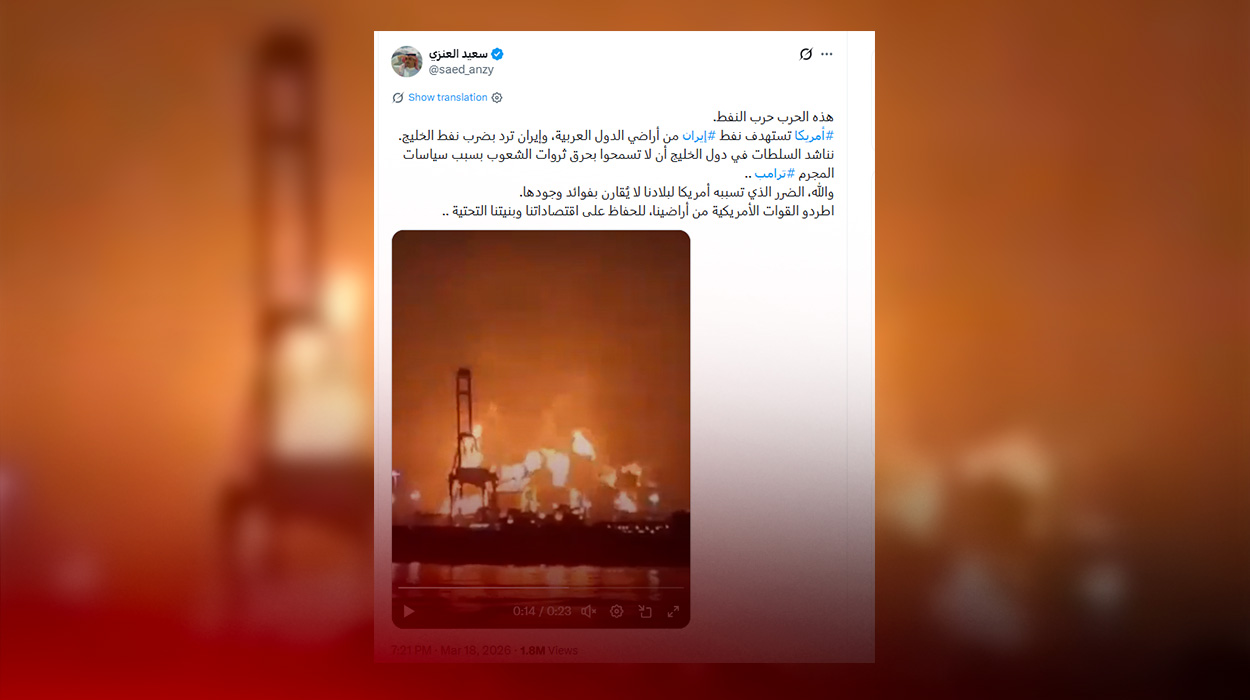
An X post shows the video in question.
Thai PBS Verify found a post on X featuring a video of an explosion, along with a caption which reads,
“
هذه الحرب حرب النف.
#أمريكا تستهدف نفط #إيران من أراضي الدول العربية، وإيران ترد بضرب نفط الخليج.
نناشد السلطات في دول الخليج أن لا تسمحوا بحرق ثروات الشعوب بسبب سياسات المجرم #ترامب ..
والله، الضرر الذي تسببه أمريكا لبلادنا لا يُقارن بفوائد وجودها.
اطردو القوات الأمريكية من أراضينا، للحفاظ على اقتصاداتنا وبنيتنا التحتية ..”
The caption can be translated via Google Translate as:
“This war is an oil war. The United States is targeting Iran’s oil from bases in Arab countries, while Iran responds by attacking oil assets in the Persian Gulf.
We appeal to the authorities in the Gulf countries not to allow the wealth of the people to be burned away because of Donald Trump’s policies. By God, the damage the United States causes to our countries is incomparable to the benefits of its presence. Expel U.S. forces from our lands to preserve our economies and infrastructure.”
So far, this post has received over 1.8 million views, with 15,000 reactions, 1,600 comments, and has been reposted 4,400 times.
The video did not show the Iranian gas station bombarded
Thai PBS Verify took frames from the video and conducted a search with Google Lens. The results revealed that the footage matches a report titled “Massive fire at critical port in Oman after the attack” from the Haberler website, which was published on March 12, 2026.
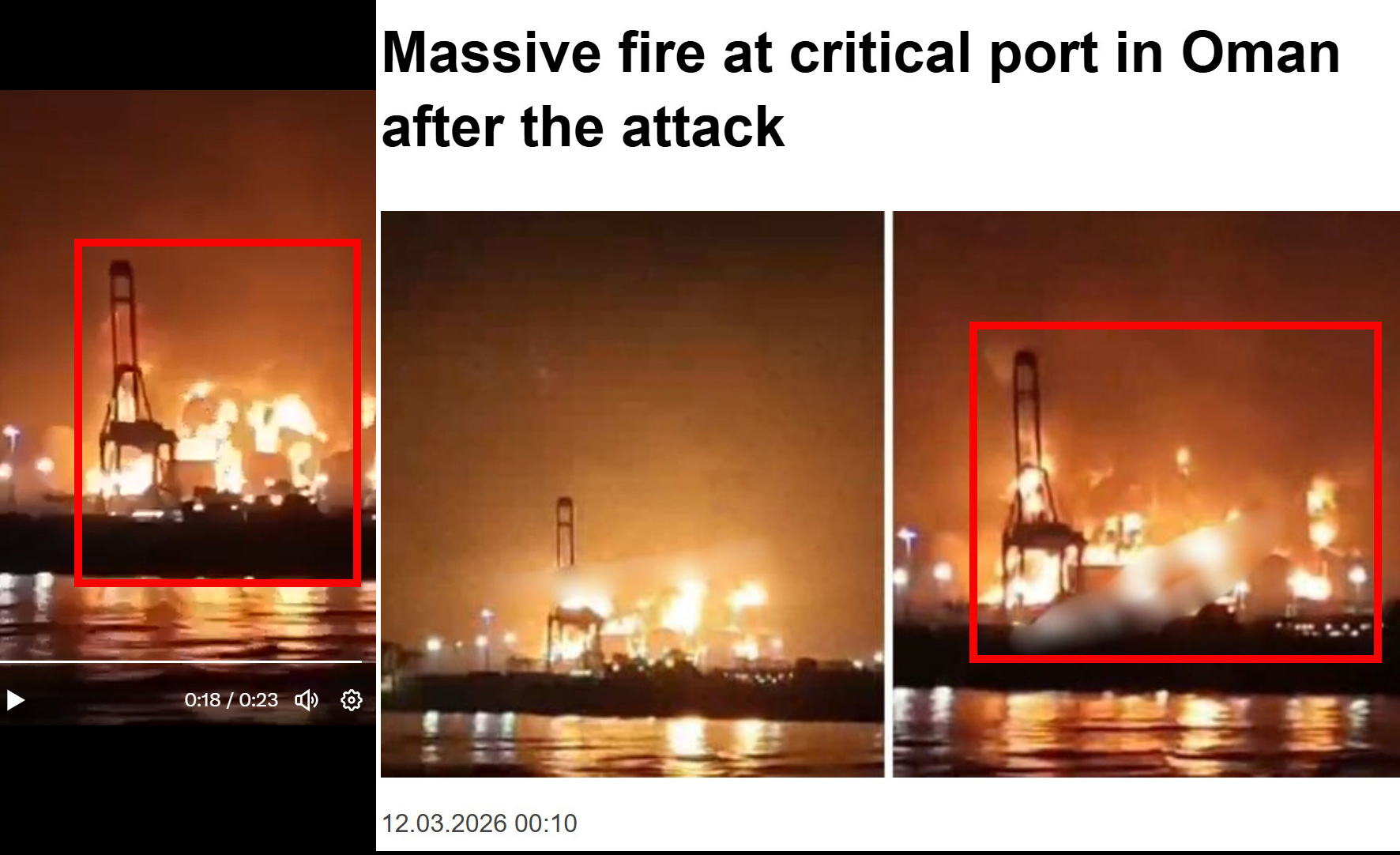
A comparison between the fire incident from the post (left) and the incident in the news report (right).
The news reads:
“Following Iran’s retaliatory attacks, a large fire broke out at the Port of Salalah in Oman after the attack. It has been reported that the large-scale fire is ongoing, and those moments were captured on camera.
“The war that began with the attacks of the USA and Israel on Iran continues; Iran also continued its retaliatory attacks today.
“Targeting Israel and US bases in the region, Iran attacked the strategic Salalah Port in southern Oman with drones.
“In a statement regarding the attack, it was noted that the attack directly targeted the oil storage tanks at the port site and that a fire broke out in the tanks that were hit.
“Following the attack, a large fire broke out at the port. It was reported that the large-scale fire was ongoing; those moments were captured on camera.”
Where did the explosion occur?
Thai PBS Verify utilized Google Earth and was able to identify the location as the Port of Salalah, Oman.
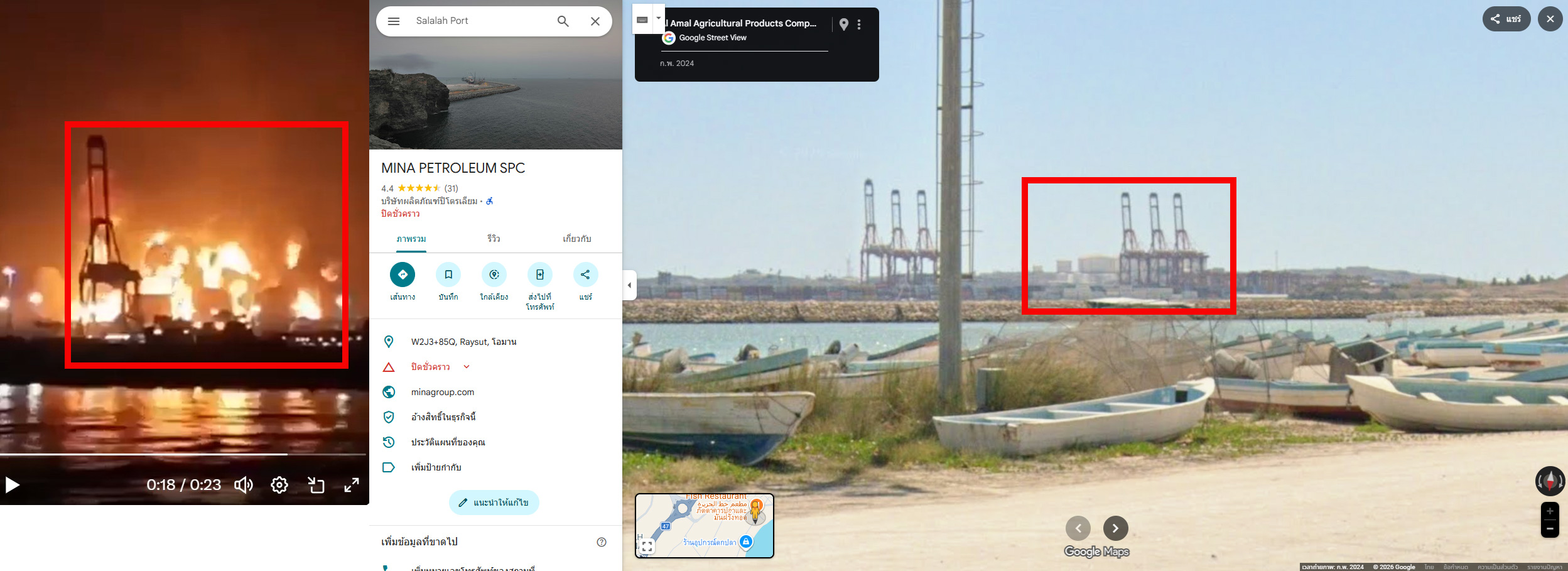
A comparison between the Port of Salalah in the video (left) and images from Google Earth (right).
What is the current situation in Iran?
Israel has launched an attack on Iran’s massive South Pars natural gas field, considered as the country’s energy heart. This marks a significant escalation of the war shortly after Israel assassinated Iran’s Intelligence Minister, Esmail Khatib, along with several other high-ranking officials within 24 hours. The attack has created intense regional tension, as South Pars is the largest gas field in the world and is of vital importance to both Iran and Qatar. Consequently, many countries have expressed their concern, while Iran has threatened to retaliate by potentially striking energy infrastructure in neighboring nations.
Regarding the overall situation, the war between the United States, Israel and Iran continues to intensify as it enters its third week. The death toll has reached the thousands, and the conflict has begun to impact global energy markets, including the disruption of shipping through the Strait of Hormuz. Furthermore, Israel has expanded its military operations into Lebanon, targeting Beirut and key infrastructure. Meanwhile, Iran maintains its ability to respond by continuously launching missile attacks against Israel, causing the situation in the Middle East to become increasingly volatile with the risk of widespread escalation.
What is the truth?
Thai PBS Verify examined the post with Google Lens and Google Earth. The investigation revealed that the video did not depict an incident of the United States attacking Iranian oil tanks as claimed. Instead, it was an incident involving an Iranian attack on Oman.
Verification Process
- Verification via Google Lens: Frames from the video were searched via Google Lens. The results revealed that the footage matches a report titled “Massive fire at critical port in Oman after the attack” from the Haberler website, published on March 12, 2026.
- Verification via Google Earth: Thai PBS Verify utilized Google Earth and was able to identify the location as the Port of Salalah, Oman.
Impacts of the disinformation
- Triggering public panic: Distorted information regarding “war” or “energy” can mislead the public and incite fear. Such as panic buying fuel or goods. This situation is leading to social unrest.
- Affecting the economy and energy markets: Fake news can cause volatility in oil prices and investments, as investors and the public may make decisions based on inaccurate data.
- Distorting public understanding: False information can change people’s beliefs and perspectives, causing them to perceive the situation incorrectly and stray from the facts.
- Fueling conflict and hostility: Particularly concerning international issues or warfare, fake news can be weaponized as a tool for incitement, potentially leading to increased conflict or violence.
What to do with this misinformation?
- Do not immediately believe or share: Maintain composure and avoid sharing the information without verification, as this could lead to the widespread dissemination of false data.
- Verify the source: Examine whether the information originates from a credible media outlet with clear references, or if it is merely an unverified social media post.
- Cross-check multiple news sources: Compare the information across several reputable news agencies or organizations to confirm its accuracy.
- Beware of old or edited videos: Often, footage is taken out of context or depicts events from entirely different times and locations.
- Notice emotionally charged content: Fake news frequently employs aggressive language and sensationalism designed to incite anger, fear, or public alarm.
Translation edited by: Peerachai Pasutan

Related Content
Most Viewed