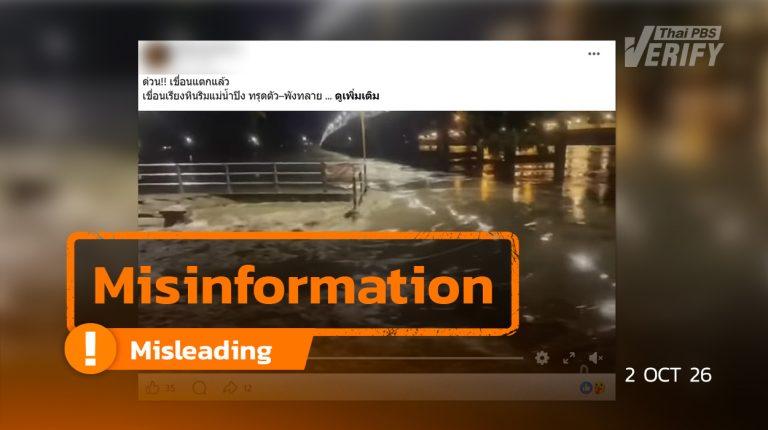
Online news page shares terrifying CCTV footage of Nepal landslide — turns out to be an AI-generated clickbait video.
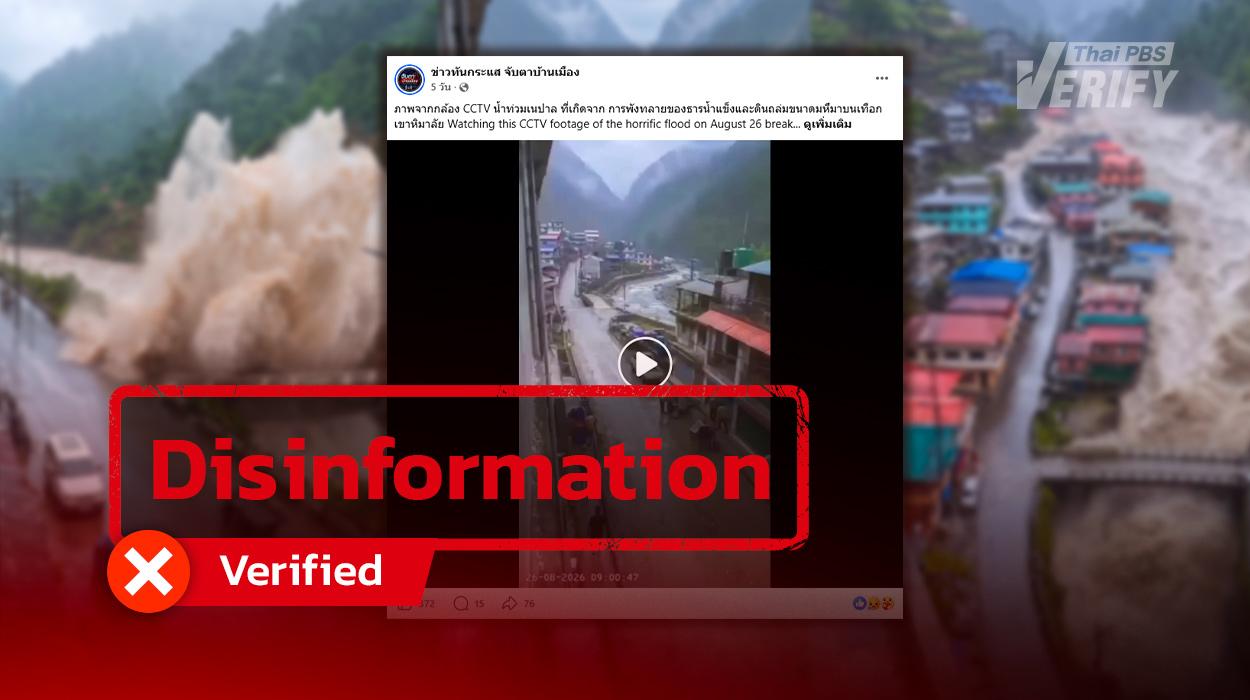
Thai PBS Verify found the source of the fake news to be: Facebook.
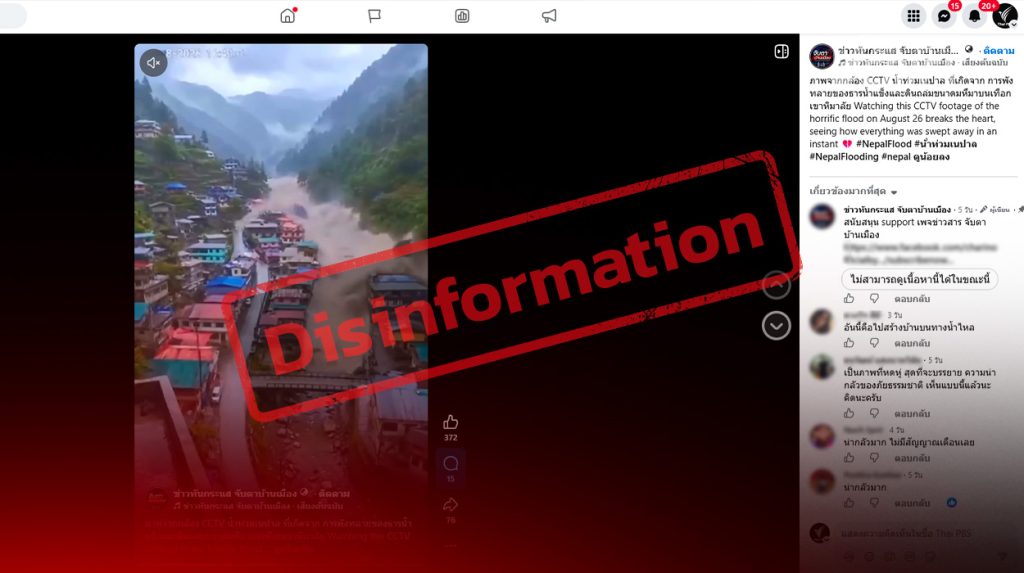
The video clip under investigation
Thai PBS Verify found a post from a Facebook user named “News Trending, Keeping an Eye on the Country,” which posted a video of a mudslide along with a message stating:
CCTV footage of the horrific flood in Nepal, caused by a massive glacial collapse and landslide in the Himalayas. Watching this CCTV footage of the horrific flood on August 26 breaks the heart, seeing how everything was swept away in an instant 💔 #NepalFlood #น้ำน้ำท่วมเนปาล #NepalFlooding #nepal
The post, published on August 29, 2026, has received over 12,000 views and been shared 76 times. Most commenters believe the video depicts a real event.

Reactions from viewers, most of whom were convinced the incident actually happened.
The video clip being verified
Is this account reliable ?
The audit uncovered that this account has amassed 60,000 followers and undergone three name changes. Originally launched in 2022 to sell grass jelly under the name “Nai Tham Thuk 100% Authentic Grass Jelly,” the page only recently pivoted to news content on August 24, 2026.

Page Transparency
Is the footage showing a village landslide in Nepal genuine or fake?
We ran the clip through Hive Moderation, an AI detection tool, and the analysis showed a 33% probability that the video was generated by AI.
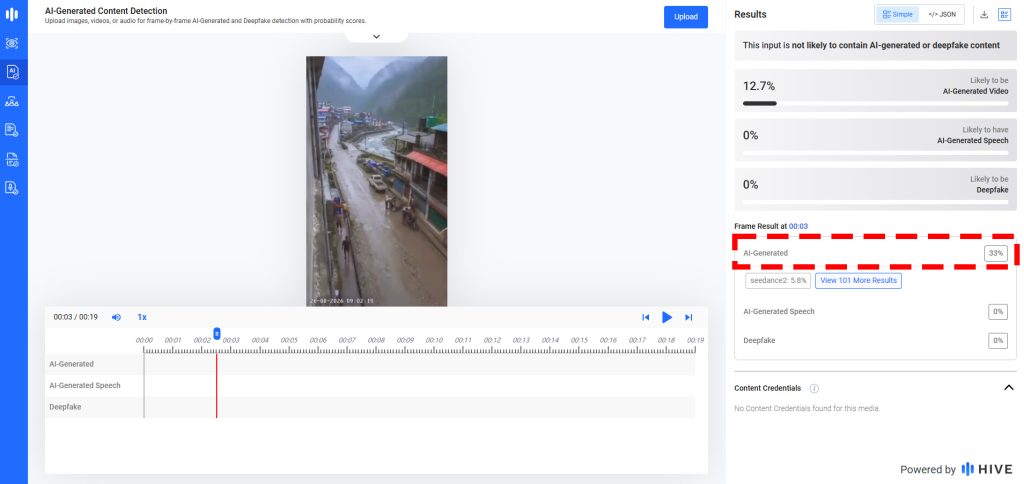
AI detection tool results
However, when screenshots from the clip were magnified and analyzed using the InVID-WeVerify forensic tool, suspicious anomalies were detected. Most notably, at the 00:08 mark, a person in the video can be seen abnormally walking or running straight through a roadside barrier.
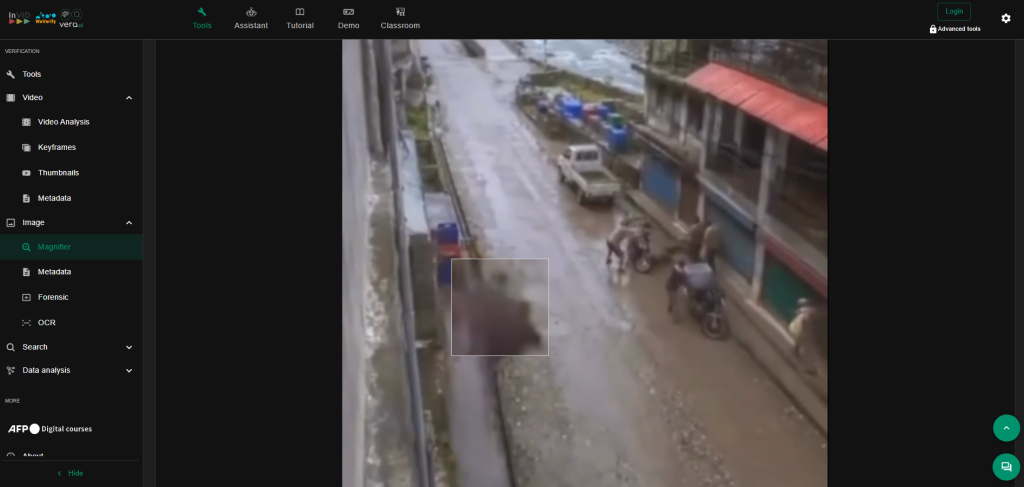
Magnified frame analysis via InVID-WeVerify
Regarding the second segment of the clip, our analysis using Hive Moderation indicated a 93.3% chance of it being artificially created by AI.
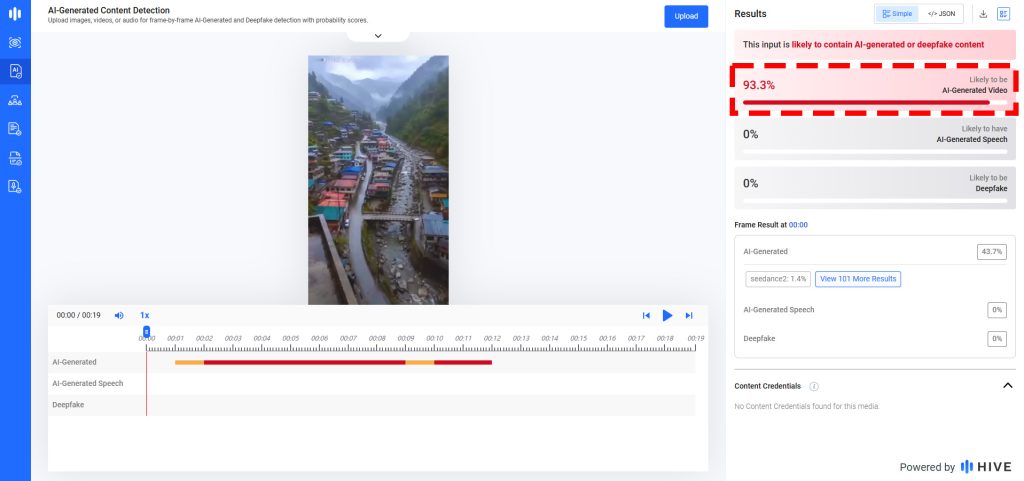
Results from Hive Moderation’s AI detection tool
Meanwhile, the third segment of the clip shows a white car at 01:06 displaying a glitch where it gets swept back by the current and strangely plunges right through the solid ground.
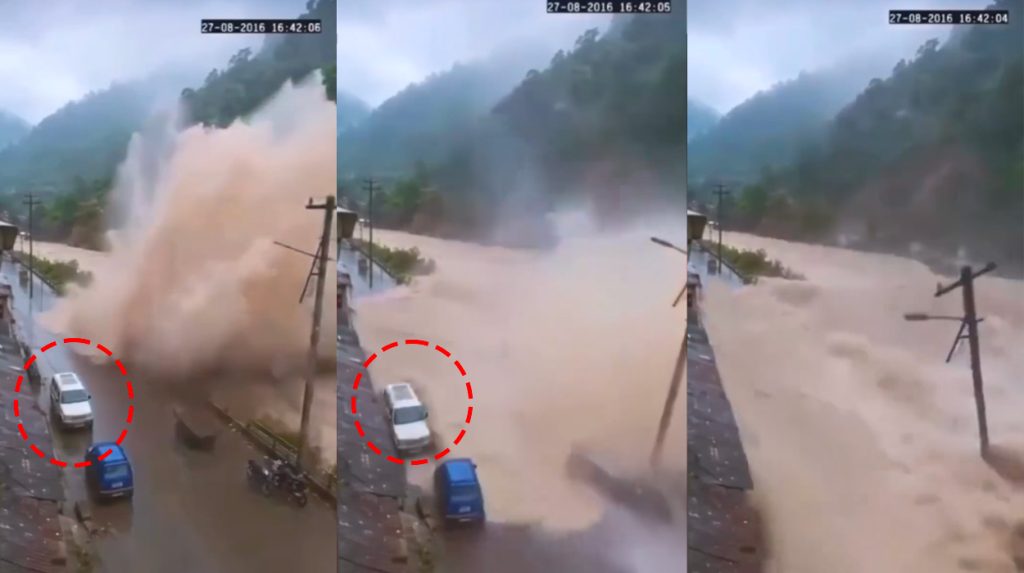
Detected irregularities in the footage
Based on all the findings, it can be concluded that the clip is merely an AI-generated video created solely to generate clicks and likes.
What is the actual truth ?
In response to the viral video posted on August 29, 2026, by the Facebook page “Khao Than Krasat Chap Ta Ban Mueang”—which claimed to capture CCTV footage of catastrophic flooding and a Himalayan landslide in Nepal with over 12,000 views—investigations show that the footage is completely fabricated by AI and the page is entirely unreliable. The actual findings are detailed below:
- Entirely AI-Generated Video: This footage was created using generative AI tools to simulate CCTV angles. Clear physical glitches are evident, such as a person walking or running straight through a roadside safety barrier (at 00:08 and 00:16) and a white car sinking unnaturally right through the ground (at 01:06).
- The fake news page disguised itself as a former “grass jelly store”: Page history checks show it was established in 2022 as “Nai Tham Thuk 100% Authentic Grass Jelly.” After changing its name three times, it recently switched to a news format on August 24, 2026 (merely five days prior to publishing the fake video) to churn out clickbait and boost engagement.
Verification Process
- Page Transparency Check: A review of the Facebook page’s history reveals that it was originally a grass jelly business before recently rebranding into an online news page to boost engagement.
- AI Detection Scan: Analysis of the video via Hive Moderation indicated that the second scene has an AI-generated likelihood as high as 93.3%.
- AI Glitch Verification: Scrutinizing the footage frame-by-frame via InVID-WeVerify exposed distinct visual anomalies, particularly a pedestrian moving directly through a roadside barrier and a van sinking right down through the terrain.
The Impact of This Misinformation
- Misleading the Public Through a Rebranded Account: Transforming an existing product-selling page into a news reporting page and using AI-generated clips claimed as “CCTV footage” constitutes a deliberate deception of the public to build a follower base, disregarding journalistic ethics.
- Exacerbating Disasters Through Manufactured Panic: Palming off artificial footage as authentic crisis events triggers public anxiety and skews perceptions regarding the true scale of the disaster in Nepal.
- Destroying Public Trust in Information: The phenomenon of a grass jelly page transforming into a news page to distribute AI clips reflects how the online world is flooded with spam and clickbait pages that undermine the value of genuine news.
What to do with this misinformation?
To protect yourself from falling victim to “fake news pages” and AI-generated video clips, you should follow these guidelines:
- Check “Page Transparency”: Before believing news from unfamiliar or suspicious pages, click on the page name and review its name-change history. If it was previously a commercial page or has frequently changed its name, presume it is a view-farming or clickbait operation.
- Spot the AI Glitches: Look for Unnatural Behavior: AI videos frequently break real-world physics. Keep an eye out for telltale signs like people walking straight through barriers, things glitching into the ground, or water that doesn’t move correctly.
- Skeptical of “CCTV Footage” Claims: The label CCTV is often used to fake authenticity. Without clear agency credits or specific camera coordinates, treat the video with caution as a potential AI fake.
- Report the Video and the Page: Together, report the content as “Fake News” and flag the impersonator page on Facebook to shut down these spam networks and stop them from confusing the public.