AI image falsely claims Louvre is on fire
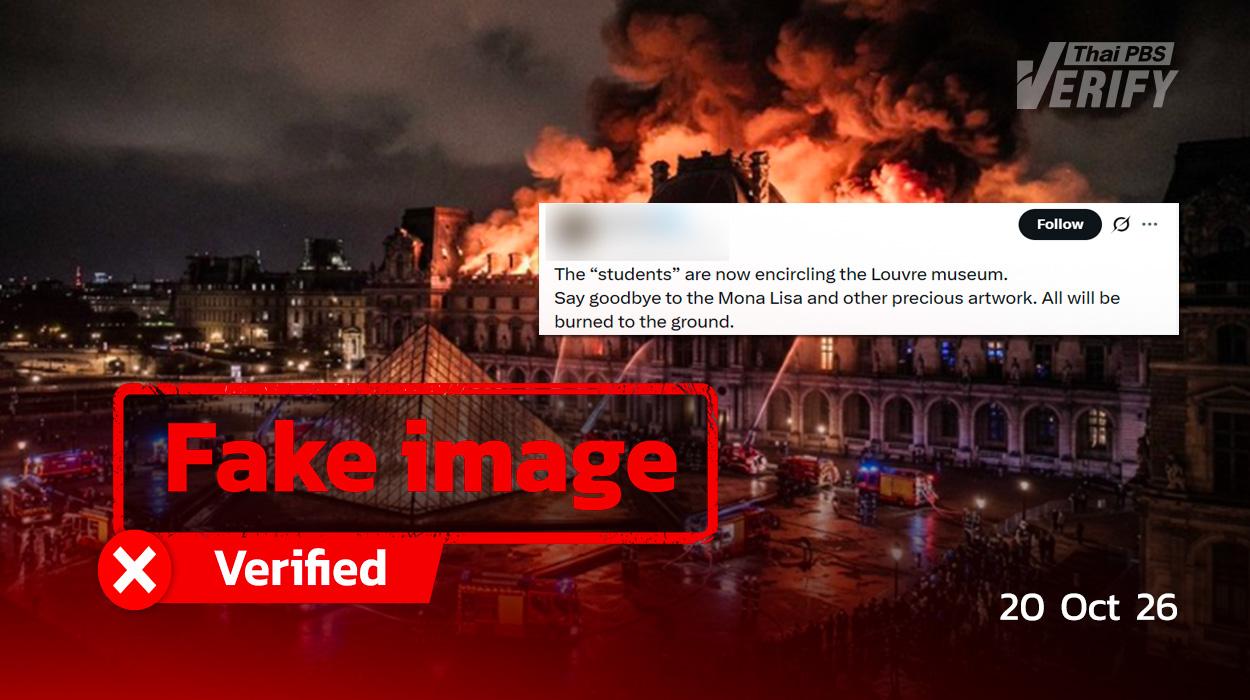
Thai PBS Verify found that the false image traced to X
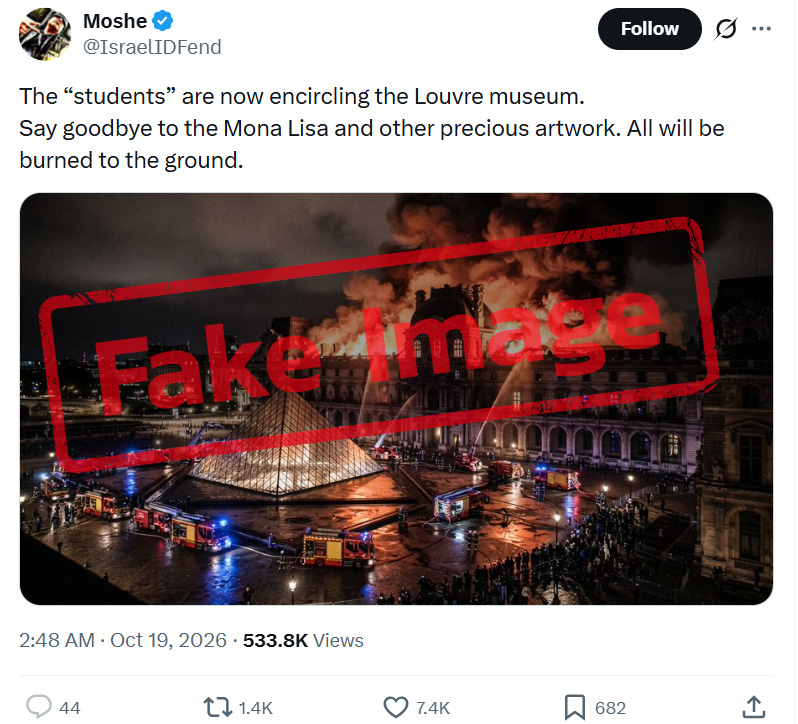
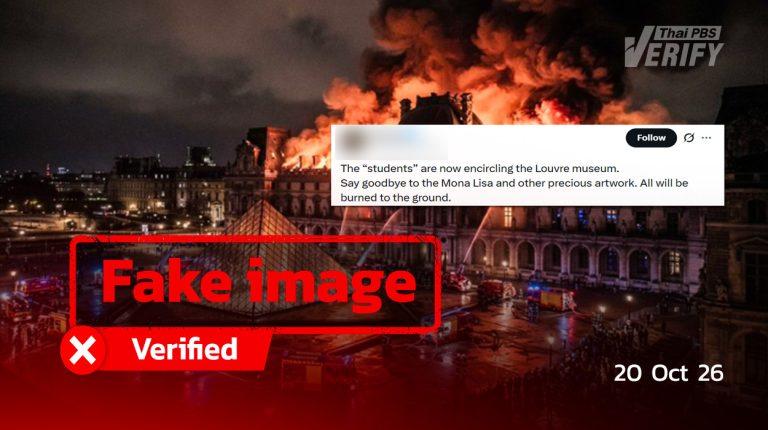
An X account shares an image of the Louvre Museum on fire.
Thai PBS Verify found that an X account had shared an image of the Louvre with the caption: “The ‘students’ are now encircling the Louvre museum. Say goodbye to the Mona Lisa and other precious artwork. All will be burned to the ground.”
The post, published on Oct 19, 2026, had attracted 53.38 million views, 7,100 reactions, 44 comments and more than 1,300 reposts.
Is this a false image?
Thai PBS Verify analysed the image using AI-detection services Wedetect, Hive moderation and Truthscan. All three indicated that the picture had been generated using AI.
Thai PBS Verify พบบัญชี X แชร์ภาพพิพิธภัณฑ์ลูฟวร์ พร้อมข้อความระบุว่า “The “students” are now encircling the Louvre museum. Say goodbye to the Mona Lisa and other precious artwork. All will be burned to the ground.”
แปลเป็นภาษาไทยโดยใช้ Google Transle ระบุว่า “กลุ่ม ‘นักศึกษา’ กำลังล้อมพิพิธภัณฑ์ลูฟวร์แล้ว
บอกลาโมนาลิซาและผลงานศิลปะล้ำค่าอื่น ๆ ได้เลย ทุกอย่างจะถูกเผาวอดวายจนเหลือแต่เถ้าถ่าน”
โดยโพสต์ดังกล่าวมียอดผู้เข้าชม 53,380,000 ครั้ง และมีการแสดงความรู้สึก 7,100 ครั้ง รวมถึงมีการแสดงความคิดเห็น 44 ข้อความอีกทั้งมีการรีโพสต์ไปกว่า 1,300 ครั้ง ถูกโพสต์เมื่อวันที่ 19 ต.ค. 2569
ภาพดังกล่าวเป็นภาพพิพิธภัณฑ์ลูฟวร์ไฟไหม้จริงหรือไม่ ?
Thai PBS Verify นำภาพดังกล่าวไปตรวจสอบด้วยเครื่องมือตรวจสอบภาพ AI เช่น Wedetect, Hive moderation และ Truthscan พบว่าเป็นภาพที่ถูกสร้างจาก AI
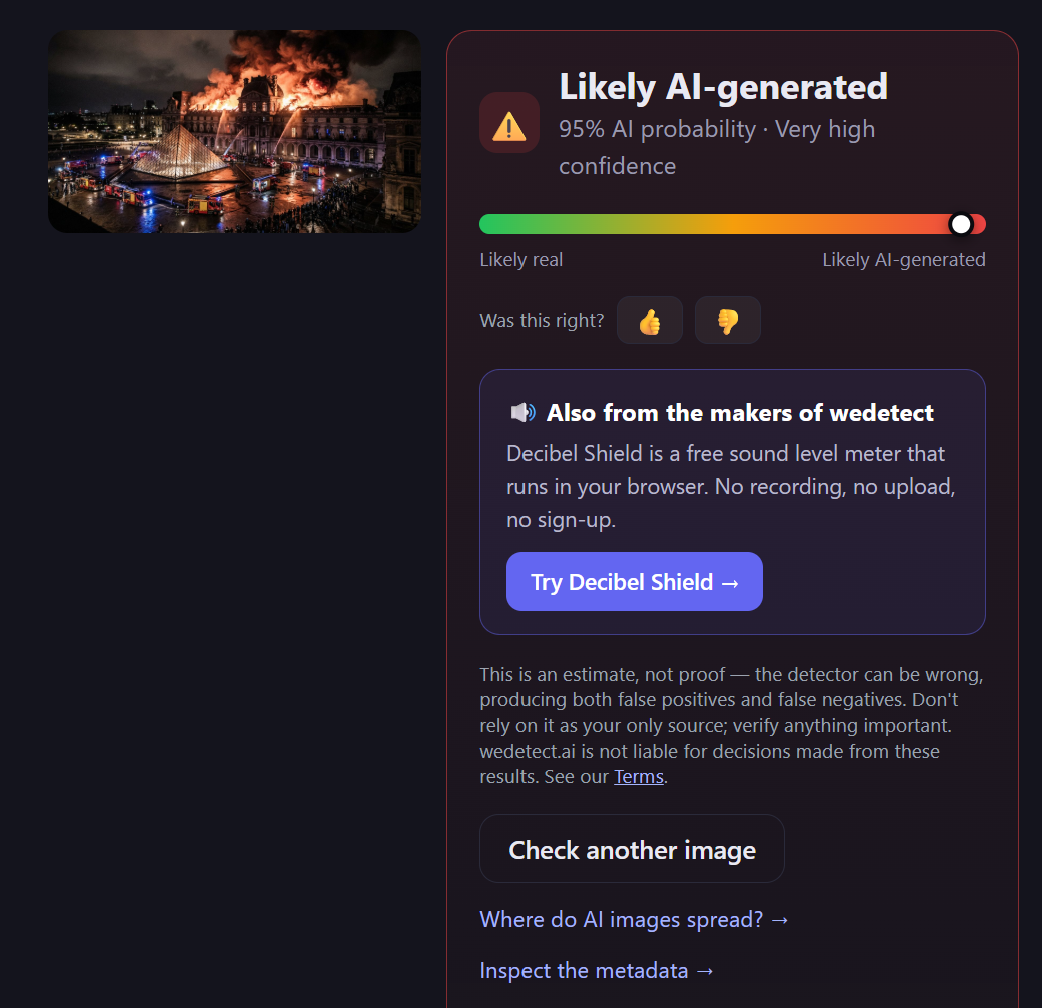
Results from Wedetect
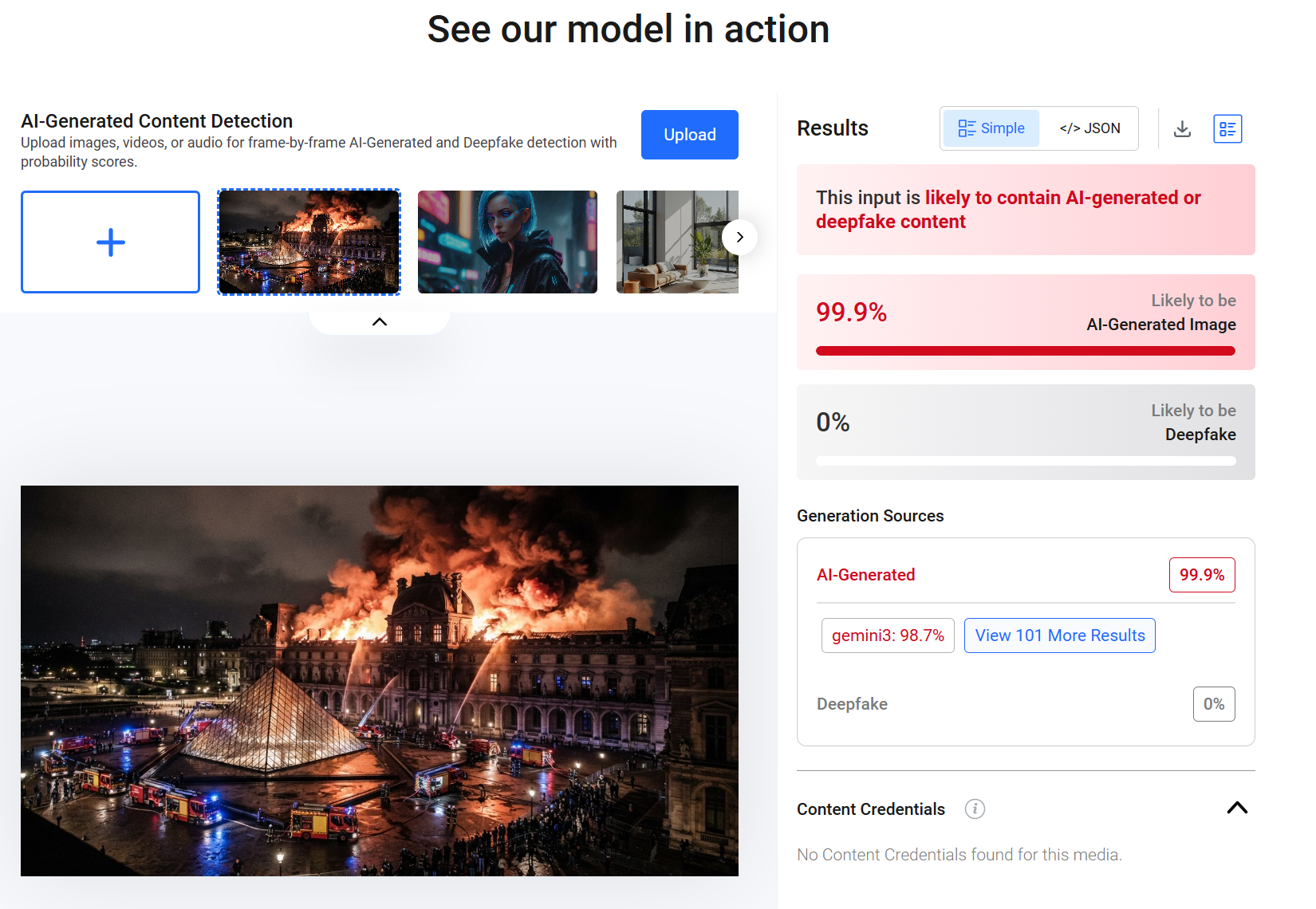
Results from Hive Moderation
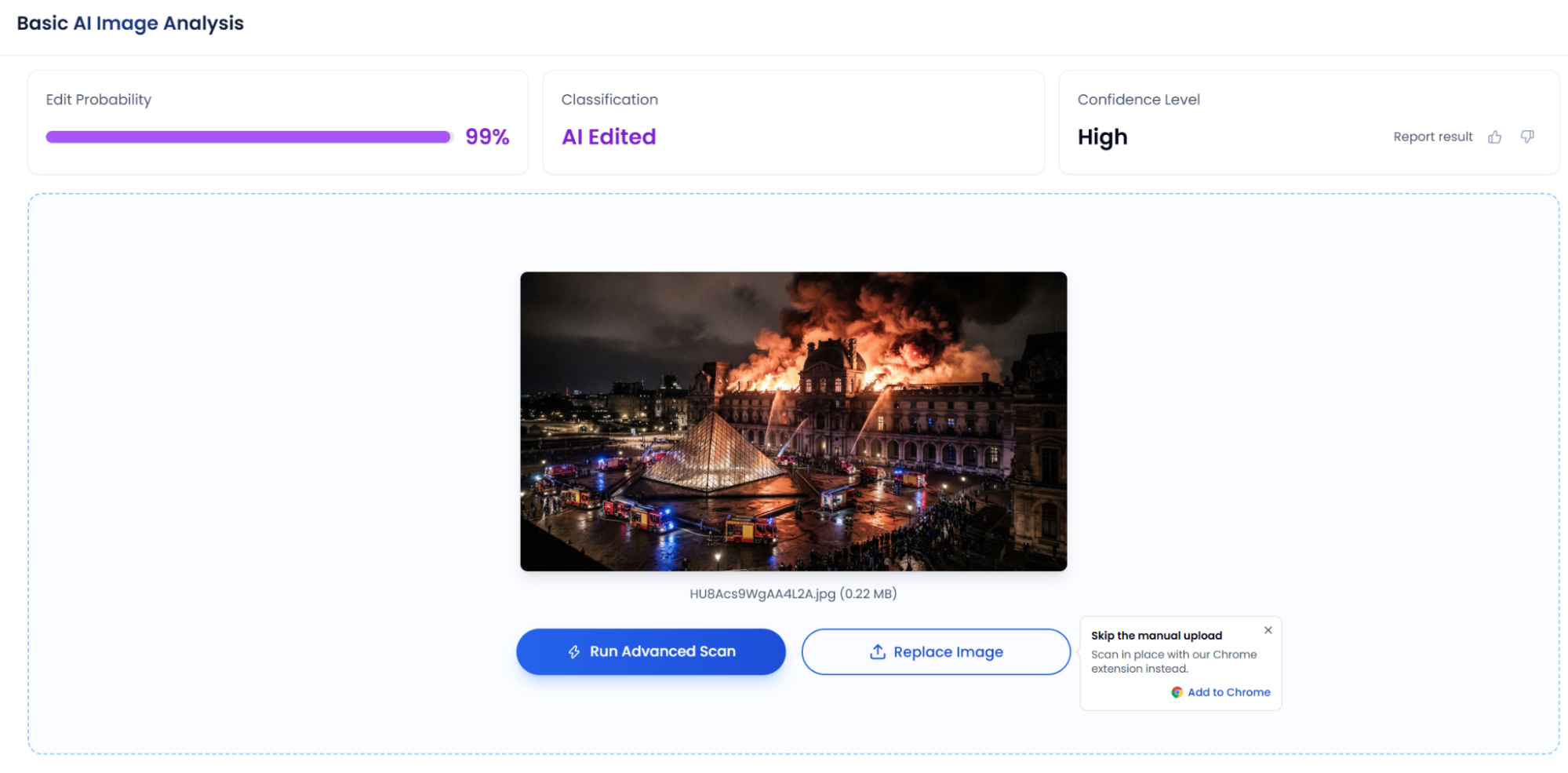
Results from Truthscan
The image was then compared with views on Google Earth. Its architecture and surroundings did not match the real Louvre museum.
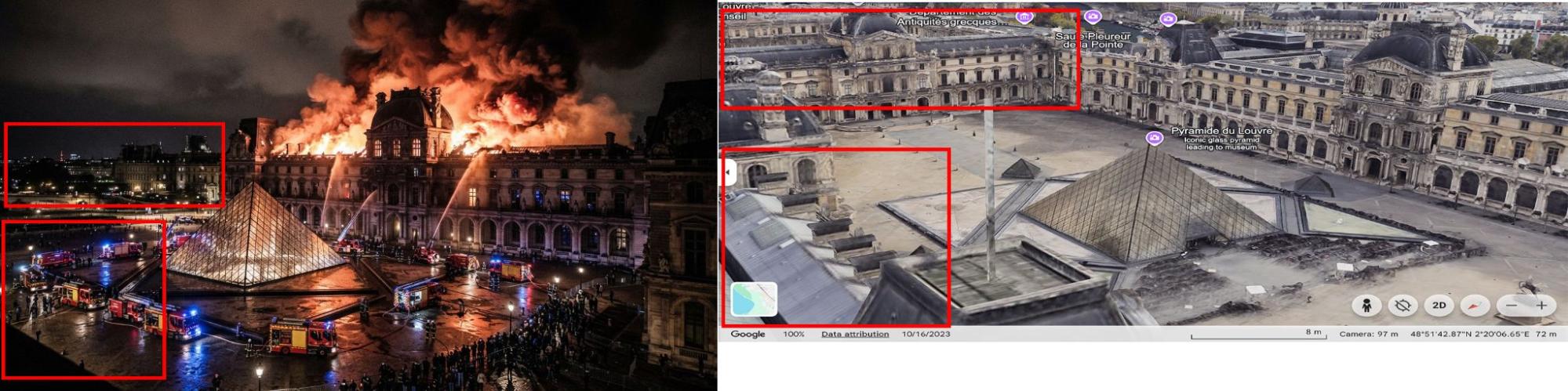
The image in the post, left, compared with Google Earth, right.
Map of the Louvre museum
What is actually happening in France?
Protests erupted across France on Oct 17, 2026, amid anger over the rising cost of living. What began as discontent over education broadened into demonstrations over inequality and public spending. Violence, arson, looting and clashes with police were reported, leaving about 150 officers injured and around 1,200 people arrested. President Emmanuel Macron said those responsible would face prosecution as political pressure mounted ahead of France’s 2027 presidential election.
Channel8 English, reporting on the demonstrations on Oct 18, found no evidence that the Louvre had caught fire.
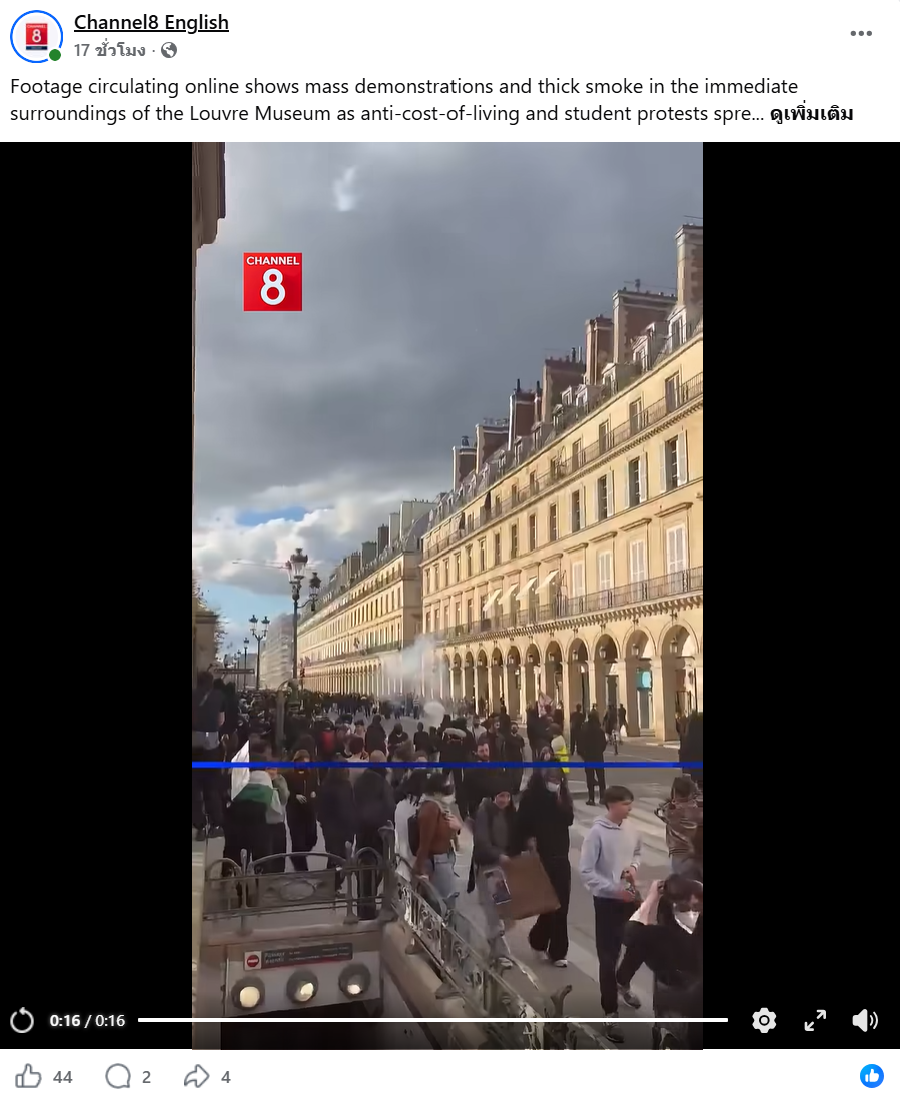
AI image falsely shows Louvre ablaze amid France unrest
An image purporting to show the Louvre Museum in Paris engulfed in flames, threatening priceless artworks including the Mona Lisa, is AI-generated and does not match the real site, a Thai PBS Verify investigation has found.
Violence was reported in several areas during protests in France on Oct 17, 2026, but there is no confirmed evidence that the Louvre caught fire as claimed.
Verification Process
- AI-image detection: The image was analysed using AI-detection tools including Wedetect, Hive moderation and Truthscan. The results indicated that it had been generated by artificial intelligence.
- Google Earth comparison: The scene was compared with imagery of the Louvre on Google Earth and did not match the museum’s actual appearance.
- News-source review: A Channel 8 English report on the protests, published on Oct 18, 2026, contained no report that the Louvre had been damaged by fire.
Impact of the false information
- Causes alarm: The claim could lead people to believe the Louvre was burning and priceless works of art were in immediate danger.
- Distorts the facts: It misrepresents the protests in France and may falsely link genuine unrest to unverified damage.
- Spreads confusion: A realistic AI-generated image can be shared without checks, allowing false information to circulate rapidly.
- Erodes trust in news: Placing a fabricated image in the context of a real event can make it harder for the public to distinguish authentic pictures from AI-generated material.
What to do with this misinformation?
- Check the source: Confirm that the image and accompanying text come from a credible news organisation, particularly when they concern a major event overseas.
- Verify the image: Use reverse-image search tools such as Google Lens, as well as AI-image detectors, to trace the original and identify anomalies.
- Compare several sources: Consult reputable news organisations and relevant authorities before concluding that an incident took place.
- Do not share unverified claims: Avoid circulating images or messages that may cause alarm until reliable evidence is available.
- Treat AI-generated images with caution: Appearance alone cannot establish whether an image is genuine. Verification should draw on several forms of evidence.