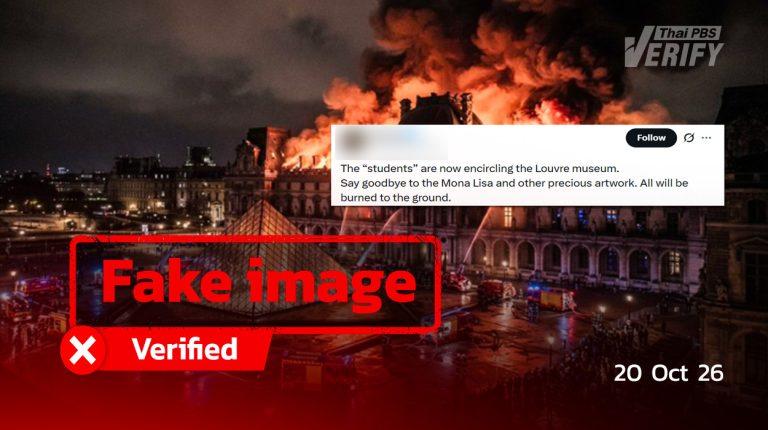
AI image falsely depicts pro-Palestinian Eiffel Tower protest
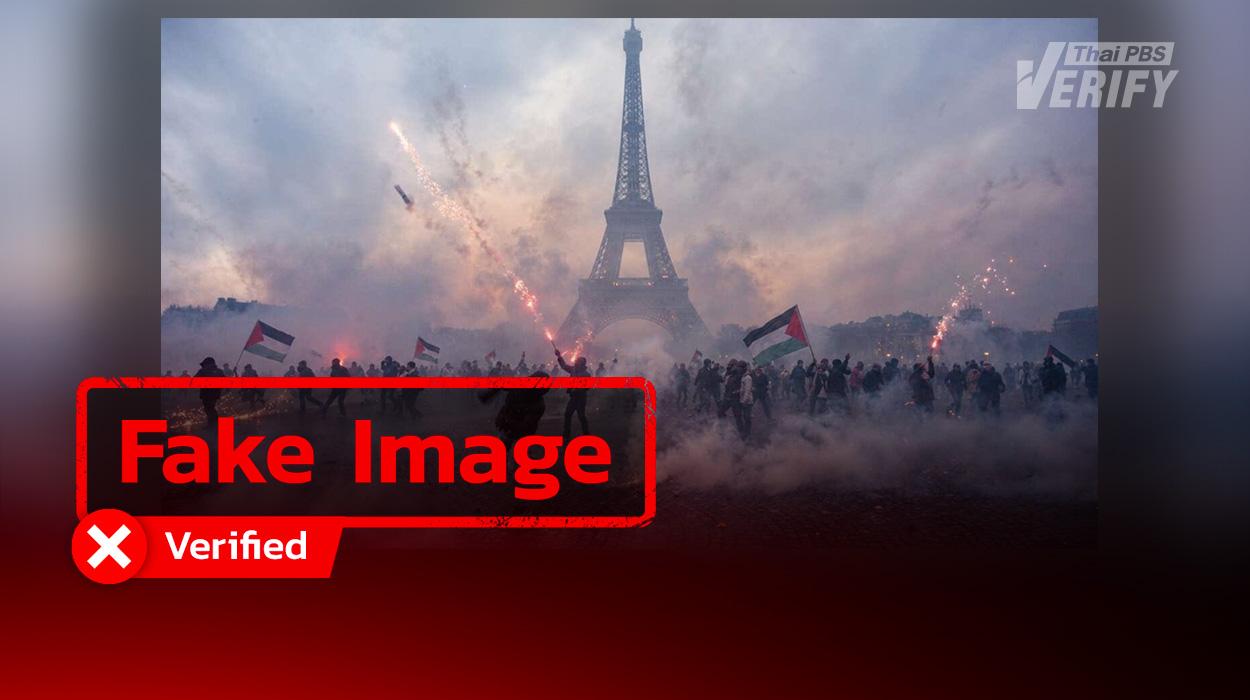
Thai PBS Verify traces false image to X
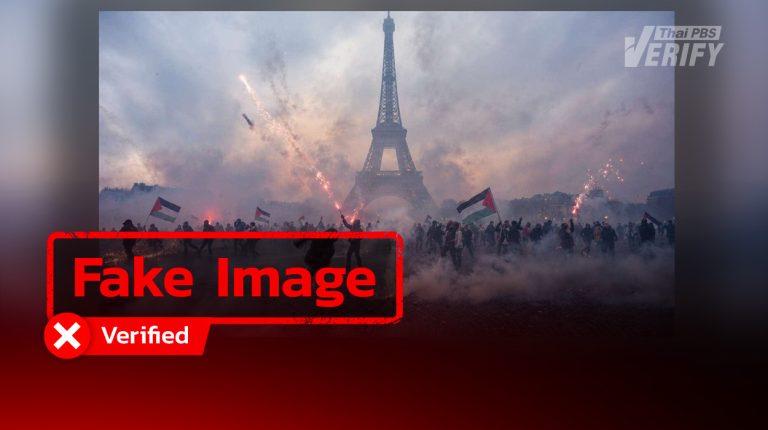
This fake picture shows protesters carrying Palestinian flags near the Eiffel Tower in France.
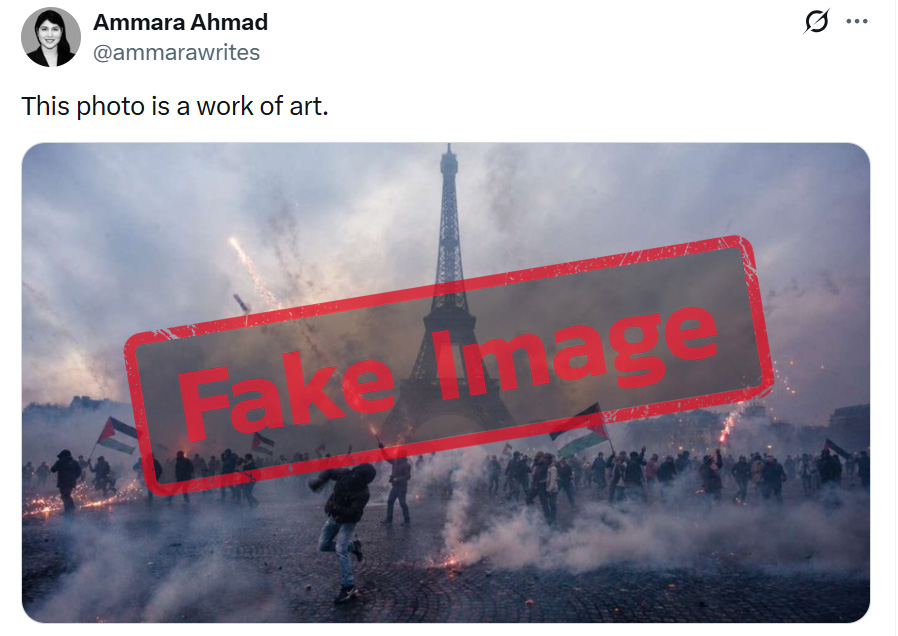
France saw demonstrations in early October 2026 involving students and trade unions demanding action on education, the cost of living and other issues. Against that backdrop, Thai PBS Verify found an X post featuring an image of protesters carrying Palestinian flags near the Eiffel Tower, creating the impression that it showed a real event in France.
The post stated:
“This photo is a work of art.”
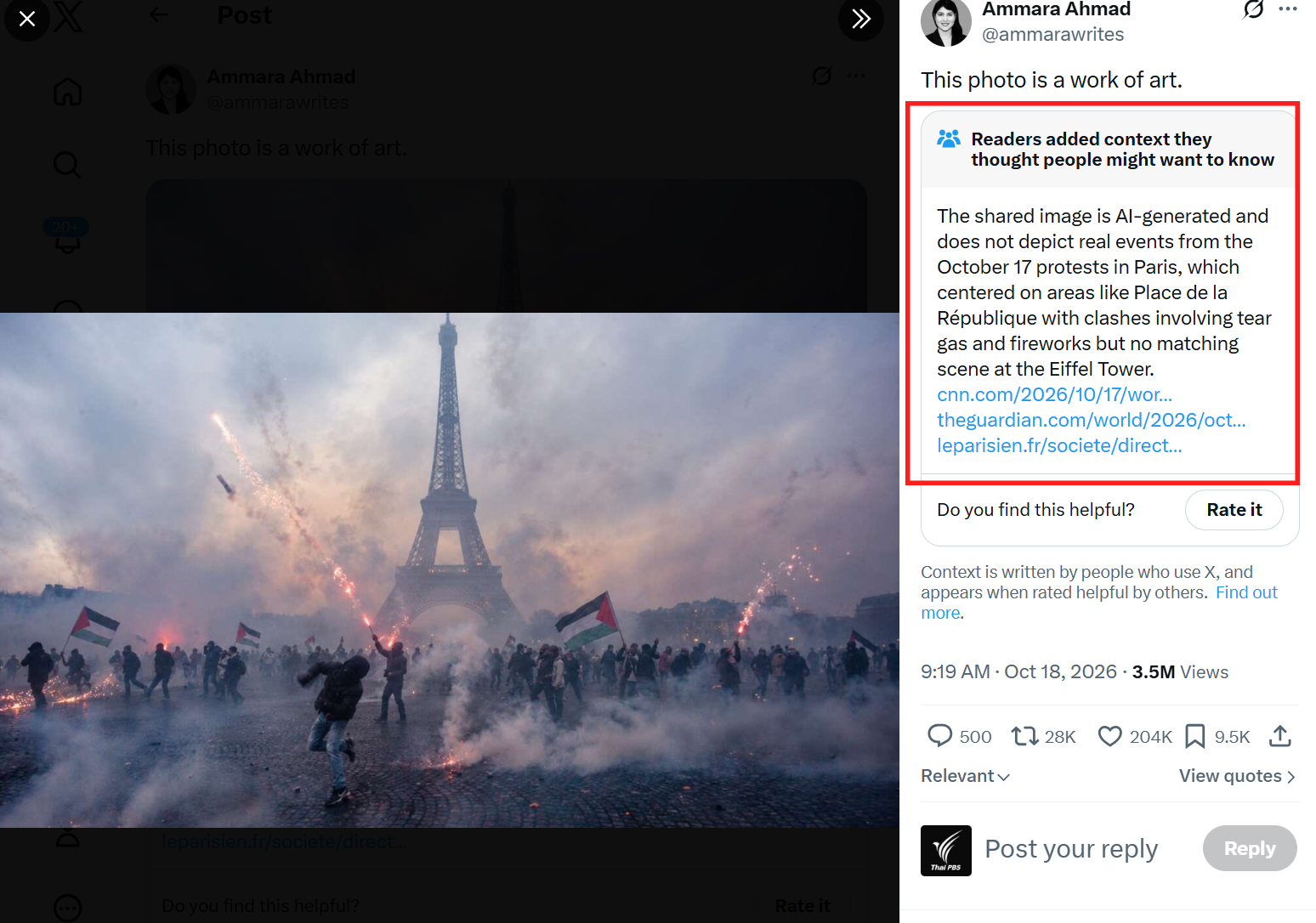
This photo was published on Oct 18, 2026, the post attracted more than 3.5 million views and over 204,000 likes.
Is this a fake photo of protesters near the Eiffel Tower genuine?
A reverse-image search using Google Lens found no clear source for the picture and no matching image in reports by reputable international news organisations that could verify it.
Thai PBS Verify then checked the image with three tools designed to detect AI-generated or manipulated content, namely SynthID, Hive Moderation and OpenAI’s verification tool. Google’s SynthID said the image contained signals indicating it had been generated or altered using an OpenAI image tool.
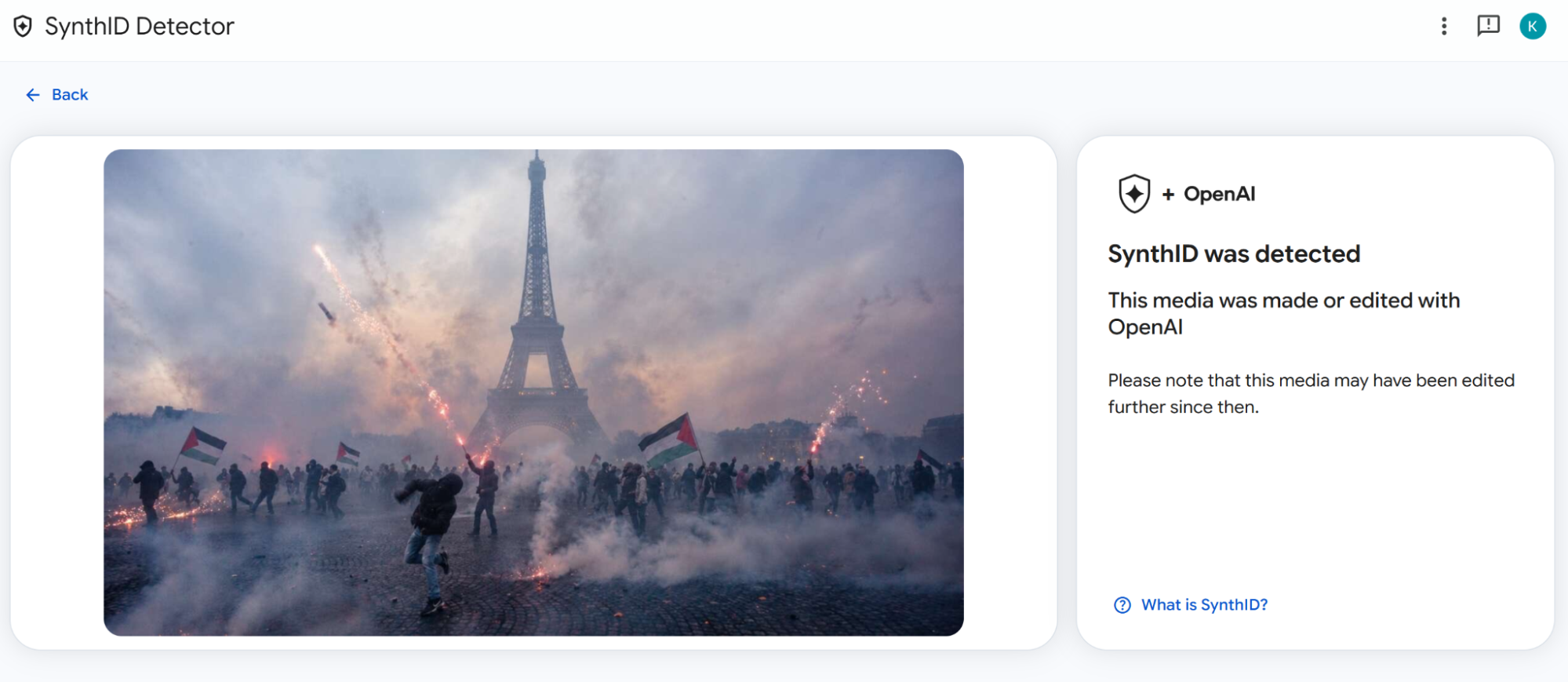
Google SynthID result
Hive Moderation, meanwhile, gave the image a 17.9% probability of being AI-generated and detected a 31.6% likelihood that the gptimage2 model was involved. This was consistent with SynthID’s indication that an OpenAI tool had been used to generate or alter the picture.
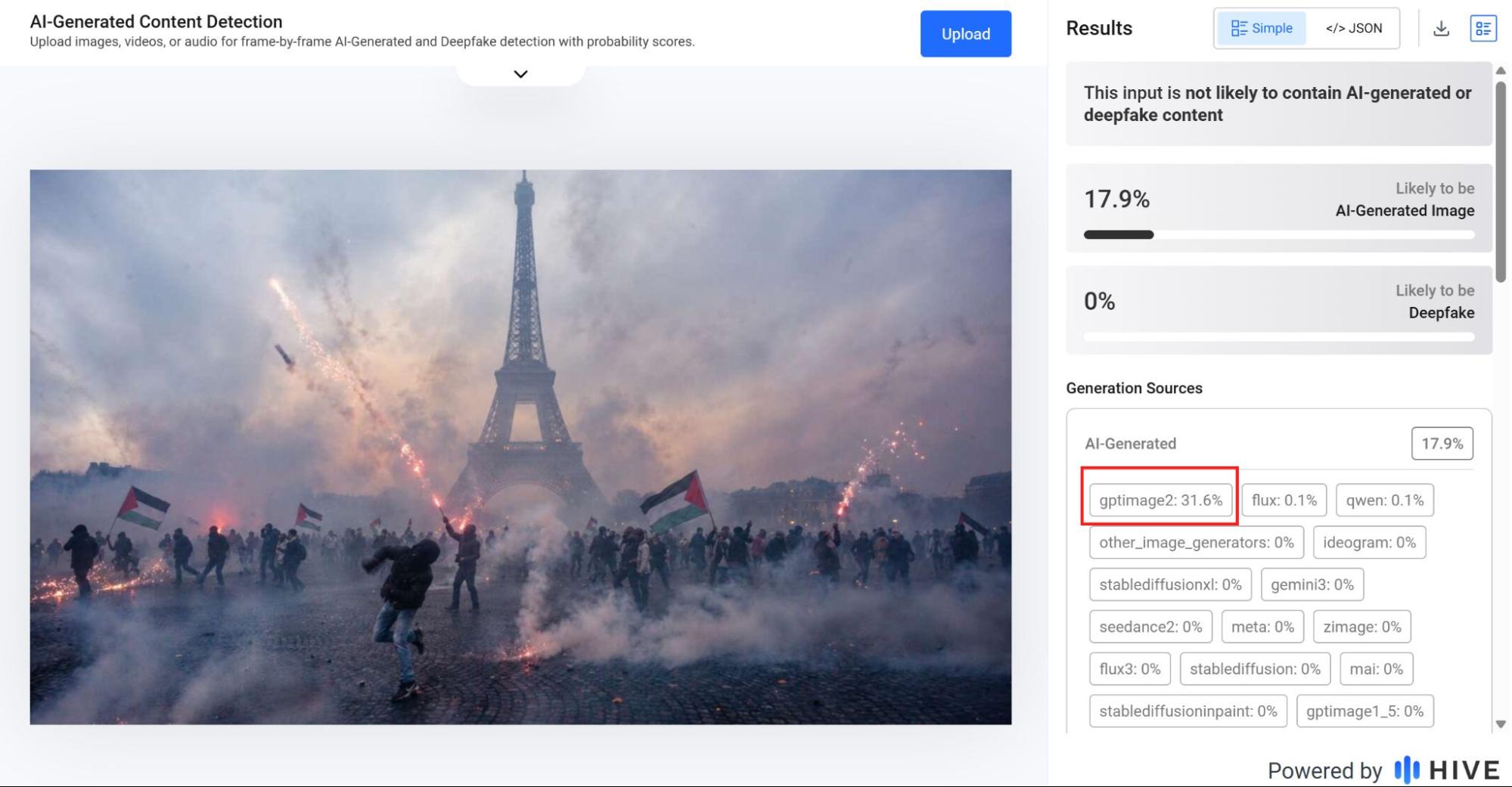
Hive Moderation analysis
OpenAI’s Verify OpenAI-generated content tool also said the image was AI-generated using an OpenAI product. It added that it had detected a SynthID watermark originating from OpenAI.
Taken together, the three tools produced consistent indications that the image had been generated or altered using OpenAI technology.
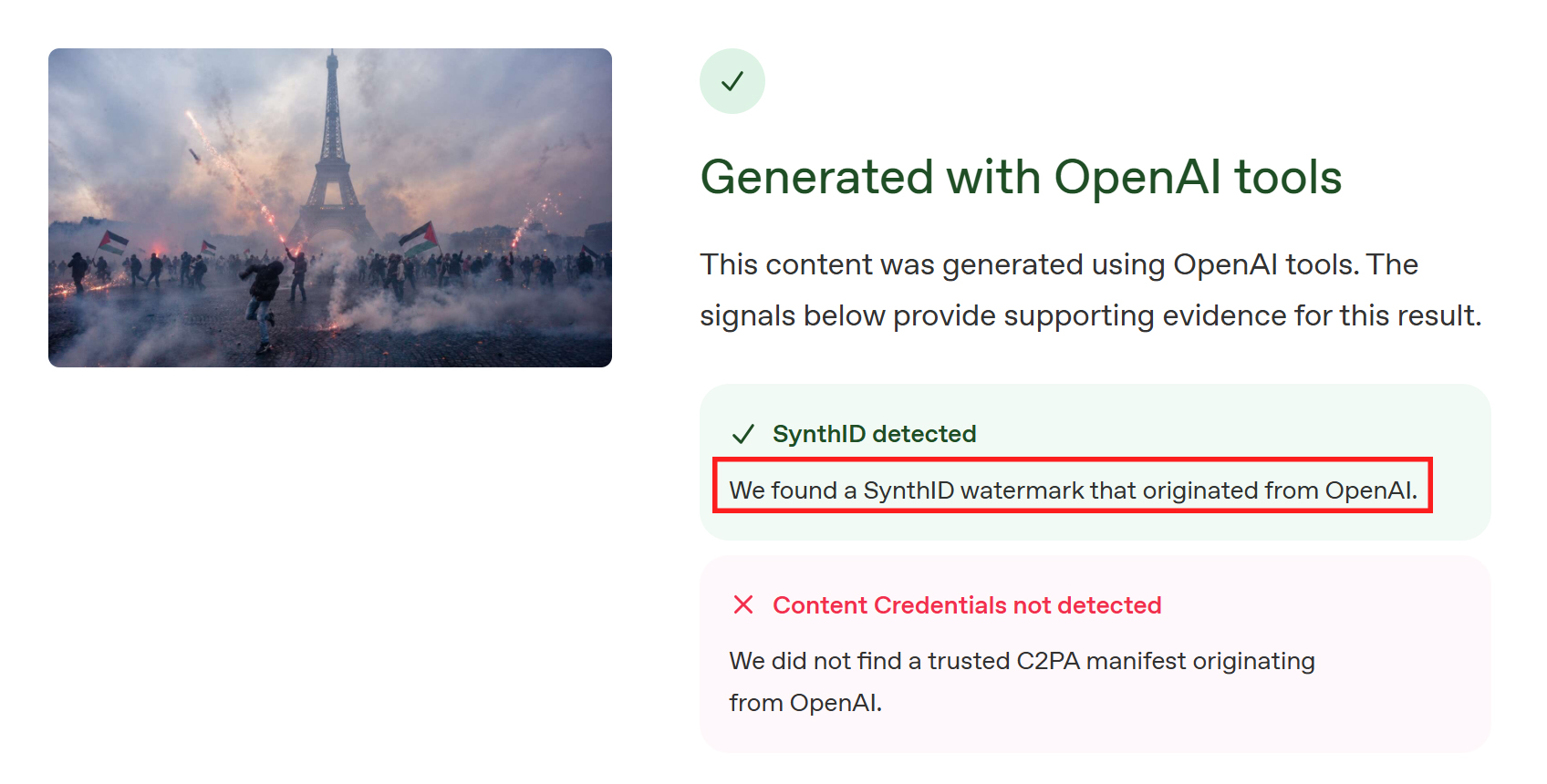
OpenAI content-verification results
In addition, a label displayed by X beneath the post said the image had been generated with AI.
Other visual inconsistencies
- Flags seen at the protest
Images from the demonstrations held at the time show participants carrying several types of flags, not only Palestinian flags.
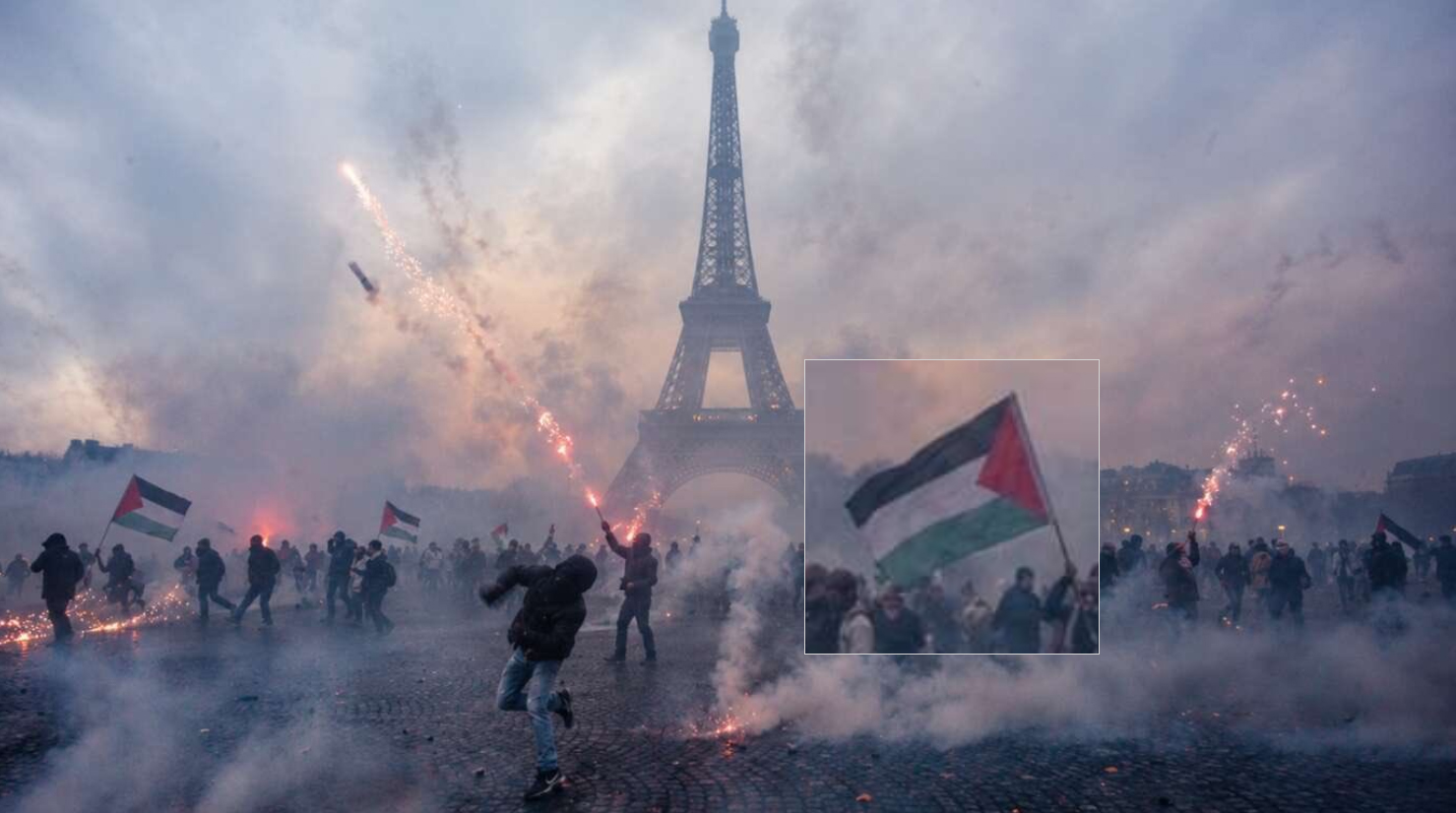
The disputed image shows Palestinian flags.
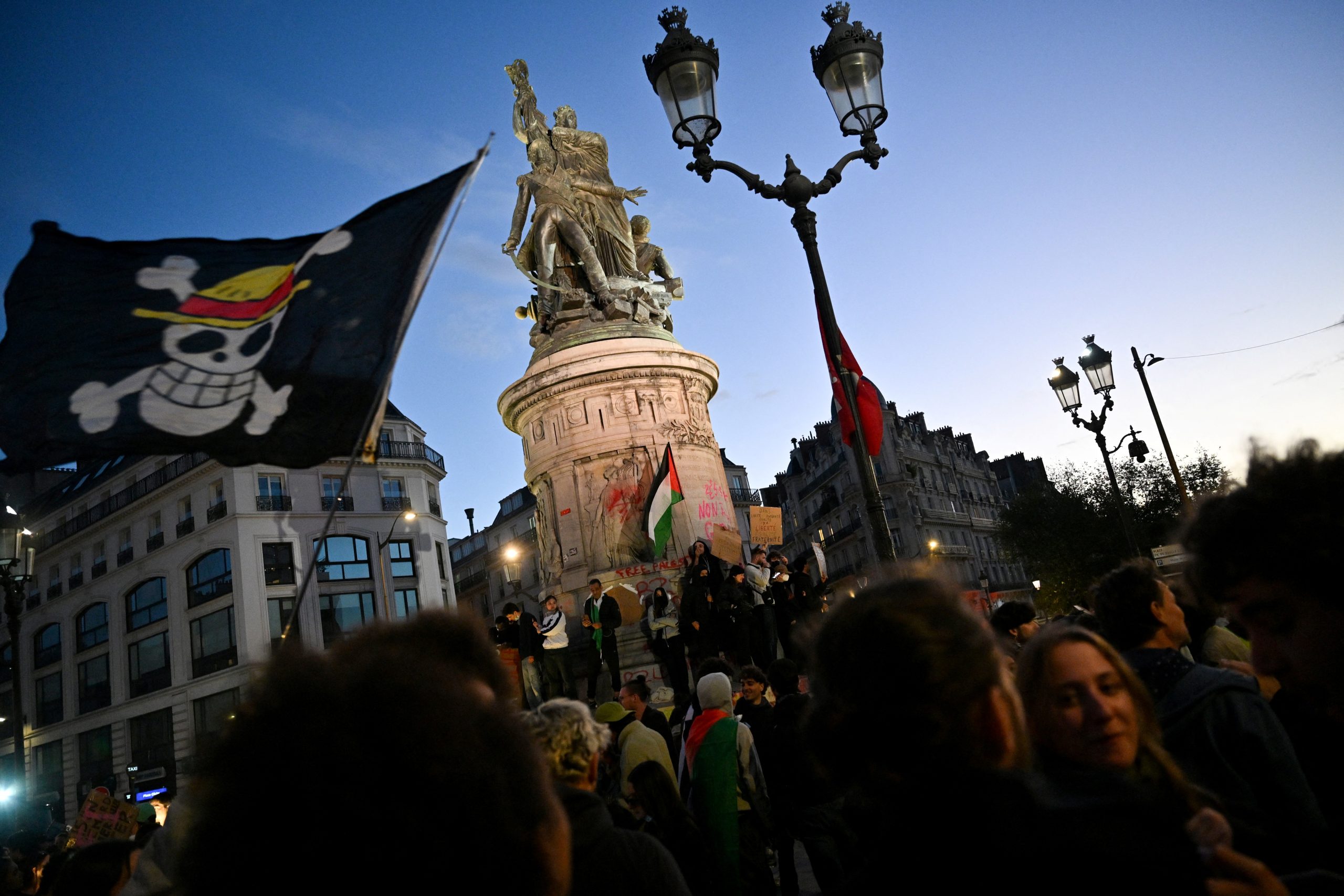
AFP said that this image is a photo of demonstrations in France on Oct 17, 2026.
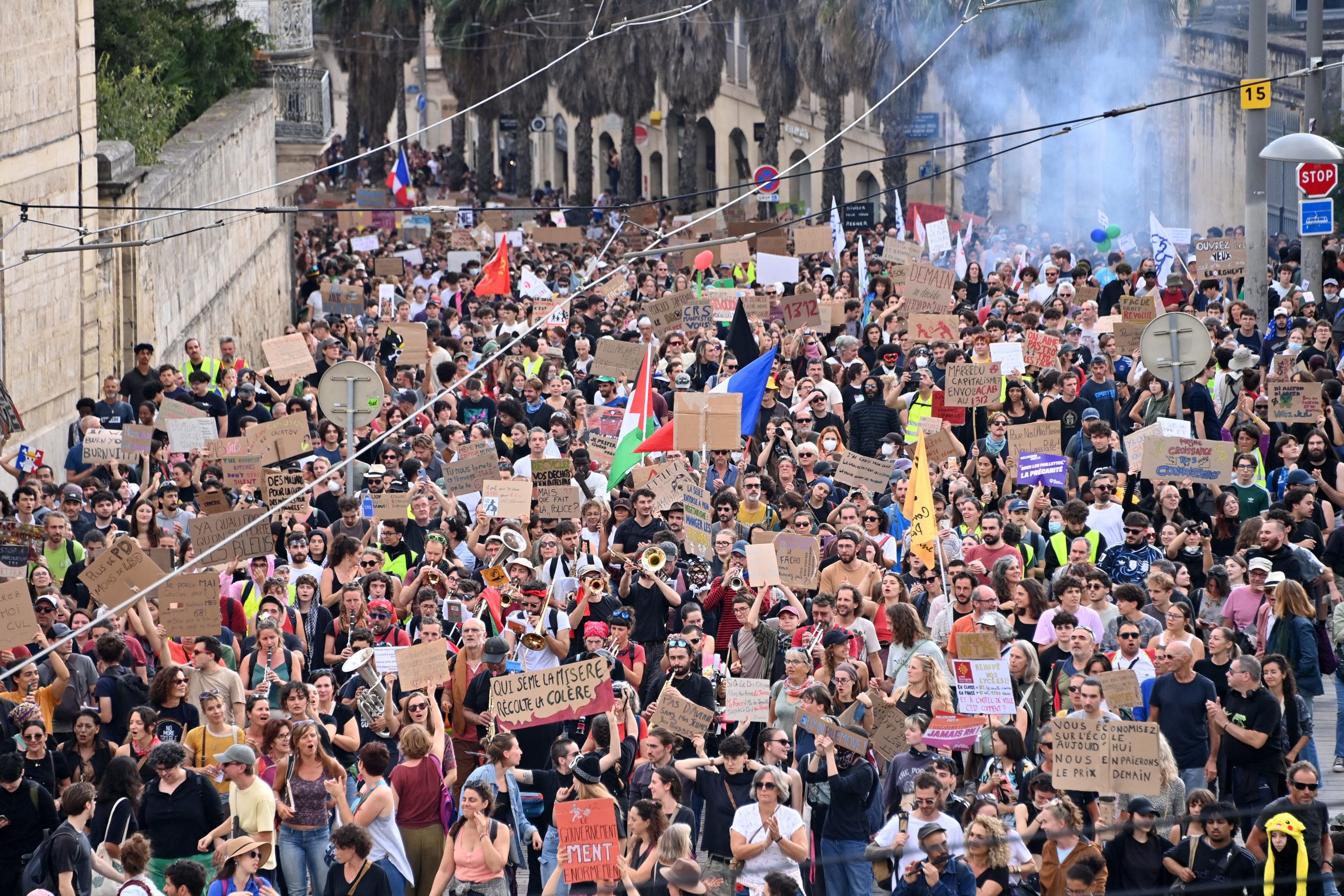
AFP said that this image is a photo of demonstrations in France on Oct 17, 2026.
- The ground and surroundings near the Eiffel Tower
The ground and other features around the Eiffel Tower differ from those visible in the disputed image. Paved areas resembling those in the picture can be found near the statue of Marshal Gallieni or on the side facing the statue of Marshal Joseph Joffre, both of which offer clear views of the Eiffel Tower.
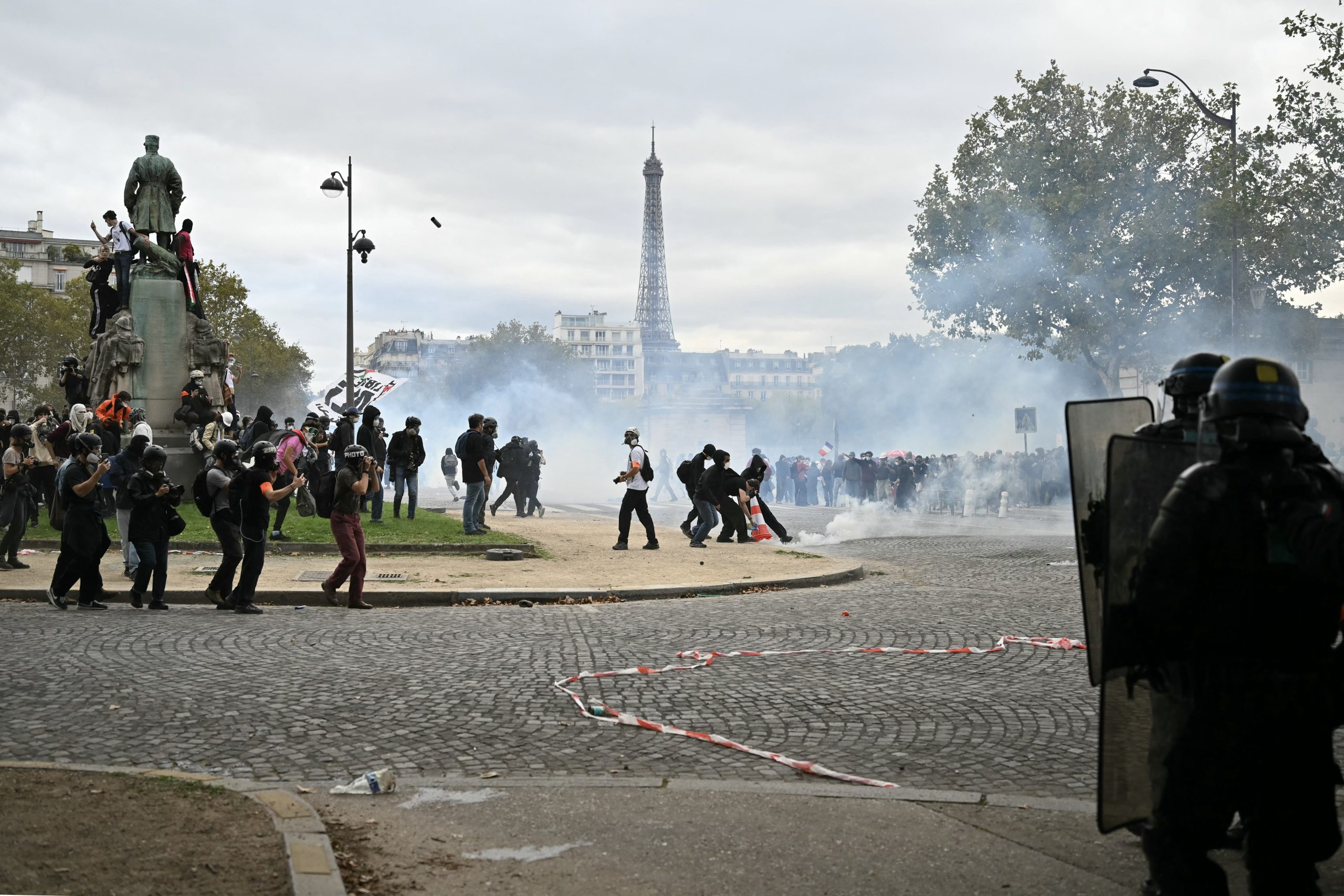
An AFP image from near the Marshal Gallieni monument, with the Eiffel Tower in view.
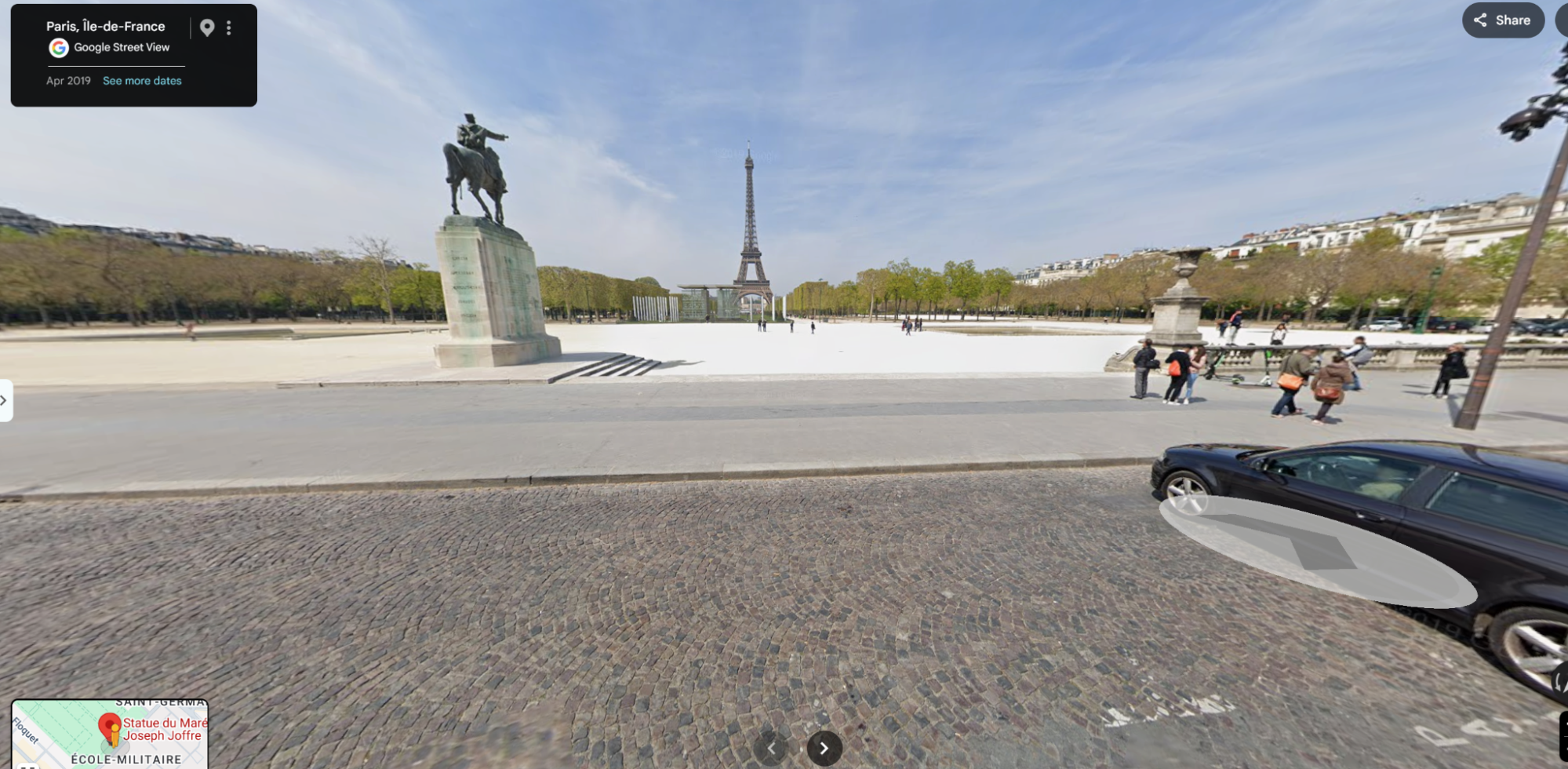
The side facing the Marshal Joseph Joffre monument. Embedded Google Maps view: Marshal Joseph Joffre monument area.
However, neither monument appears in the image under review, so it cannot be confirmed that the picture was taken in either location.
Thai PBS Verify also compared the apparent scale of the Eiffel Tower and the surrounding landscape with footage from the Ha Lua Official YouTube channel, used with the owner’s permission. The footage shows parkland and pedestrian paths around the tower, unlike the road surface seen in the AI-generated image.
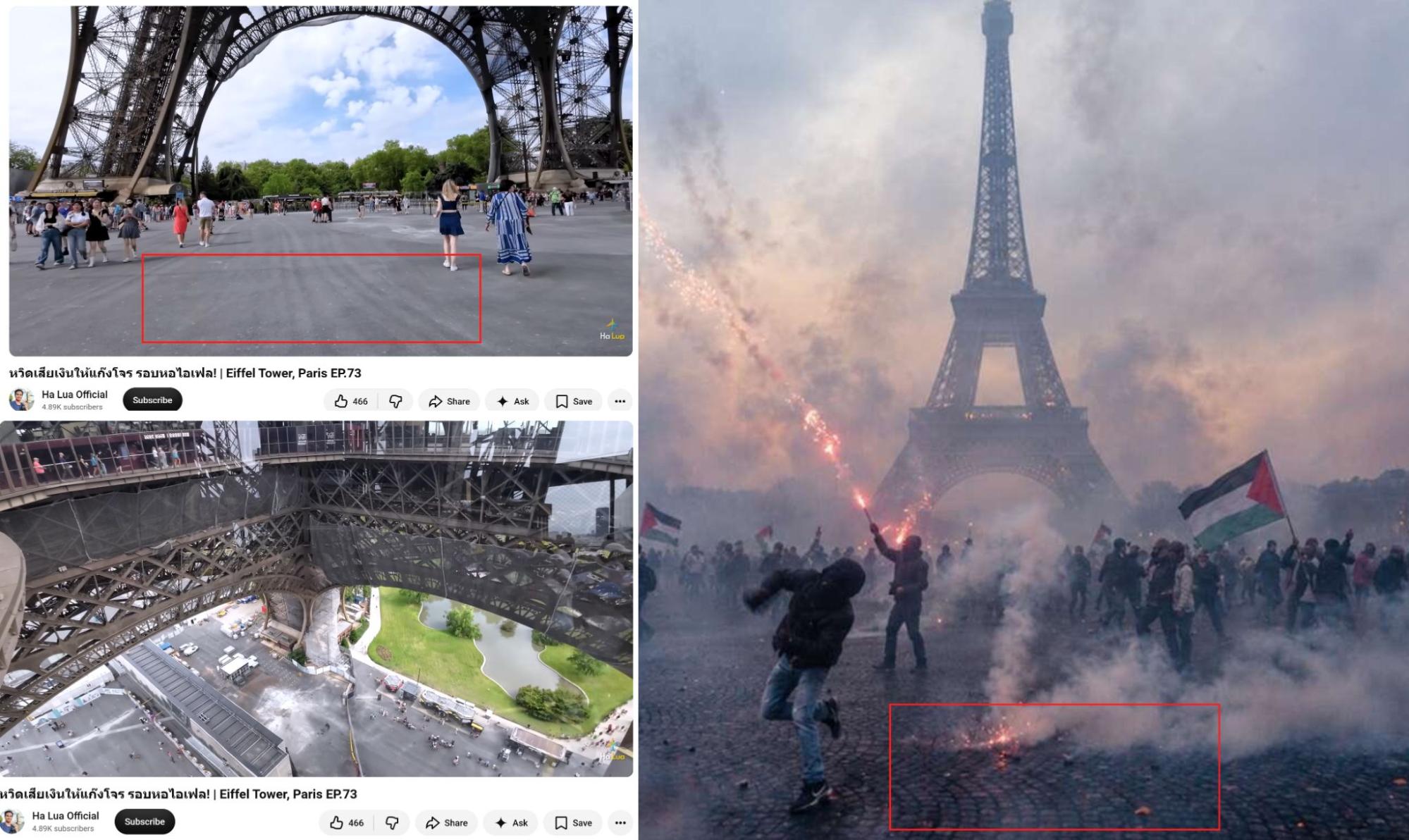
The area around the Eiffel Tower in footage from Ha Lua Official.
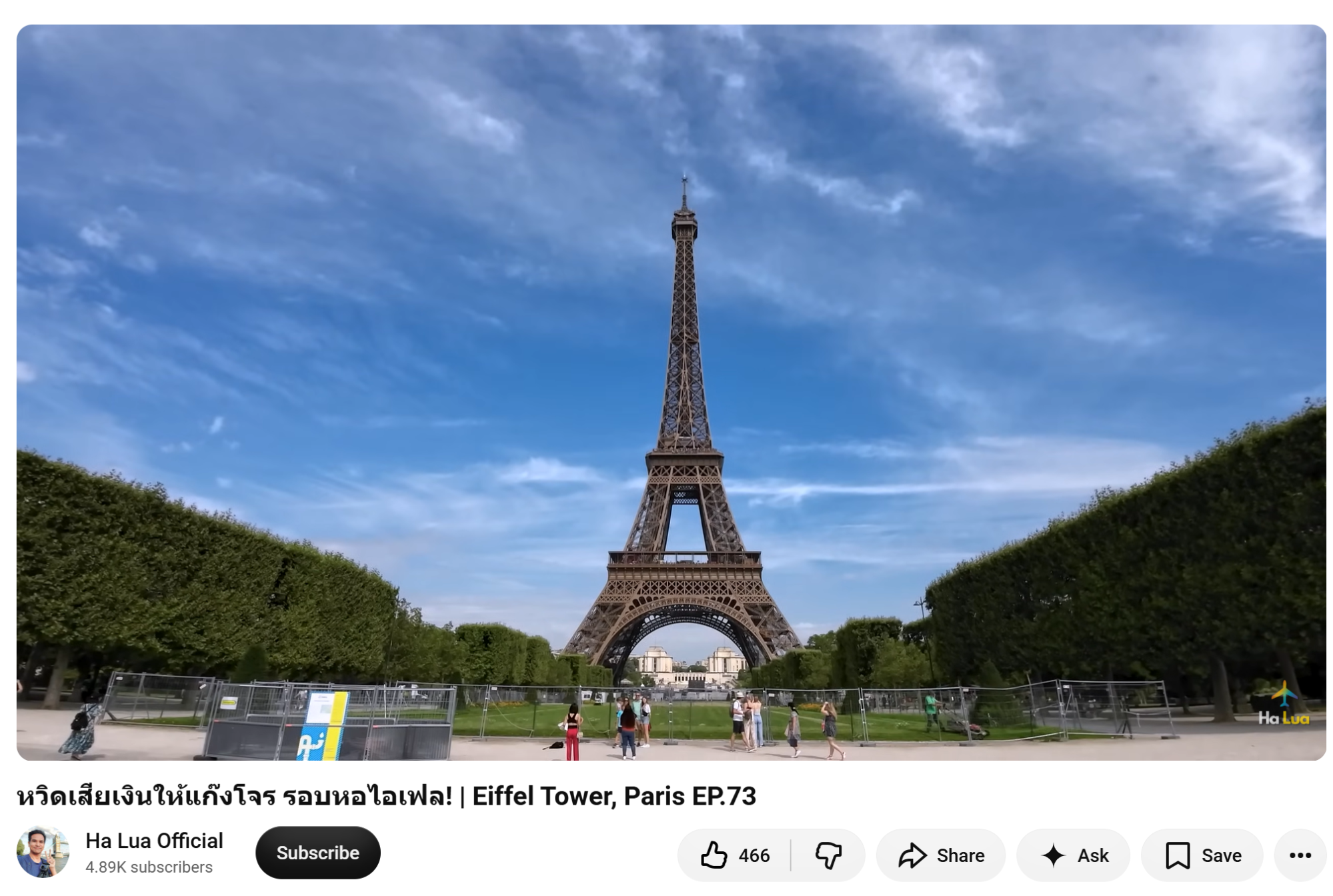
The area around the Eiffel Tower in footage from Ha Lua Official.
What really happened?
The image said to show protesters carrying Palestinian flags near the Eiffel Tower was generated by AI. France did, however, experience real demonstrations in October 2026.
Verification Process
- Google Lens was used to search for the original image and related sources. No clear source or matching picture from a reputable news organisation was found.
- The image was tested with SynthID, Hive Moderation and OpenAI’s AI-content verification tool. All produced indications that it had been generated or altered with AI.
- The label beneath the X post was checked and found to state that the image was AI-generated.
- Elements in the picture were compared with the surroundings of the Eiffel Tower. The road surface and nearby features did not match the locations used for comparison.
Why this misinformation matters
- It distorts understanding of events abroad. An AI-generated picture can lead readers to believe an incident occurred even when there is no evidence that the image was taken at the claimed place and time.
- It misrepresents demonstrations. Placing an AI-generated image in the context of a real event can create false impressions about the protest, its participants or violence said to have occurred.
- It allows false information to spread widely. A realistic image linked to a trending event may be shared by people who believe it is genuine, rapidly extending the reach of misleading information.
- It undermines trust in genuine news images. When AI-generated pictures circulate alongside authentic photographs, audiences may find it harder to distinguish between them and may begin to doubt reporting from credible news organisations.
What to do with this misinformation?
- Check the source before sharing. Use Google Lens for a reverse-image search to see where a picture has appeared and whether reputable news organisations have published images from the same event. If no original can be found, seek more evidence before deciding whether it is genuine.
- Use more than one AI-detection tool. SynthID, Hive Moderation and OpenAI’s verification service can support an investigation, but their results should be treated with caution. No single analysis can establish the truth of an image on its own.
- Compare the picture with reports from credible news organisations. Search AFP, Reuters or AP using the claimed location, date and event, then compare the images, setting and captions. A genuine event can usually be cross-checked against other reporting or photographs.
- Examine the details and context. Check whether roads, buildings, monuments, flags, clothing and the positions of people are consistent with the claimed location and date, and look for visual anomalies.
- Check platform labels and the publisher’s explanation before believing or sharing the content. Any AI warning should be considered alongside other evidence. If the image still cannot be verified, do not share it — or make clear that its authenticity remains unconfirmed.