AI-generated content of Nattaphong Ruengpanyawut and Dhanin Chearavanont linked to fraudulent investment link
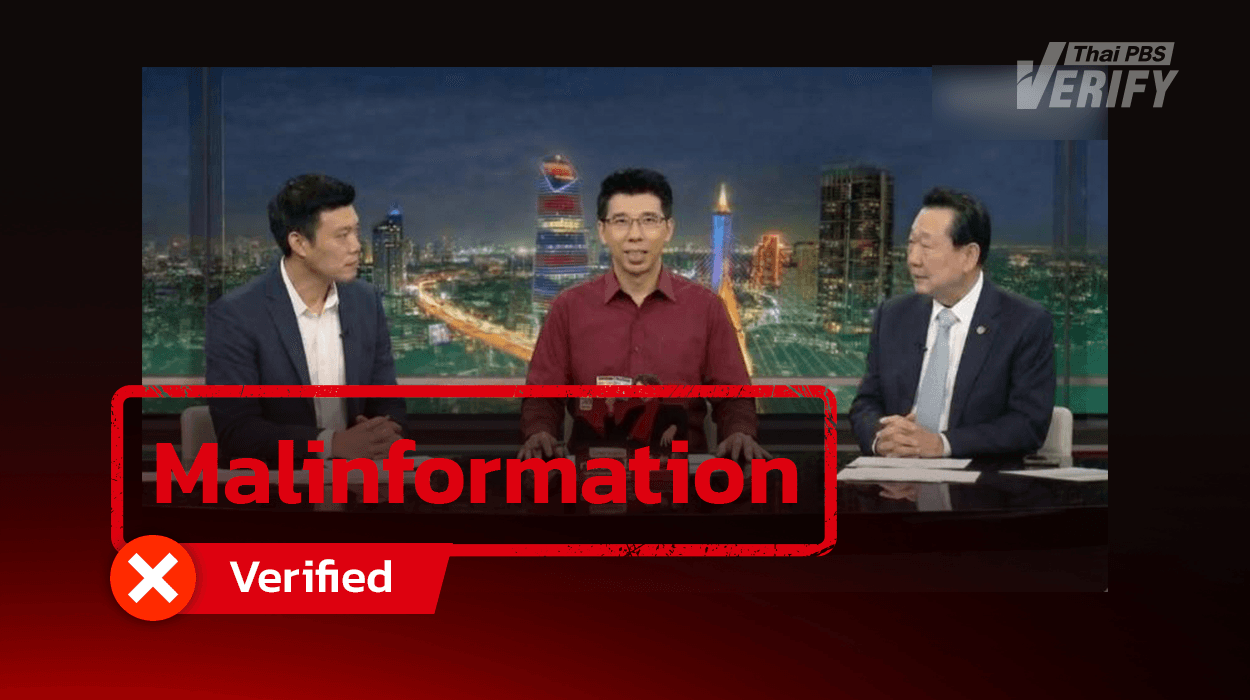
Thai PBS Verify found the piece of malinformation on: Facebook
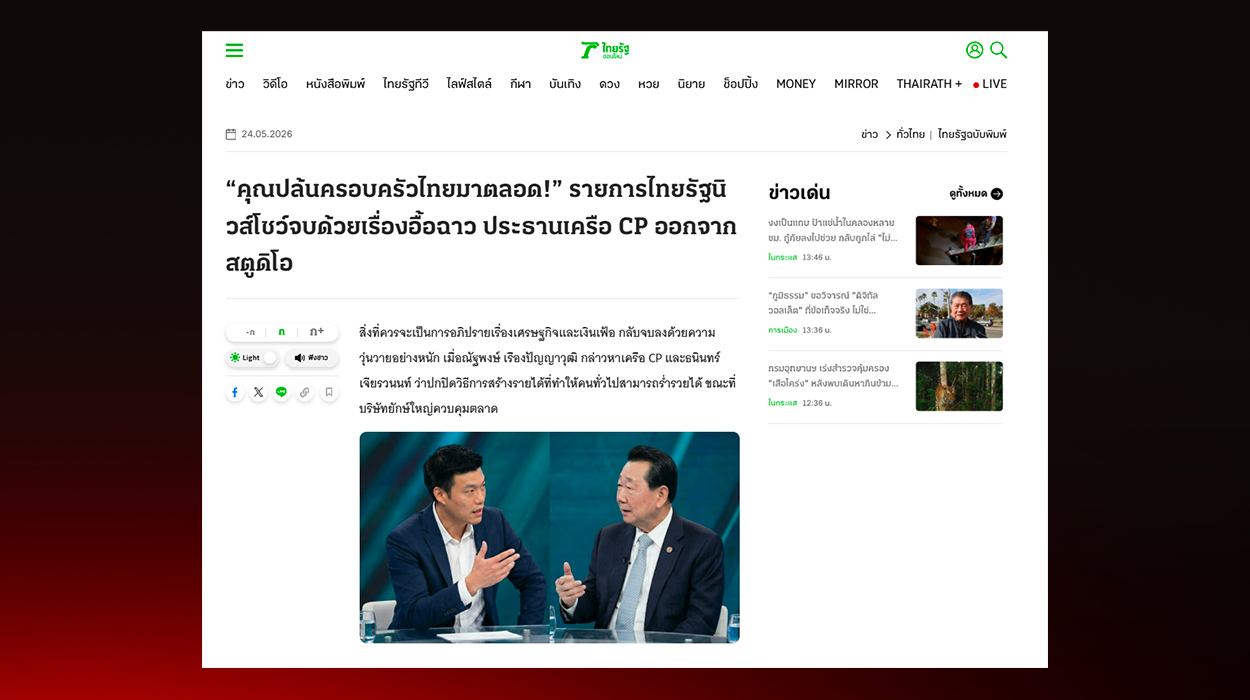
An AI deepfake news article on Nattaphong Ruengpanyawut and Dhanin Chearavanontlink was found on social media.
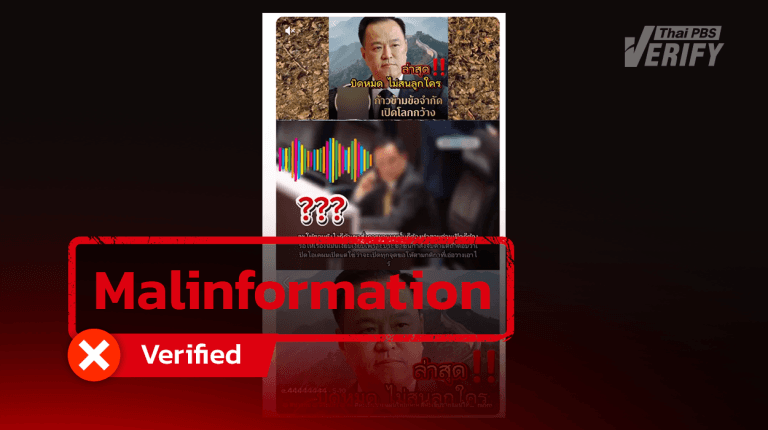
Thai PBS Verify investigated a website asserting that Natthaphong “Teng” Ruengpanyawut, leader of the People’s Party, accused Dhanin Chearavanont, Senior Chairman of the Charoen Pokphand Group (CP Group), of concealing financial strategies that could enrich the Thai public. The article claimed to be a summary of a Thairath TV program, featuring well-known anchor Phakphoom Phansatit. The deceptive platform also included accompanying images and text urging readers to click an investment link to generate revenue, falsely claiming that Mr. Natthaphong utilized this automated profit-making program themselves and reaped substantial returns from it.
Furthermore, the other high-profile people, such as Sarath Ratanavadi, falsely claimed that he had previously invested through this platform as well.
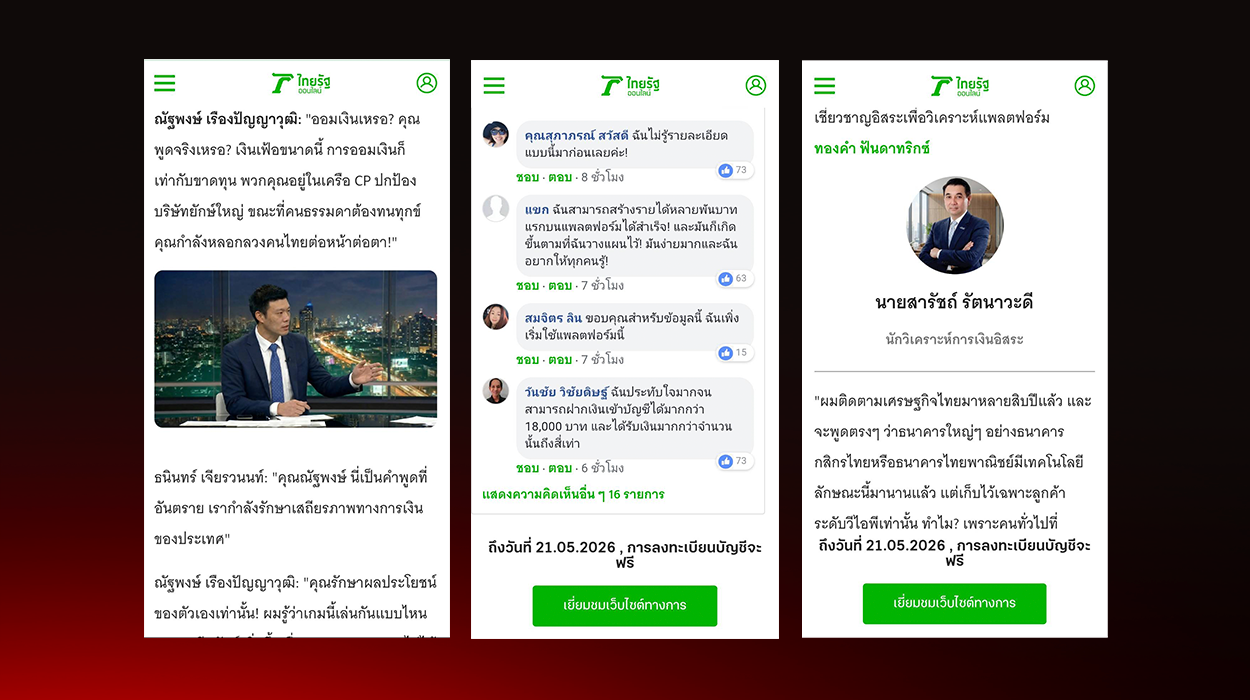
Screenshots of the fabricated article aimed at deceiving netizens.
The entire images and content are proven to be fabricated
Later, the “Fact Check – People’s Party” Facebook page issued a clarification, stating that the imagery was AI-generated, and the entire narrative was utterly baseless. The statement further suggested that the fraudulent website mimicked the interface layout of the Thairath Online news portal aimed at projecting legitimacy to unsuspecting viewers.
The details of the statement are the following:
“Complaints have been received regarding a sponsored ad campaign running on Facebook, featuring content that depicts the leader of the People’s Party and the CP Group chairman engaging in an argument on the ‘Thairath News Show’ program by ThairathTV. The ad presents what appears to be a dialogue from the program but ultimately transitions into inviting viewers to invest, complete with a link directed to a registration page.
“Upon investigation, it was discovered that the image was simulated with AI, and the narrative holds absolutely no truth whatsoever. Because the two individuals have never once appeared on any program together, this website mimicked the official Thairath – Thairath Online news portal’s interface, making it appear as though it originated from the portal.
“With the offense being so blatant, the URL clearly visible, and this kind of ad campaigns requiring a link to an identifiable credit card, a request has been made to Mr. Chaichanok Chidchob, Minister of Digital Economy and Society, to intervene and order a crackdown to bring the perpetrators to justice. Because the evidence is entirely complete, if the minister addresses this issue with genuine seriousness, tracking down the lawbreakers should not prove difficult.”
Additionally, when certain images from the content were analyzed with AI image-detection tools, the results indicated a 99.9-percent probability that the pictures were AI-generated.
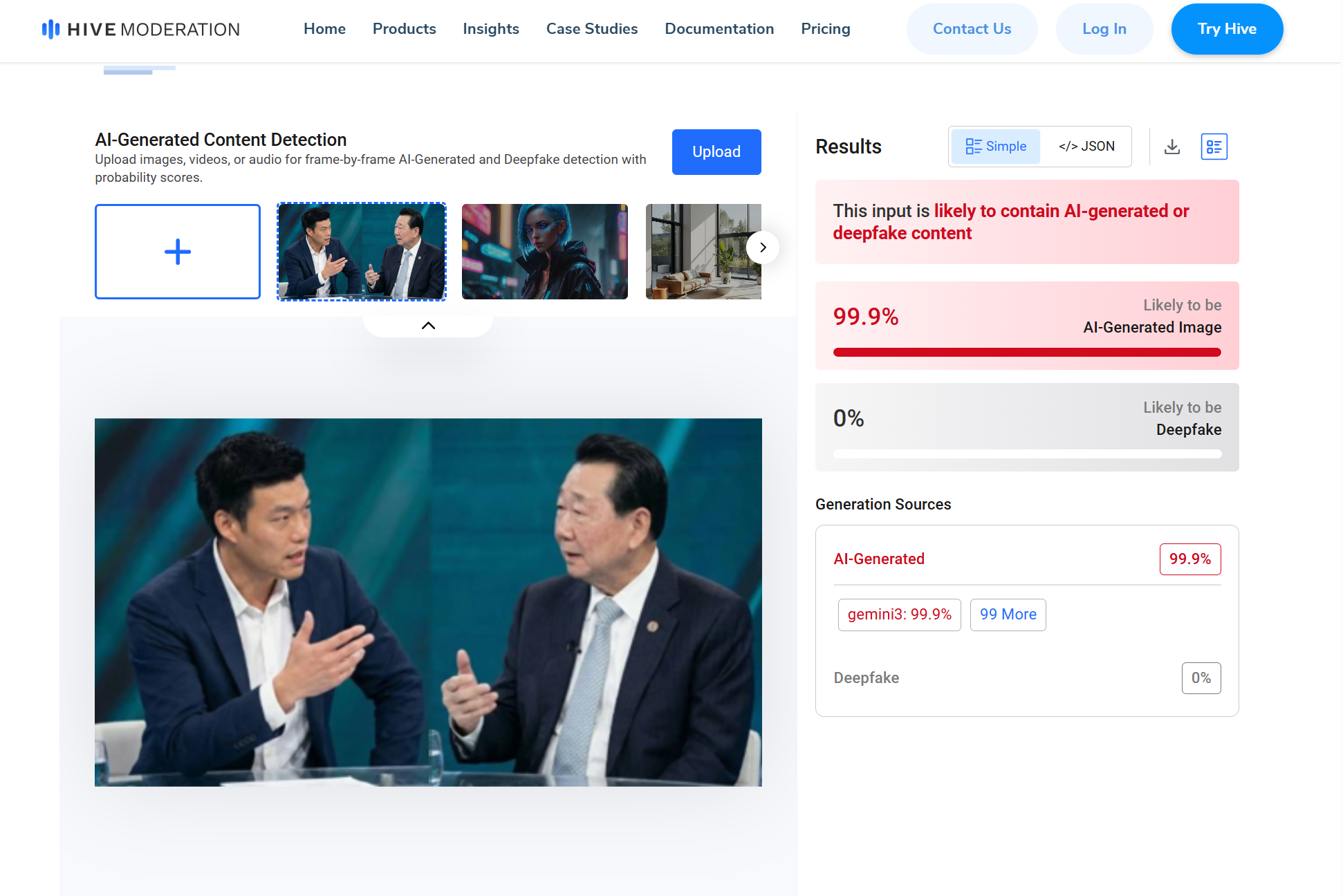
The AI detection results indicate that the photos were highly likely to have been generated or manipulated by AI.
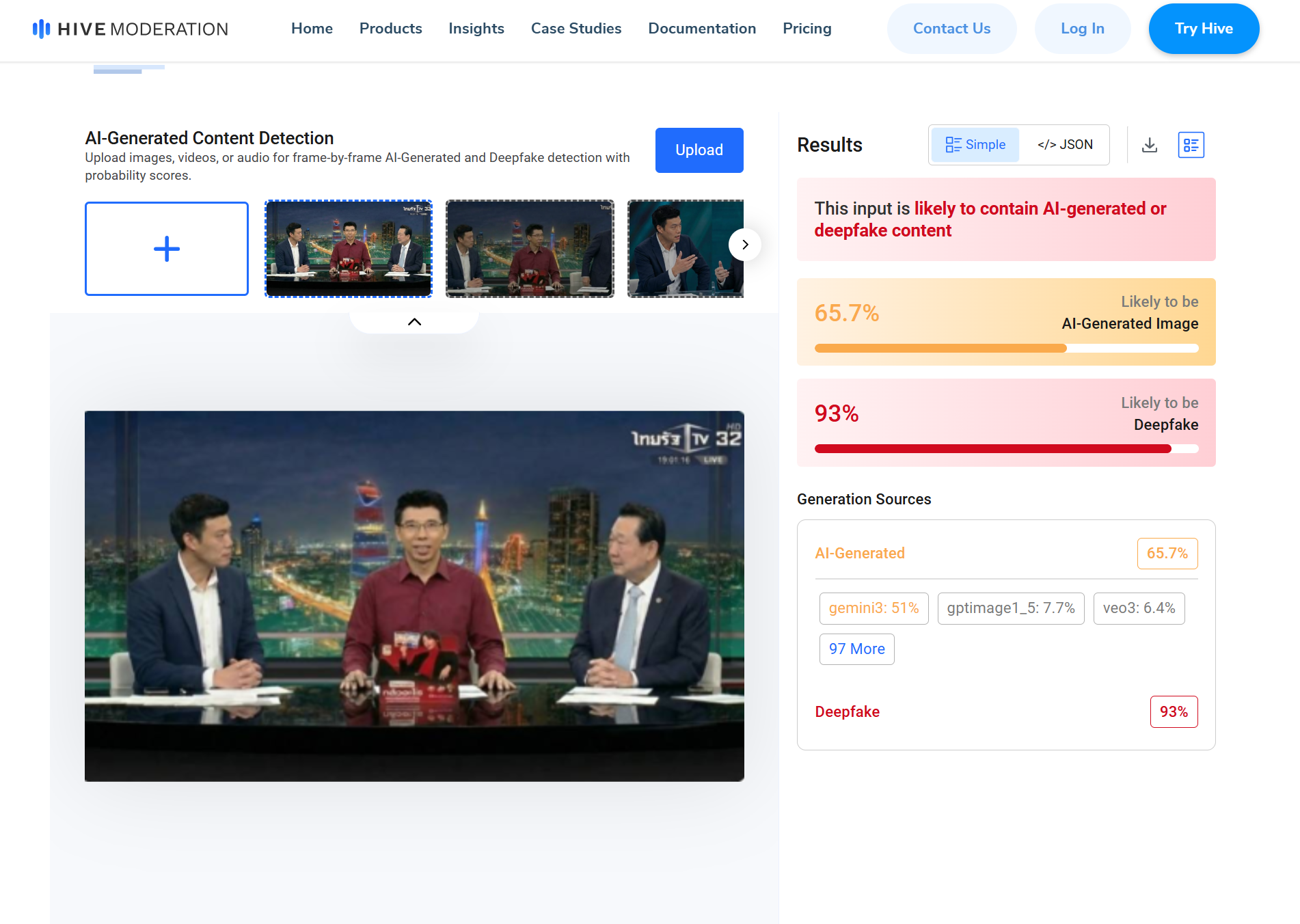
The selected image is likely to contain deepfake content, with a 93-percent probability.
Furthermore, Thai PBS Verify contacted representatives of the Charoen Pokphand Group (CP Group) for comments. They subsequently issued an official statement asserting that the content in question was completely fabricated. The group clarified that no such interview or event ever took place, and that the CP Group has absolutely no affiliation with the material or any investment activities displayed in the media.
The full statement is detailed:
“CP Clarifies Fake News – Defamation Involving Media Using AI-Generated Visuals for Investment Scams
“Regarding the circulation of content on social media that impersonates media outlets and manufactures entirely false scenarios, by utilizing the images and names of corporate leaders alongside political figures in an interview format, as well as employing Artificial Intelligence (AI) to craft distorted and defamatory visuals and narratives to create public misunderstanding and lure people into investment schemes.
“The CP Group wishes to clarify that the aforementioned content is entirely counterfeit. It involves the unauthorized mirroring of pages to make them look like the country’s leading mainstream media, alongside the fabrication of interview scenarios featuring the corporate leader and a political figure. Crucially, the material contains distorted information and utilizes AI to engineer fake imagery that ‘simulates events’ which never occurred, all designed to manufacture credibility and deceive the public.
“Such actions not only distort the facts but also inflict severe damage upon the reputation and image of both the executives and the organization. This constitutes a violation of personal privacy rights and falls under the scope of legal offenses liable to both civil and criminal prosecution.
“The company wishes to reaffirm that no such interview or event ever took place, and the Charoen Pokphand Group holds absolutely no involvement with the content or any investment activities displayed in the said media.
“The CP Group emphasizes that the organization maintains no policy or operation to solicit investments through such channels, nor does it have any connection to the alleged platforms or investment schemes. The unauthorized use of executives’ names, images, or profiles constitutes a direct infringement of rights and is an unlawful act.
“Currently, the company is in the process of gathering evidence to pursue the absolute maximum legal action against all parties involved, spanning the dissemination of false information, defamation, and public fraud, and will prosecute both civil and criminal avenues.
“At the same time, the public is urged to exercise vigilance when consuming information from online media, particularly content that references individuals or organizations in a damaging manner, or features investment invitations, and should thoroughly verify facts from reliable sources before making any decisions.”
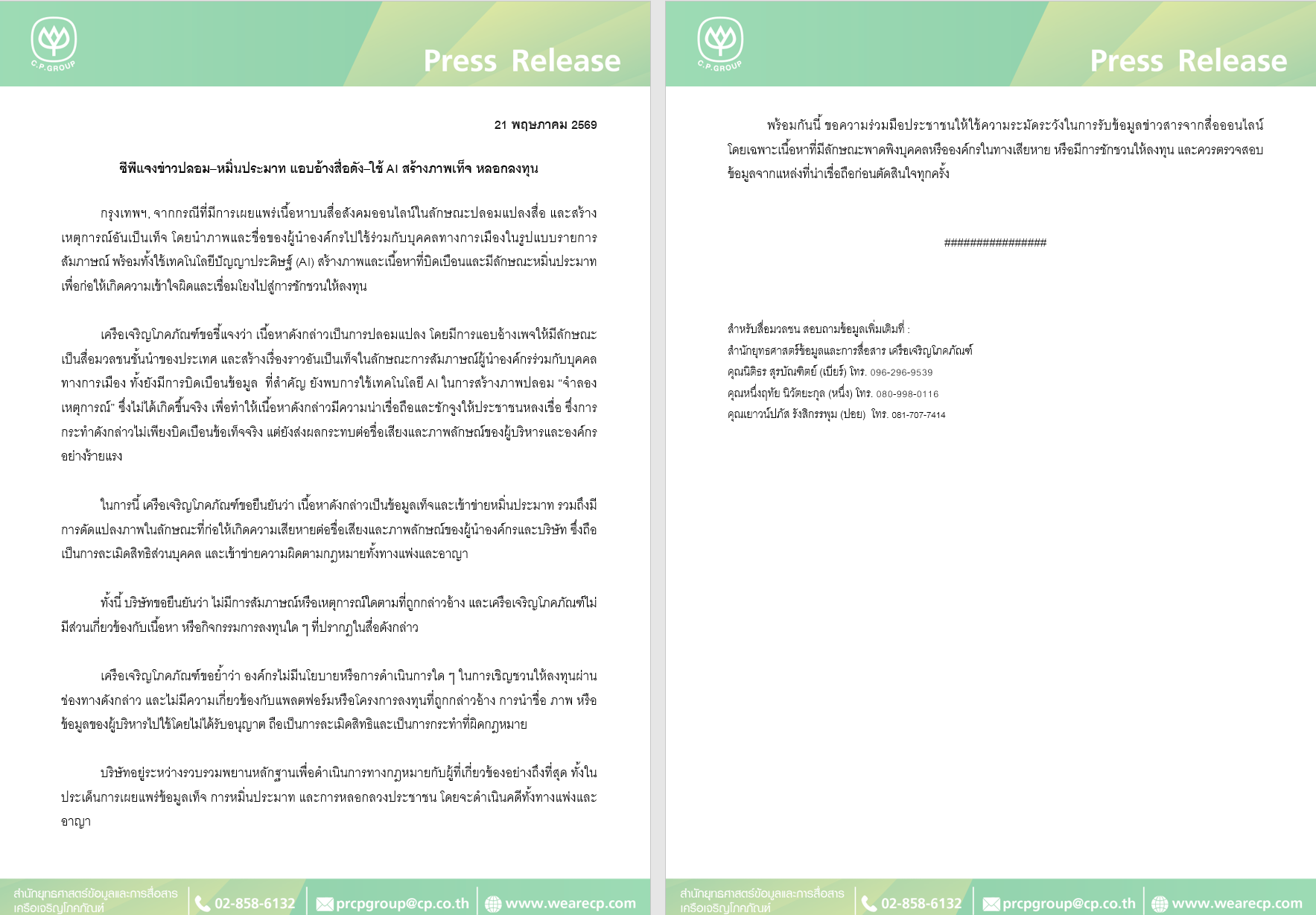
The official Statement made by the CP group in response to the AI-generated content.
What is the truth?
Thai PBS Verify has found that the content alleging Mr. Natthaphong made accusations against Mr. Dhanin, while simultaneously coaxing viewers into investing through an automated income-generating link, is entirely “false information.”
The ‘Fact Check – People’s Party’ Facebook page has confirmed that both the visuals and the narrative were manipulated with AI, and no such joint appearance on the program ever took place as claimed. Furthermore, an analysis conducted with AI image-detection tools indicated a staggering 99.9% probability that the image is a Deepfake.
While the Charoen Pokphand Group (CP Group) has issued an official statement confirming that no such interview or investment initiative ever transpired. The group specified that the scheme involved the impersonation of media outlets and the deployment of AI to fabricate false imagery to deceive the public into investing, adding that legal proceedings are currently underway against those responsible.
Verification Process
1. Confirmation from representatives of the referenced parties
The “Fact Check – People’s Party” Facebook page addressed the situation, stating that their investigation revealed the imagery was fabricated with AI and the entire narrative was completely groundless. Additionally, the fraudulent website mimicked the interface design of the Thairath Online news portal to project legitimacy to the public.
Furthermore, the Charoen Pokphand Group (CP Group) subsequently issued an official statement declaring the content to be false and entirely counterfeit. The company clarified that no such interview or event ever occurred as claimed, and that the CP Group has no affiliation whatsoever with the material or any investment activities displayed in the media.
2. Analysis via AI image-detection tools
When running select images from the content through AI detection software, the analysis indicated a 99.9-percent probability that the visuals were generated or manipulated with AI deepfake.
Potential impacts of malinformation
- Risk of falling victim to fraudulent investment schemes: Recipients of this information might buy into the fake investment advertisements and transfer funds into deceptive platforms, resulting in financial losses that are impossible to recover, as these operations typically route through offshore networks or use mule accounts.
- Leakage of personal data: If users click the links or fill out sensitive details, such as phone numbers, national ID numbers, or bank account credentials, their data could be exploited in future phishing scams or resold on the dark web.
- Misunderstanding and societal misconception: Impersonating high-profile public figures and major conglomerates misleads people into believing that these investment opportunities are legitimate, which in turn causes the fake news to proliferate rapidly across social media channels.
- Damage to personal and corporate credibility: The deployment of AI-generated visuals or Deepfakes in fake news can cause the public to misjudge the referenced individuals or companies, despite the parties having absolutely no involvement in the matter.
What to do with this misinformation?
- Verify the source before believing: Check whether the content originates from an official news website and avoid engaging with pages that lack a clear identity or have been recently created.
- Avoid clicking unfamiliar URLs and refrain from instant investment: Advertisements claiming unusually high returns or leveraging celebrities as selling points are typically scams. Always pause and double-check before taking any action.
- Analyze images/videos with AI tools or reverse image search: Utilize image verification tools like Google Lens or Deepfake detection systems to determine whether the visuals have been generated or manipulated.
- Check for clarifications from the referenced entities: If specific individuals or corporations are cited, visit their official websites or verified social media pages to see if they have issued any formal statements or clarifications.
- Report the content and refrain from sharing: If a piece of information is found to be fake news, file a report on that respective platform and refrain from sharing it further to prevent the misinformation from spreading further.