False claim on non-existent ‘Chamchuri basil’ sale ban debunked
Thai PBS Verify found this false information from X
False basil seed jail claim spreads online
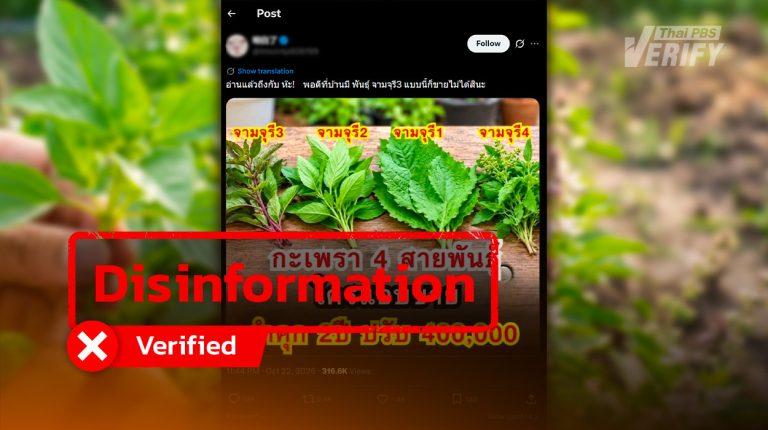
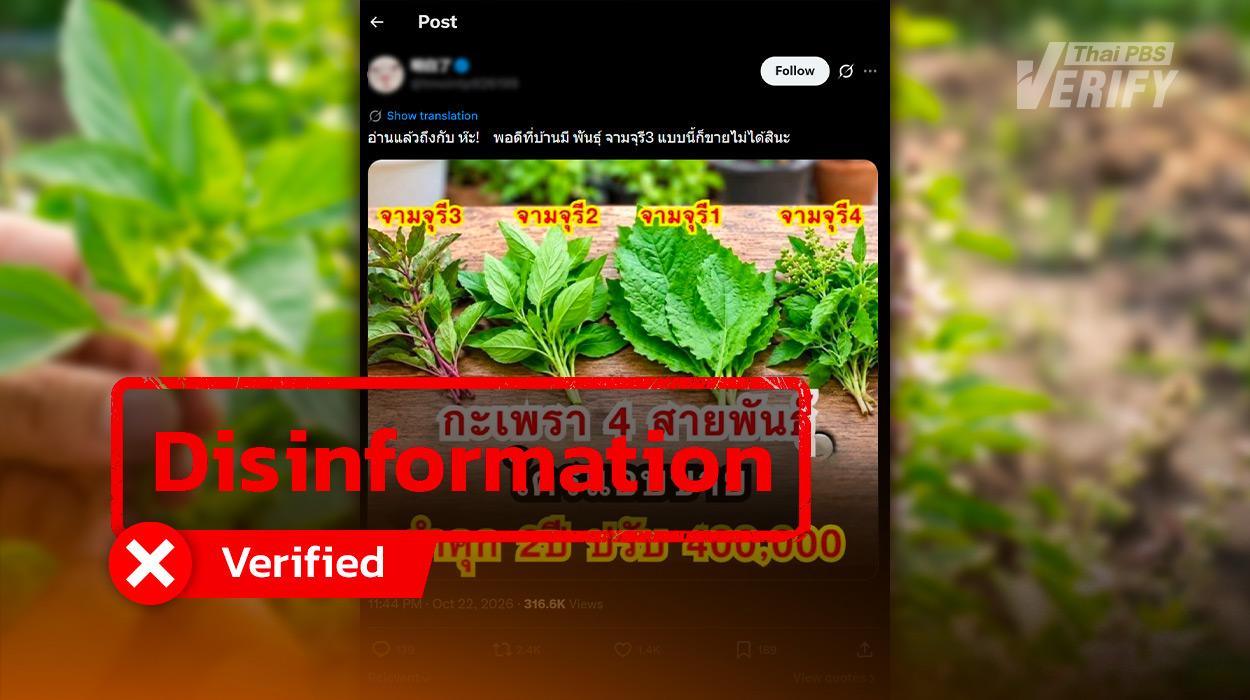
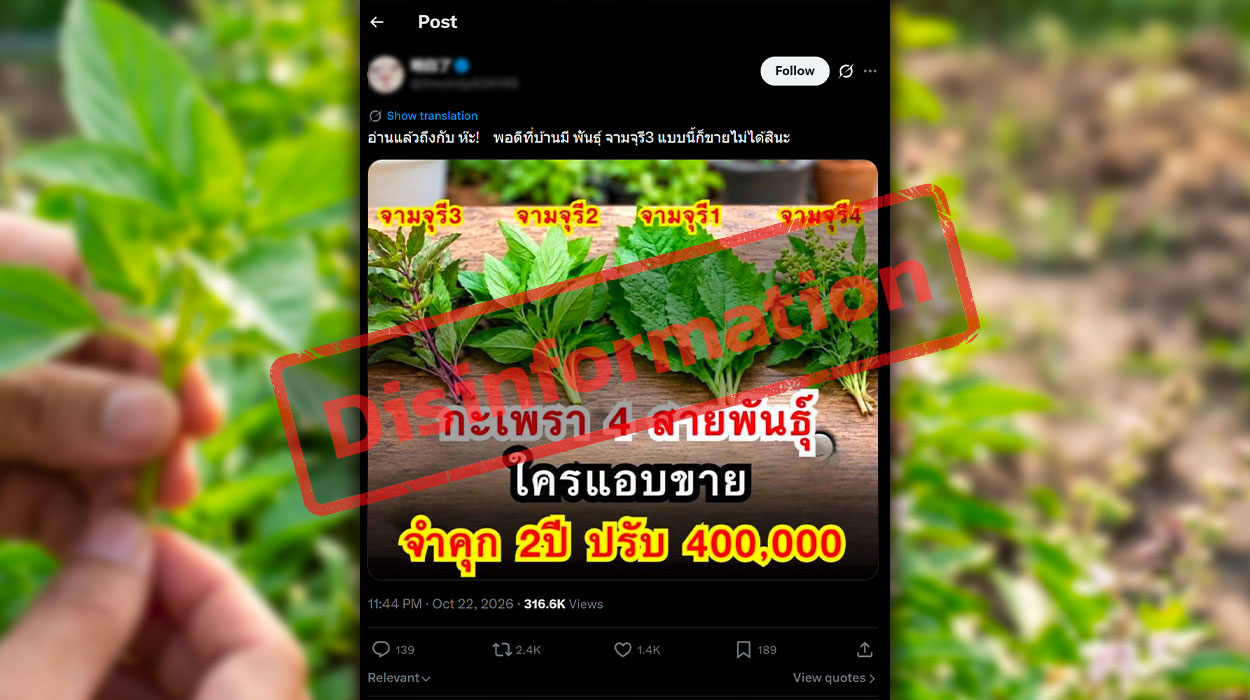
The fact-checking unit found that an X user under the name 明白了 had shared a graphic stating: “I was shocked when I read this! My family has Chamchuri 3 at home, so that means we can’t sell it?” The image claimed there were four basil varieties known as “Chamchuri 1-4” and that anyone secretly selling them could be jailed for two years and fined 400,000 baht.
The post, published on Oct 22, attracted more than 251,000 views and was reposted more than 1,900 times. Some users commenting on the post appeared to believe the claim was genuine.

Some people believed this misinformation
Do ‘Chamchuri 1-4’ basil varieties exist?
A search of 1,105 newly registered plant varieties listed on the website of the Plant Variety Protection Division under the Department of Agriculture found no basil variety registered under the name “Chamchuri”.
However, when Thai PBS Verify searched for basil varieties named “Kaewjuree”, official registration records appeared immediately. This indicated that the “Chamchuri” basil varieties mentioned in the viral post do not exist.
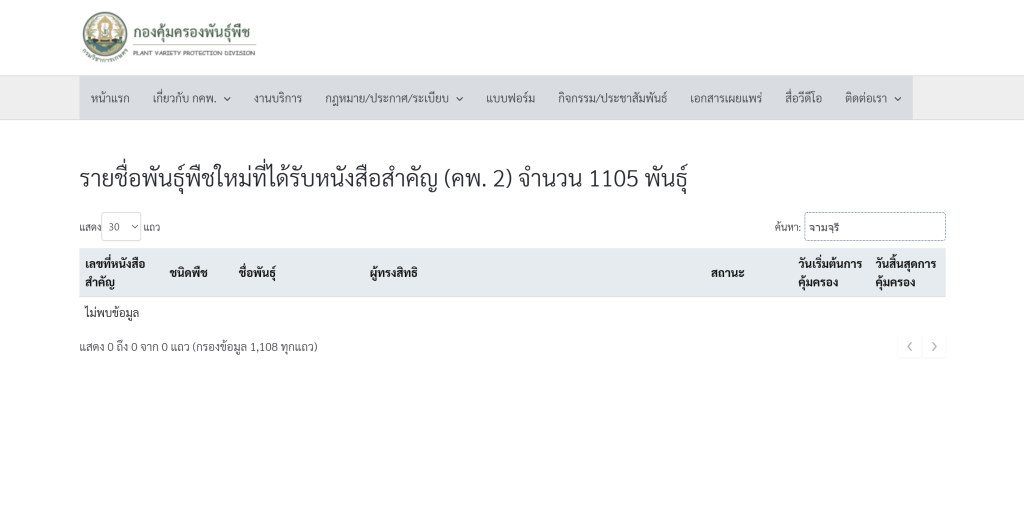
Search results for new plant varieties on the website of the Plant Variety Protection Division, Department of Agriculture.
What are the newly protected basil varieties?
Keyword searches showed that CPRAM Co Ltd has obtained protection certificates for four new basil varieties: Kaewjuree 01, Kaewjuree 02, Kaewjuree 03 and Kaewjuree 04, not “Chamchuri” as claimed in the widely shared graphic.
The varieties were developed from a local basil line, identified as CPR1, in cooperation with Kasetsart University’s Kamphaeng Saen campus. Plant breeders used conventional breeding and tissue-culture techniques to develop the varieties.
The four cultivars are protected under Thailand’s Plant Varieties Protection Act of 1999 for 12 years, from 2024 to 2036.
Can people still grow and sell basil?
The Ministry of Agriculture and Cooperatives and the Department of Agriculture have clarified that the public can continue growing traditional or common basil varieties for personal consumption, harvesting leaves for sale, selling fresh plants, or using basil in food prepared for commercial sale.
Authorities stressed that legal protection applies only to the four Kaewjuree varieties and does not affect other basil strains.
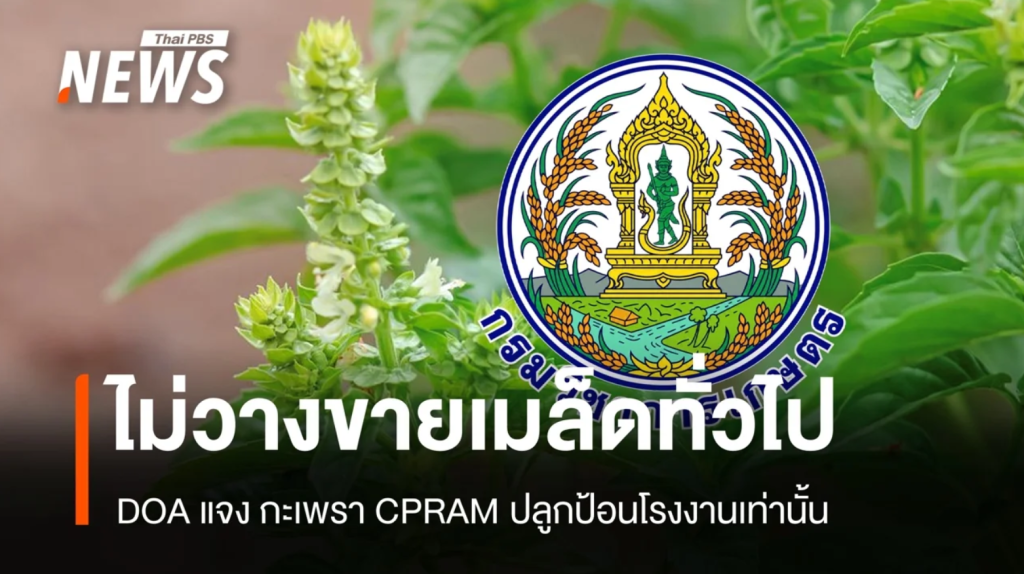
Even the Kaewjuree varieties may be grown for household consumption. What is prohibited is the unauthorised propagation of Kaewjuree 01-04 through seeds, seedlings or cuttings for commercial sale without permission from the rights holder.
CPRAM says varieties developed for in-house use
CPRAM said the protected varieties were developed as raw materials for the company’s own food production operations and that the seeds are not being sold to the general public.
Can violators really face jail terms?
Under Section 64 of Thailand’s Plant Varieties Protection Act of 1999, anyone who infringes rights over a protected plant variety without authorisation, such as by producing, selling or distributing propagating material, may face imprisonment of up to two years, a fine of up to 400,000 baht, or both.
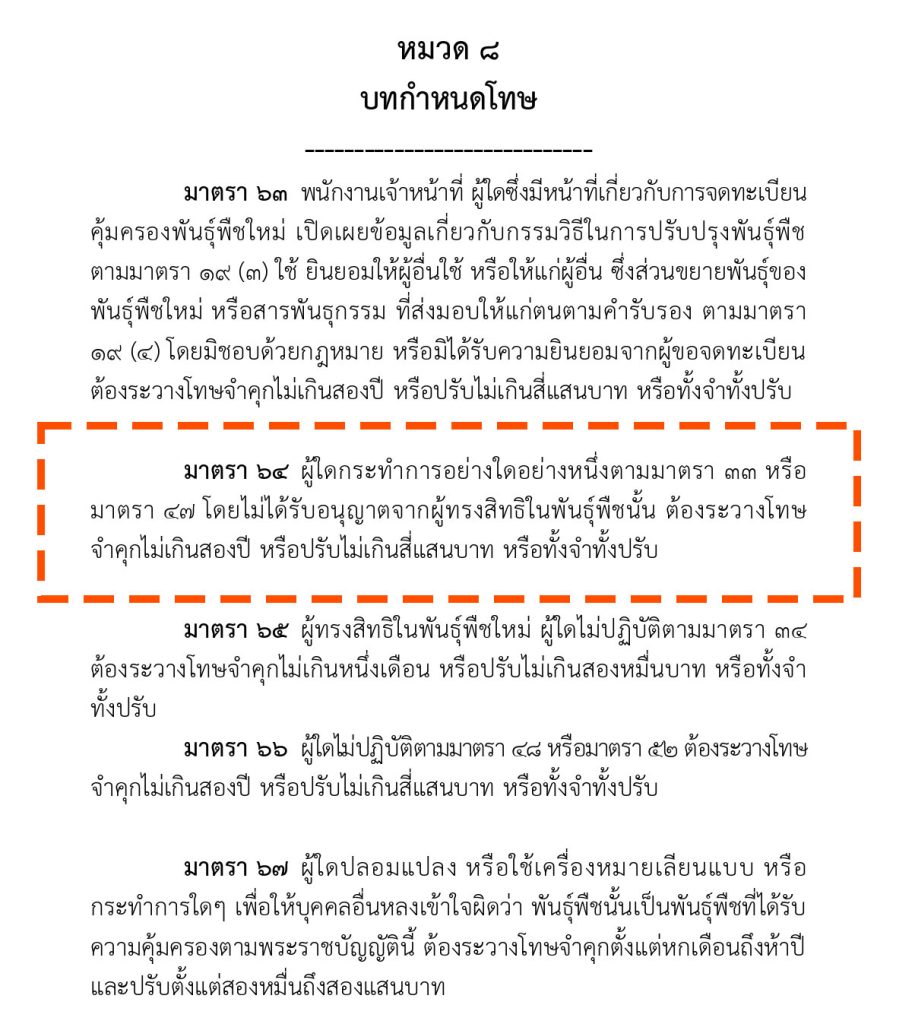
Section 64 of Thailand’s Plant Varieties Protection Act of 1999However, the penalties apply only to infringements involving propagating material of protected varieties. They do not apply to the sale of basil leaves, the cultivation of basil for household consumption, or the use of basil in food preparation.
Verdict
Thai PBS Verify concluded that the claim that there are four basil varieties called “Chamchuri 1-4” and that anyone growing and selling them could be jailed for two years and fined 400,000 baht is misleading information.
- The fact-check found that no “Chamchuri” basil varieties exist in official records. The protected varieties are Kaewjuree 01-04, registered by CPRAM in partnership with Kasetsart University and protected from 2024 to 2036.
- Authorities have confirmed that the public remains free to grow, harvest and sell ordinary basil. The legal penalties cited in the viral post apply only to the unauthorised commercial propagation of protected plant varieties, not to the sale of basil leaves or household cultivation.
- CPRAM also noted that the protected varieties were developed for its own manufacturing needs and are not sold commercially, making it unlikely that members of the public would unknowingly grow or sell them.
Verification Process
- Checking the plant variety database: A search of new plant varieties granted protection certificates (Kor Por 2) on the website of the Plant Variety Protection Division under the Department of Agriculture found no basil variety registered as “Chamchuri”. However, it did identify four protected basil varieties officially registered as “Kaewjuree 01-04”.
- Tracing the origin of the varieties: A review of available information found that the Kaewjuree varieties were developed by CPRAM Co Ltd in partnership with Kasetsart University’s Kamphaeng Saen campus. The cultivars were bred from a local basil strain known as CPR1 for use as a raw material in the company’s food-production process.
- Checking the law and official clarification: An examination of Thailand’s Plant Varieties Protection Act B.E. 2542 (1999) found that Section 64 imposes penalties of up to two years’ imprisonment or a fine of up to 400,000 baht only for commercial infringement involving protected propagating material. Official statements from the Ministry of Agriculture and Cooperatives further confirmed that the protections do not affect the normal activities of farmers or consumers.
Impact of this misinformation
- Confusion and fear among farmers and the public: The claim cites penalties of up to two years in prison and fines of hundreds of thousands of baht, leading farmers, market vendors and households that grow basil to mistakenly believe that cultivating or selling the herb has become illegal.
- Distorting the purpose of plant variety protection laws: The misinformation gives the impression that the law allows large corporations to monopolise traditional herbal plants. In reality, legal protection applies only to newly developed and improved plant varieties and does not affect existing native varieties.
- Fueling public anger and viral sharing through misinformation: The post attracted more than 250,000 views and nearly 2,000 reposts, with many users sharing it while expressing frustration based on information that did not reflect the facts.
What to do with this misinformation?
- Check plant variety names with government agencies: If reports emerge about patents or plant variety protection, verify the correct variety names directly through the website of the Plant Variety Protection Division under the Department of Agriculture.
- Distinguish between “propagating material” and “produce for consumption”: Plant variety protection laws cover the commercial propagation and sale of seeds or seedlings. They do not prohibit the buying or selling of vegetable leaves and other produce intended for cooking and consumption.
- Be cautious of headlines that focus on severe penalties: Misleading reports often highlight only the harshest punishments, such as “two years in prison and a 400,000-baht fine”, to create fear and attract attention. Readers should seek the full details of the alleged offence before accepting such claims as fact.
- Stop sharing false information and help spread the facts: Do not forward inaccurate messages or graphics. Instead, help clarify the facts using information from government agencies, or take part in fact-checking efforts through Thai PBS Verify.