Cambodian BM-21 explosion clip identified as AI-generated
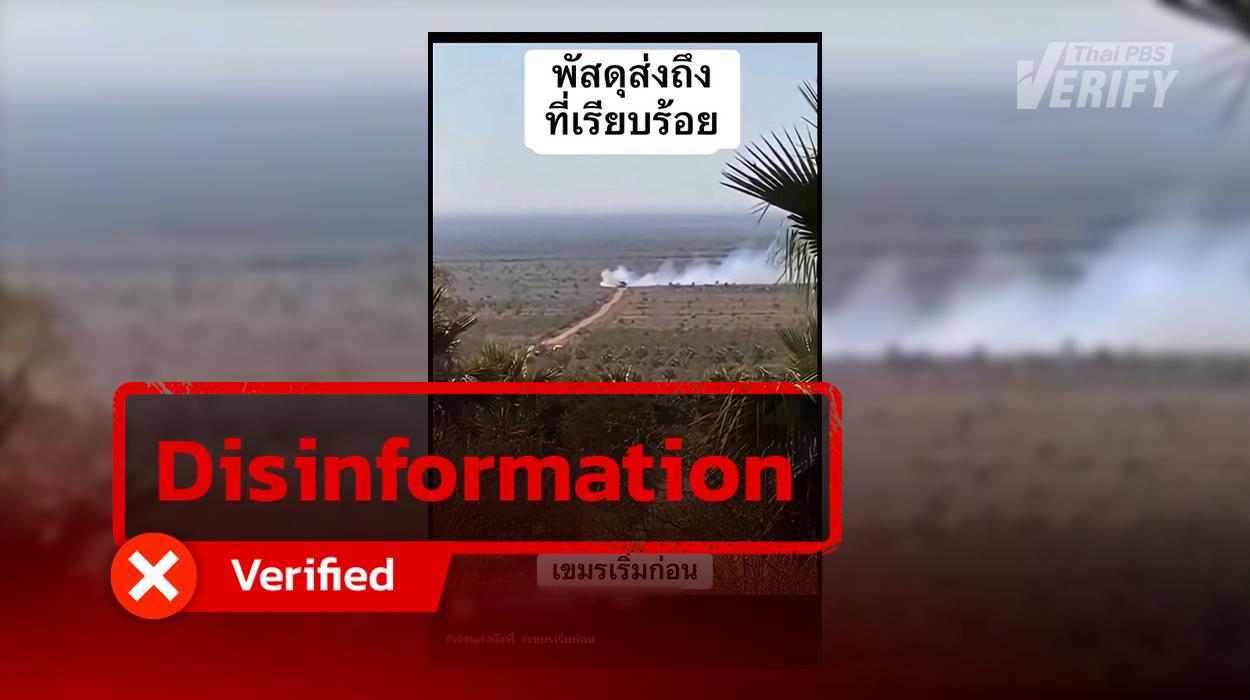
The video has amassed nearly 3 million views, and confirmed it was entirely created by AI. The public is urged to caution, avoid falling for such misinformation, and stop the distribution of fake news.
Thai PBS found the source of misinformation on: Facebook
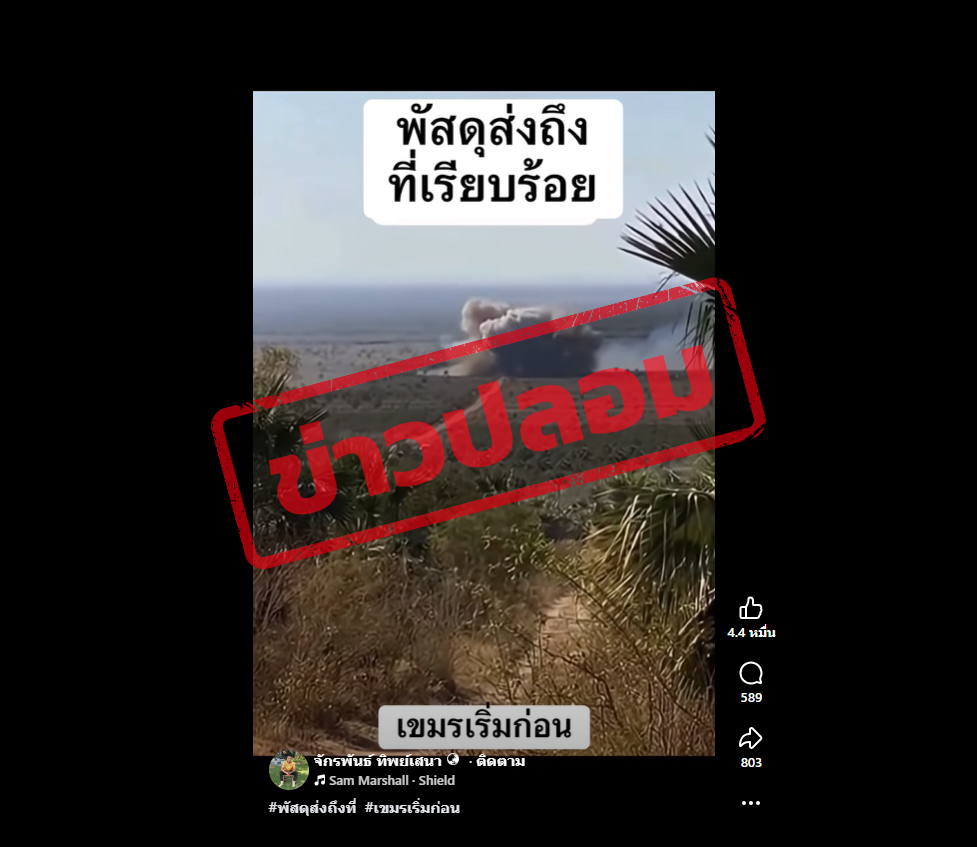
A video post with caption in Thai #PackageDelivered #CambodiaStartedIt
Thai PBS Verify has investigated a video post uploaded by Facebook user ‘Jakrapun Thipsena (จักรพันธ์ ทิพย์เสนา),’ which depicts Cambodian military BM-21 rocket launchers being subjected to a Thai airstrike. The post was accompanied with hashtags ‘#PackageDelivered’ and ‘#CambodiaStartedIt.’ This post was published on December 21, 2025.
The investigation found that the clip has over 2.8 million views, 41,231 reactions, and more than 752 shares. Most of the comments reflect hateful rhetoric, with many users mistakenly believing the footage to be a real event.
Is the video real?
Thai PBS Verify analyzed the video using Hive Moderate, an AI-detection tool. The analysis concluded that there is a 99.6% probability that the video was generated by artificial intelligence.
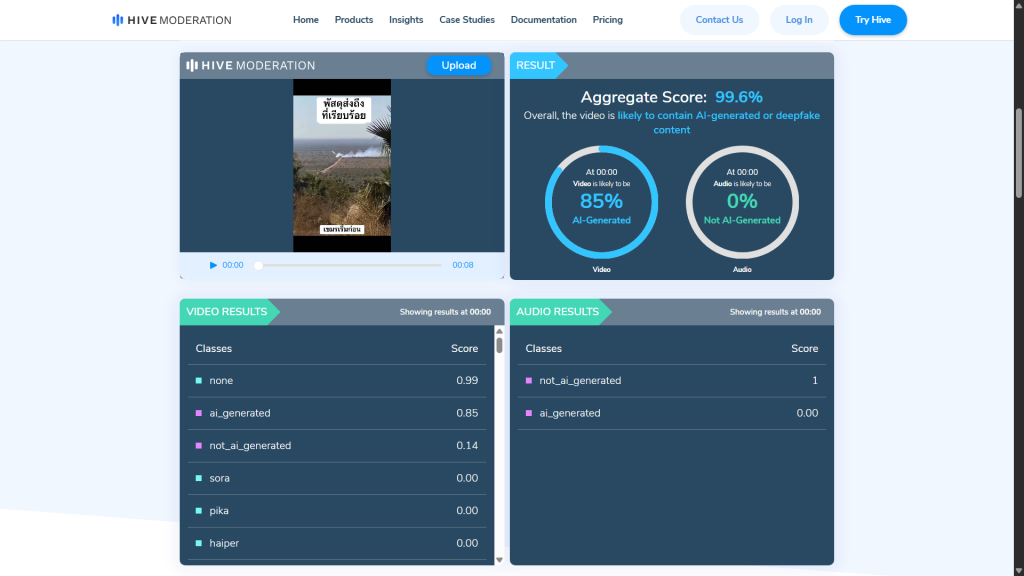
Findings from Hive Moderation indicate a 99.6% probability that the content was AI-generated.
Furthermore, a close observation of the video reveals several irregularities. For example, the second rocket is launched at an unnatural angle, and the purported Thai military strikes lack typical ballistic trajectories or bombing patterns seen in authentic combat footage available online.
And part of the video shows a watermark for “Sora” (Sora Text-to-Video), an AI video generation model developed by OpenAI, the same company behind ChatGPT, visible before being blurred out in later segments.
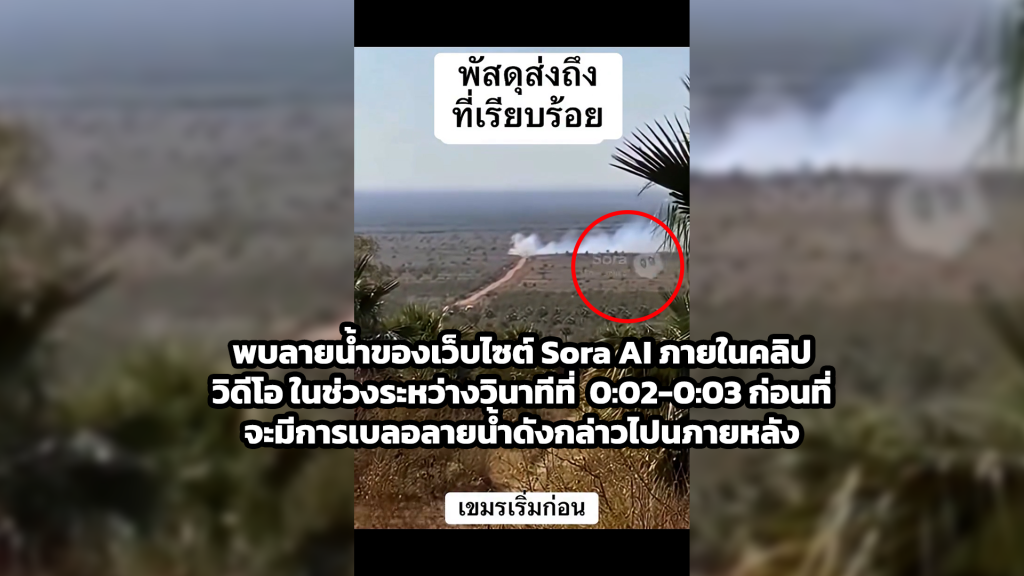
The watermark of Sora” (Sora Text-to-Video), an AI video-generated model, was found on the video.
What does the BM-21 look like in actual combat?
Thai PBS Verify conducted a background search and reviewed combat records of the Cambodian military’s BM-21 Grad multiple rocket launchers. It was found that Cambodia has deployed the BM-21 Grad across various terrains, primarily utilizing it for area-denial or indiscriminate fire from multiple firing positions. Due to the effectiveness and mobility of the truck-mounted system, the unit can use “Shoot-and-Scoot” tactics, which allow it to immediately vacate to avoid counter-battery fire.
Extensive evidence, including imagery of military stockpiles and hardware positioned within historical sites and residential areas, has surfaced on both Thai and Cambodian social media. This reflects an approach utilized by Cambodia to increase mission success while minimizing the risk of Thai retaliation. By utilizing surrounding structures and civilian communities as human shields or strategic buffers, they aim to deter counterstrikes.
However, the Royal Thai Army and Air Force have utilized high-precision weaponry, such as laser-guided bombs and precision-guided artillery. These assets ensure that there is minimal collateral damage to the surrounding environment.
Obvious evidence: Cambodia uses civilian areas as BM-21 launch sites against Thailand
Photographs and video footage have confirmed several locations where Cambodian forces established firing positions and strongholds as follows.
- Civilian communities in Cambodia: village areas opposite Khok Sung District, Sa Kaeo Province, were utilized to conceal launchers and conduct reloading operations. These positions were neutralized subsequently by the Royal Thai Air Force.
- Historical sites: the Spean Toap ancient stone bridge and the perimeter of Ta Kwai Temple. Both are significant archaeological sites that were identified as staging areas for rocket reloading during the periods of armed conflict.
What is the truth?
The mentioned footage is entirely AI-generated, created specifically to mislead the public and maximize engagement. The content leverages existing news narratives solely to gain unmerited credibility.
Verification Process
- Verified by AI detector tool: analysis of the video by Hive Moderation revealed a 99.6% probability that the video was produced by AI.
- Visual observation analysis: detailed scrutiny of the video uncovered several anomalies, including rockets launched at physically impossible trajectories and the presence of a Sora AI watermark, which was later blurred to conceal the video’s origin.
Impacts of this misinformation
- Border security: such content can create misunderstandings among local officials and residents, potentially escalating tensions or triggering unnecessary panic and excessive surveillance in border areas.
- Provocation of ultranationalism: These videos are often weaponized by political pages or social media groups to incite “cross-border hatred.” This emotionally charged rhetoric obscures complex geopolitical facts.
- Erosion of trust in mainstream media: Once fake clips go viral and are accepted as truth, a segment of the audience often clings to those initial impressions. Even after mainstream media outlets issue corrections, public perception remains distorted.
- Diminished credibility of “evidence”: the prevalence of such hoaxes creates an effect. In the event of a real future crisis, the public may reflexively ask, “Is this also AI?”, thereby severely hindering effective crisis communication.

The majority of viewers’ comments indicate that they believe the footage is real.
What to do with this misinformation?
Recommendations when receiving misinformation
- Verify physical elements and lighting consistency
Smoke and fire: AI often generates explosion smoke that appears “unnaturally diffused” or exhibits repetitive patterns.
Vehicle details: examine the wheels or rocket tubes of the BM-21. If the lines appear blurred or exhibit distorted movements, it is highly likely to be AI-generated.
- Verify the original source: if an actual airstrike occurred, it would be officially reported by security agencies or on-ground correspondents. Be skeptical of footage that appears exclusively as short clips on TikTok or YouTube without a verified origin.
- Analyze the audio context: AI-generated clips frequently utilize looped war sound effects or cinematic audio that mimics movies. This lacks the authentic acoustic environment of a real recording, such as wind interference or ambient background noise.
- Beware of “clickbait” headlines: They always use emotionally charged language such as “Breaking! Thailand Strikes Back” or “Cambodia Utterly Destroyed.” These are hallmarks of content designed specifically to drive views through sensationalism.

Related Content